 GUIDE 033
The Cat Corner
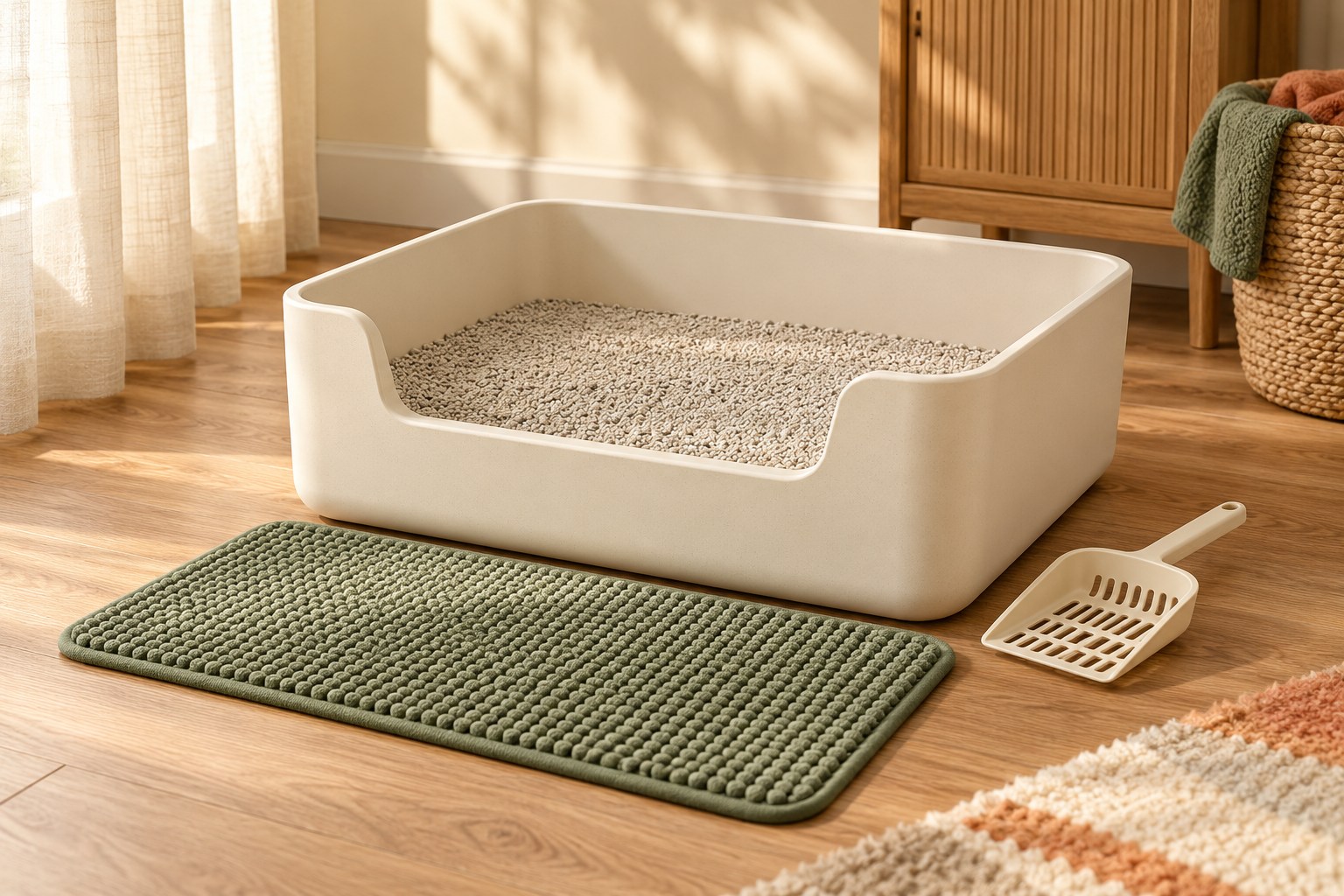
Compare sidewall height, doorway cutouts, interior floor area, and maintenance access when you need litter containment without making the entrance unnecessarily difficult for the cat.
 GUIDE 034
The Cat Corner
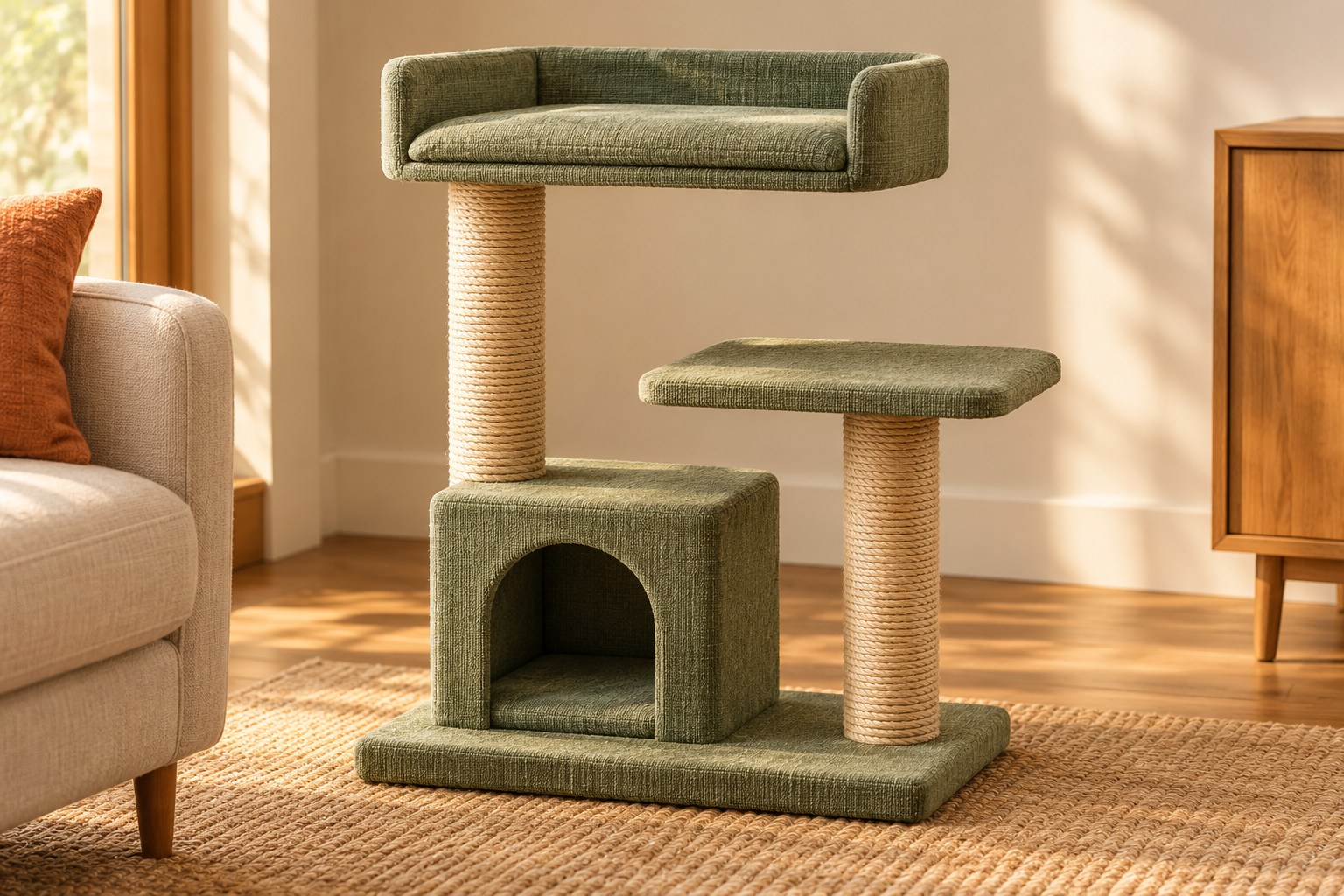
Check post sizes, fastener compatibility, removable covers, refill availability, and repair instructions before choosing a cat tree intended to stay useful beyond its first worn component.
GUIDE 035
The Cat Corner
Balance floor footprint, upper-platform support, accessible steps, and useful scratching area when fitting a cat tree into a small room or an awkward living-space corner.
GUIDE 036
The Cat Corner
Compare mat texture, opening size, stable backing, emptying method, and placement so litter capture remains compatible with comfortable paw contact and easy access to the box.
GUIDE 037
The Cat Corner
Compare scoop openings, basket depth, leading edges, handle angles, and storage so routine scooping separates material effectively without making the wrist or the box corners work harder than necessary.
 GUIDE 038
The Cat Corner
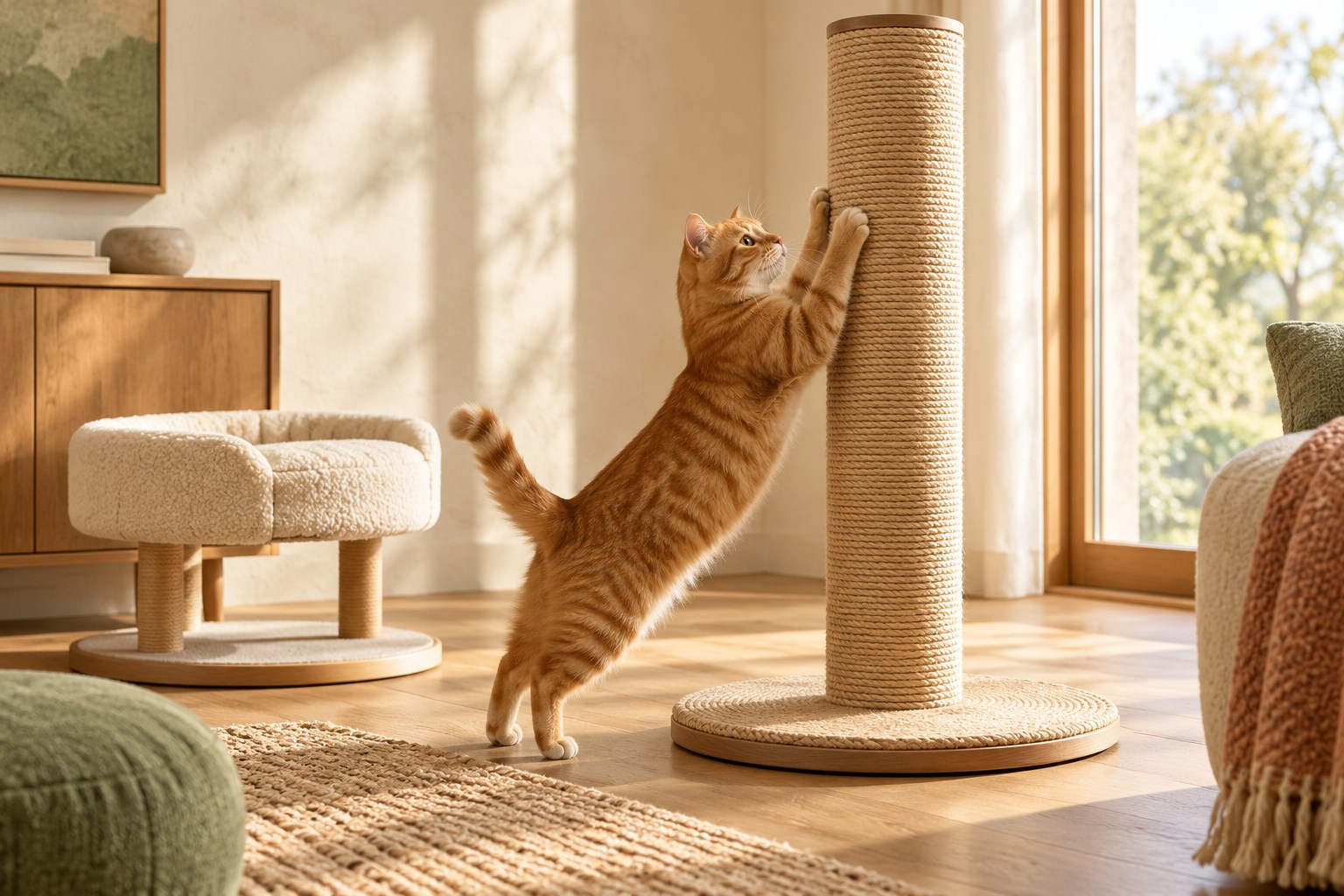
Evaluate scratching-post height, base geometry, surface attachment, and placement so a cat can stretch and pull against the post without a lightweight structure tipping or shuffling away.
GUIDE 039
The Cat Corner
Compare supported and suction-mounted window perches, usable platform area, inspection access, and surrounding hazards before creating a cat observation spot beside a closed secure window.
GUIDE 040
The Cat Corner
Compare platform spacing, alternate routes, sight lines, and exit options so a shared climbing structure offers usable space instead of creating a single elevated bottleneck.
GUIDE 041
The Cat Corner
Compare fitted covers, rigid corner guards, and adhesive sheets through material compatibility, secure attachment, edge condition, and the nearby scratching alternatives a cat still needs.
GUIDE 042
The Cat Corner
Compare step depth, ramp slope, traction, width, and landing space when adapting access to a familiar perch for a cat whose mobility or confidence has changed.
GUIDE 043
The Cat Corner
Evaluate liner fit, corner folds, claw resistance, attachment methods, and disposal before deciding whether a liner simplifies your box routine or adds material that shifts during digging.
GUIDE 044
The Cat Corner
Compare flat scratchers, trays, and broad pads through usable surface area, movement resistance, edge access, and replacement options for cats that scratch with their body close to the floor.
GUIDE 045
The Cat Corner
Assess stability, floor protection, full dimensions, assembly, and moving plans when choosing climbing furniture for a home where drilling or permanent wall alterations may be restricted.
GUIDE 046
The Cat Corner
Decode exterior measurements, tapered walls, hood clearance, doorway size, and scoop access so you can compare the space a cat actually uses rather than the size of the packaging.
GUIDE 047
The Cat Corner
Examine base footprint, post layout, cantilevered platforms, fasteners, and supported anchoring to assess how a cat tree will behave when a cat jumps onto its outer edges.
GUIDE 048
The Cat Corner
Compare gap-setting latches, door stops, opening direction, and removal methods when managing access between rooms without creating a pinching gap or trapping a cat on one side.
GUIDE 049
The Cat Corner
Assess reversible inserts, exact tray dimensions, cardboard construction, replacement availability, and disposal practicalities so a cardboard scratching system remains useful after its first surface wears down.
GUIDE 050
The Cat Corner
Evaluate interior dimensions, entry position, ventilation, observation, and maintenance access when comparing open and covered litter boxes for an individual cat and a particular location.
GUIDE 051
The Cat Corner
Plan scratching locations around daily routes, waking areas, existing furniture targets, and multi-cat access instead of hiding every surface in one corner with limited approach space.
GUIDE 052
The Cat Corner
Assess permissions, complete containment, structural installation, door routines, weather exposure, and supervision before choosing a balcony enclosure intended to provide controlled outdoor access for a cat.
GUIDE 053
The Cat Corner
Plan wall substrate, supported fixings, platform spacing, turning room, clear landing zones, and maintenance access before installing a cat-perch route that must carry repeated climbing movements.
GUIDE 054
The Cat Corner
Look at routes, exits, noise, maintenance access, and individual preferences when distributing litter resources so several boxes do not function as one easily blocked station.
GUIDE 055
The Cat Corner
Look beyond overall tower size to usable platform depth, opening dimensions, post spacing, and documented component limits when choosing climbing furniture for a broad or long-bodied cat.
GUIDE 056
The Cat Corner
Compare rope-wrapped and woven sisal surfaces through claw resistance, seam placement, attachment, wear patterns, and supported replacement methods while leaving room for each cat’s texture preference.
GUIDE 057
The Cat Corner
Compare clear opening size, installation height, tunnel depth, substrate compatibility, and locking controls before fitting a cat flap that needs to work for both the cat and the door.
GUIDE 058
The Cat Corner
Examine entry effort, turning space, lid traction, internal visibility, and scooping access before choosing a top-entry litter box primarily for its contained appearance or scatter-control potential.
GUIDE 059
The Cat Corner
Evaluate tunnel diameter, exit placement, structure, and location when a covered passage is intended to provide spatial choice rather than become another obstruction or a single dead-end hiding place.
GUIDE 060
The Cat Corner
Evaluate identification compatibility, direction control, registration, power behavior, installation requirements, and doorway interactions before using an electronic cat door to manage access between defined household spaces.
GUIDE 061
The Cat Corner
Examine ramp angle, bracing space, surface length, and base stability when a cat scratches on sloping furniture edges or alternates between horizontal and upright scratching.
