Furniture protection can preserve a vulnerable corner while a cat learns about a suitable nearby scratching surface. It does not remove the need to scratch. A guard that simply blocks one appealing area may redirect attention to another, particularly if the replacement surface is unstable, too small, or far away.
Choose protection and scratching provision together, with the furniture material and the cat’s access in mind.
Identify the working area
Watch whether the cat scratches a vertical edge, a broad front panel, or a horizontal seat. Protect the actual contact area rather than covering a random patch. A hypothetical sofa corner may need coverage extending around both sides because the cat alternates paws across the edge. The nearby alternative should offer a similar orientation and enough room to stretch. A small horizontal pad may not replace an established upright scratching motion.
Check furniture compatibility first
Adhesive sheets can affect finishes, fabrics, dyes, and delicate surfaces. Read the product’s compatibility guidance and test as directed in an inconspicuous area before broad application. Do not assume a removable label means residue-free on every material. Fitted fabric covers avoid some adhesive issues but can slide or develop loose folds. Rigid guards need secure supported attachment without exposed sharp edges or fixings accessible to the cat.
Inspect edges after installation
Corners and borders are where sheets can lift and where covers can bunch. Remove loose material before the cat can pull it free. Keep attachment pins, clips, or other small parts fully secured according to instructions, and avoid improvised fasteners. A protector should not create a new snagging edge at paw height. Check again after someone sits on the furniture, since compression and movement can change how a fitted cover lies.
Make the alternative genuinely useful
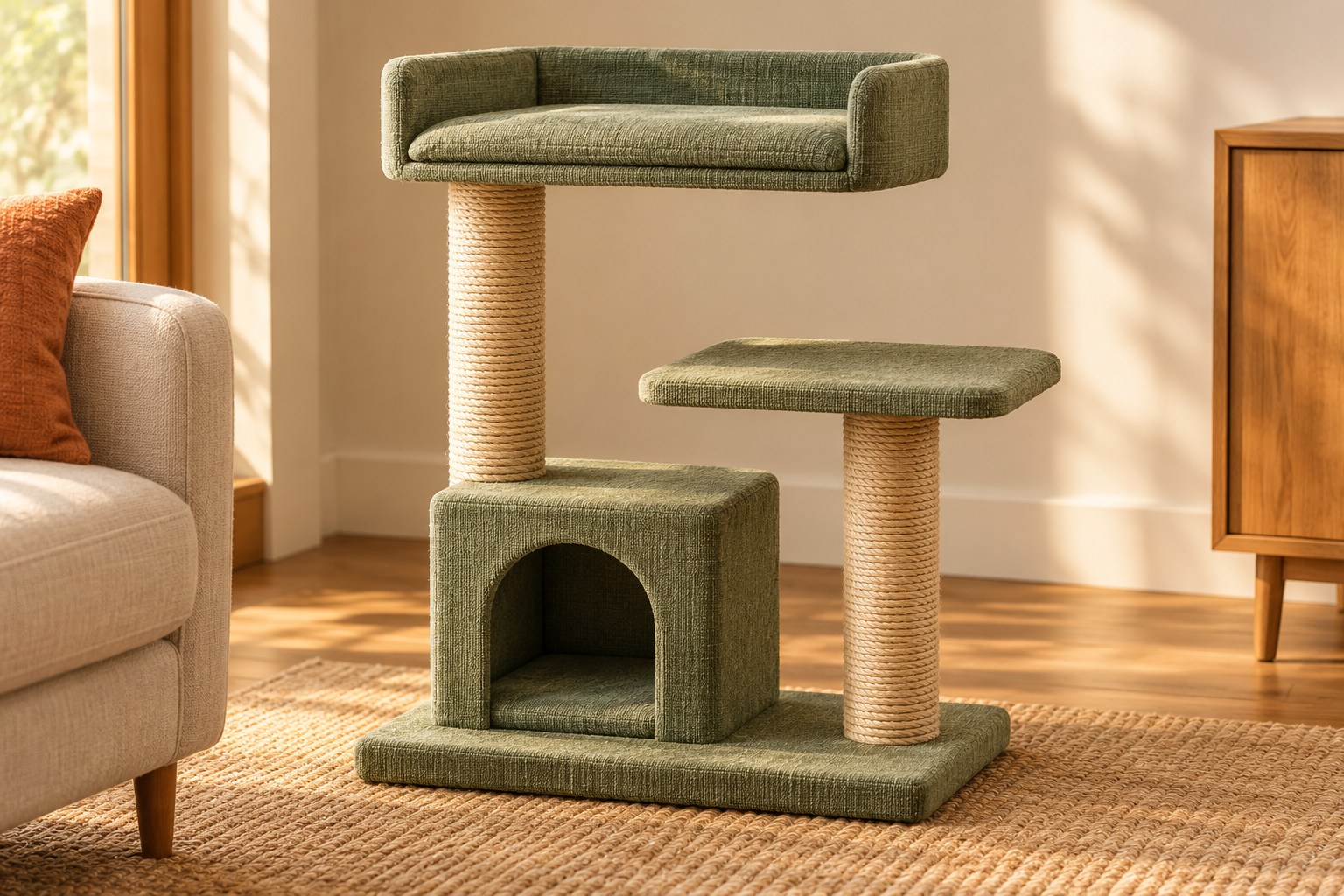
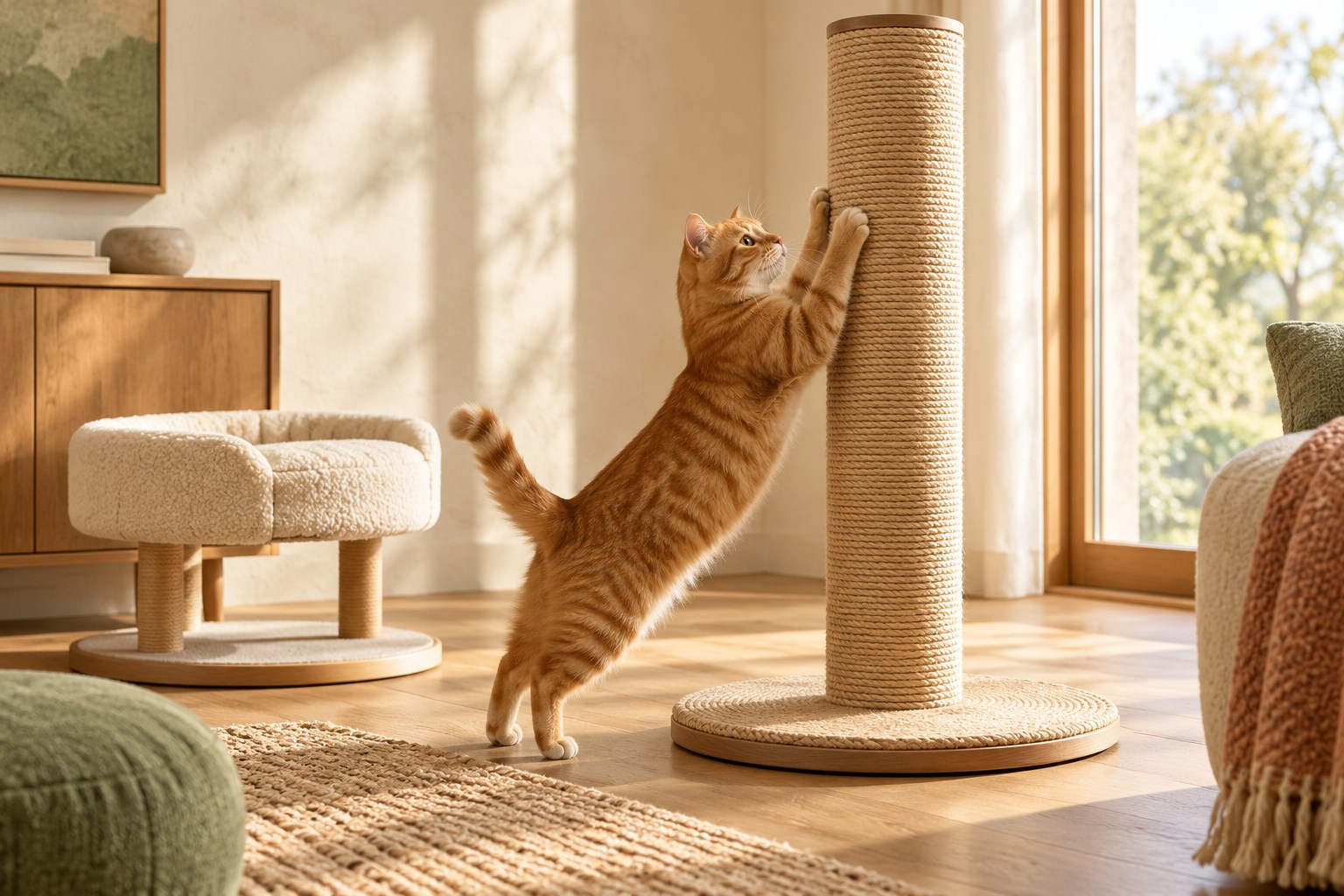
Place a stable appropriately sized scratcher near the established target. Match vertical, horizontal, or angled orientation and observe texture preference. Reward voluntary use without forcing paws onto the surface. Keep the approach clear of bags and household clutter. If the scratcher moves under a pull, fix that problem before deciding the cat is rejecting the material. Protection is more likely to fit a workable plan when the cat has an appealing outlet immediately available.
Avoid turning protection into punishment
Choose barriers that manage access rather than frightening or hurting the cat. Do not add startling devices or harsh deterrents to compensate for an unsuitable scratching setup. If use shifts to another furniture area, review the resource layout and the cat’s preferred motion. In multi-cat homes, one scratcher may not be comfortably accessible to every cat. Qualified feline behavior advice can help when the pattern is persistent or accompanied by tension.
Review whether the protector remains necessary
Once the alternative is being used consistently, assess the protected area gradually while maintaining scratching options. Follow removal instructions carefully, especially for adhesives. Keep the protector if it remains useful and sound, but replace it when edges lift, material tears, or attachments loosen. Inspect the furniture beneath according to its care needs. The long-term aim is a maintainable room in which both furniture and appropriate scratching resources continue to function.

For our approach to product claims and illustrations, see the Editorial Policy.