 GUIDE 136
Brush & Care
A practical home setup can use a suitable low stable area and well-organized supplies. Plan footing, light, tool access, cleanup, and handling boundaries before investing in large specialist equipment.
GUIDE 137
Brush & Care
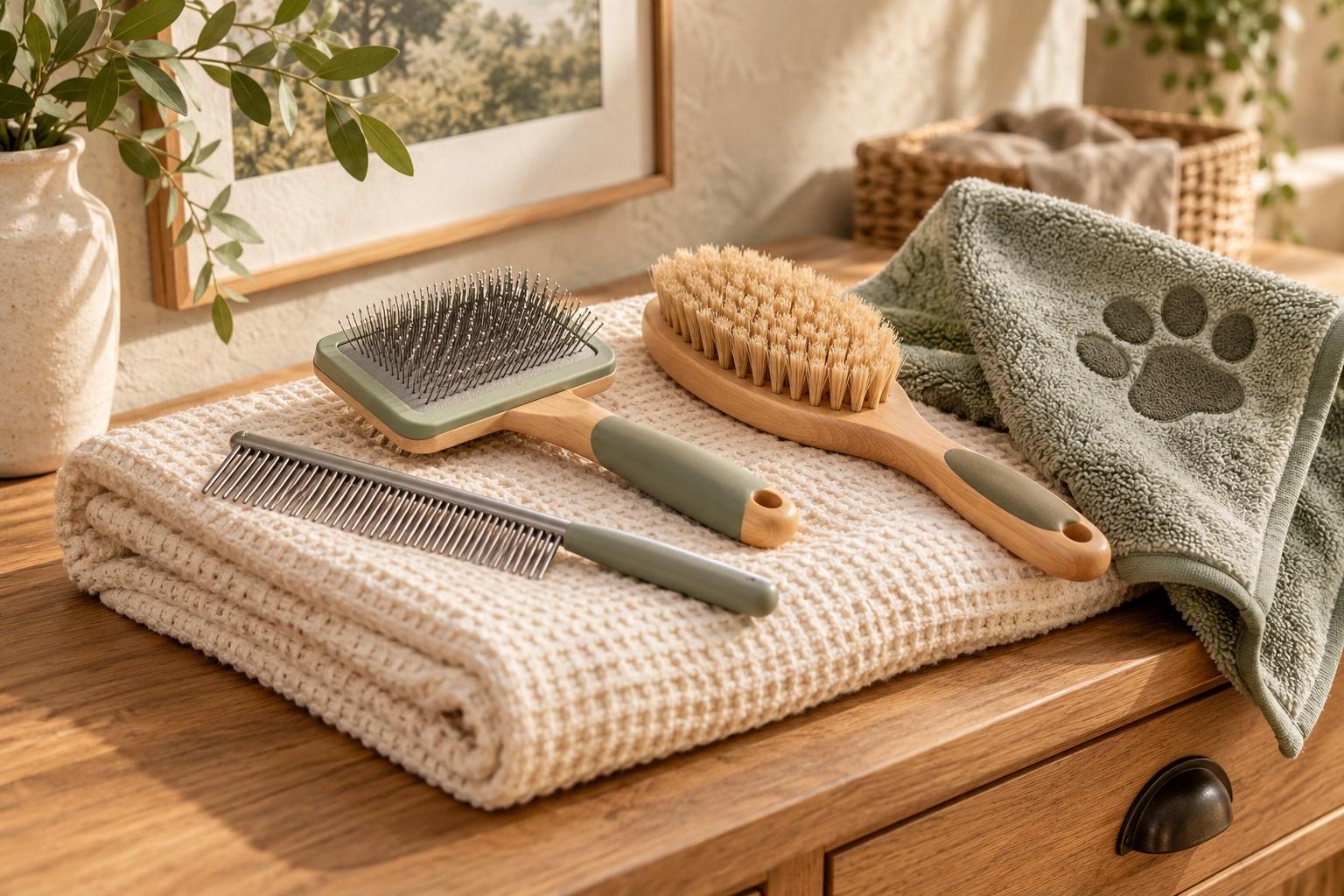
A compact cat grooming kit should serve a clear routine without accumulating forceful tools. Choose manageable brush and comb shapes, a stable setup, and simple cleaning storage with qualified technique guidance.
GUIDE 138
Brush & Care
Separate the first dirty cleanup from the cleaner finishing stage with two clearly assigned towels. Plan sizes, storage, floor protection, and laundering so the routine remains manageable after an ordinary wet outing.
GUIDE 139
Brush & Care
Bristle density, length, and flexibility influence how a finishing brush moves across a coat. Understand what this simple tool can do, where it falls short, and how to keep its base clean.
GUIDE 140
Brush & Care
A drying zone should protect the floor without becoming an unstable pile of wet textiles. Compare absorbent mats, removable towels, backing compatibility, and laundry rotation around the route out of the bath.
GUIDE 141
Brush & Care
A comb's tooth spacing changes how it engages with a coat. Compare coarse, fine, and combination layouts alongside tooth finish, handle control, and the limits of routine home grooming.
GUIDE 142
Brush & Care
Handle shape can change grip pressure, wrist position, and cleaning effort. Compare palm tools, straight handles, and offset shapes according to the task and the person using the equipment.
 GUIDE 143
Brush & Care
A guillotine clipper uses a moving blade across an opening. Examine aperture size, visibility, blade availability, and storage before deciding whether this format suits your instructed nail-care routine.
GUIDE 144
Brush & Care
Material influences weight, rigidity, and cleaning, but it does not establish quality alone. Compare comb teeth, molding or joins, grip, and storage to find a controllable tool for the intended routine.
GUIDE 145
Brush & Care
A drying towel must also be easy to unfold, handle, wash, and dry. Compare pile, weight, edges, and practical size instead of choosing by an unqualified absorbency claim alone.
GUIDE 146
Brush & Care
A grooming mat needs secure contact with its actual surface, manageable drainage, and complete drying afterward. Compare suction, texture, shape, and cleaning access without treating a mat as a restraint.
GUIDE 147
Brush & Care
A grinder changes the nail-care tool but still requires technique and cooperation. Examine sound, vibration, working-head access, charging, and cleaning before deciding whether it belongs in your pet's routine.
GUIDE 148
Brush & Care
Hand pockets can keep a drying towel positioned, but they also change bulk and drying time. Compare pocket placement, fit, seam strength, and cleaning access before choosing a mitt-style product.
GUIDE 149
Brush & Care
A pin brush can offer a different feel from a dense slicker. Examine pin mounting, cushion movement, head dimensions, and cleaning access to choose a manageable tool for routine coat care.
GUIDE 150
Brush & Care
Flexible rubber nubs create a different grooming contact from metal pins. Compare nub shape, hand straps, surface grip, and cleaning needs while keeping pressure and skin comfort central to the choice.
GUIDE 151
Brush & Care
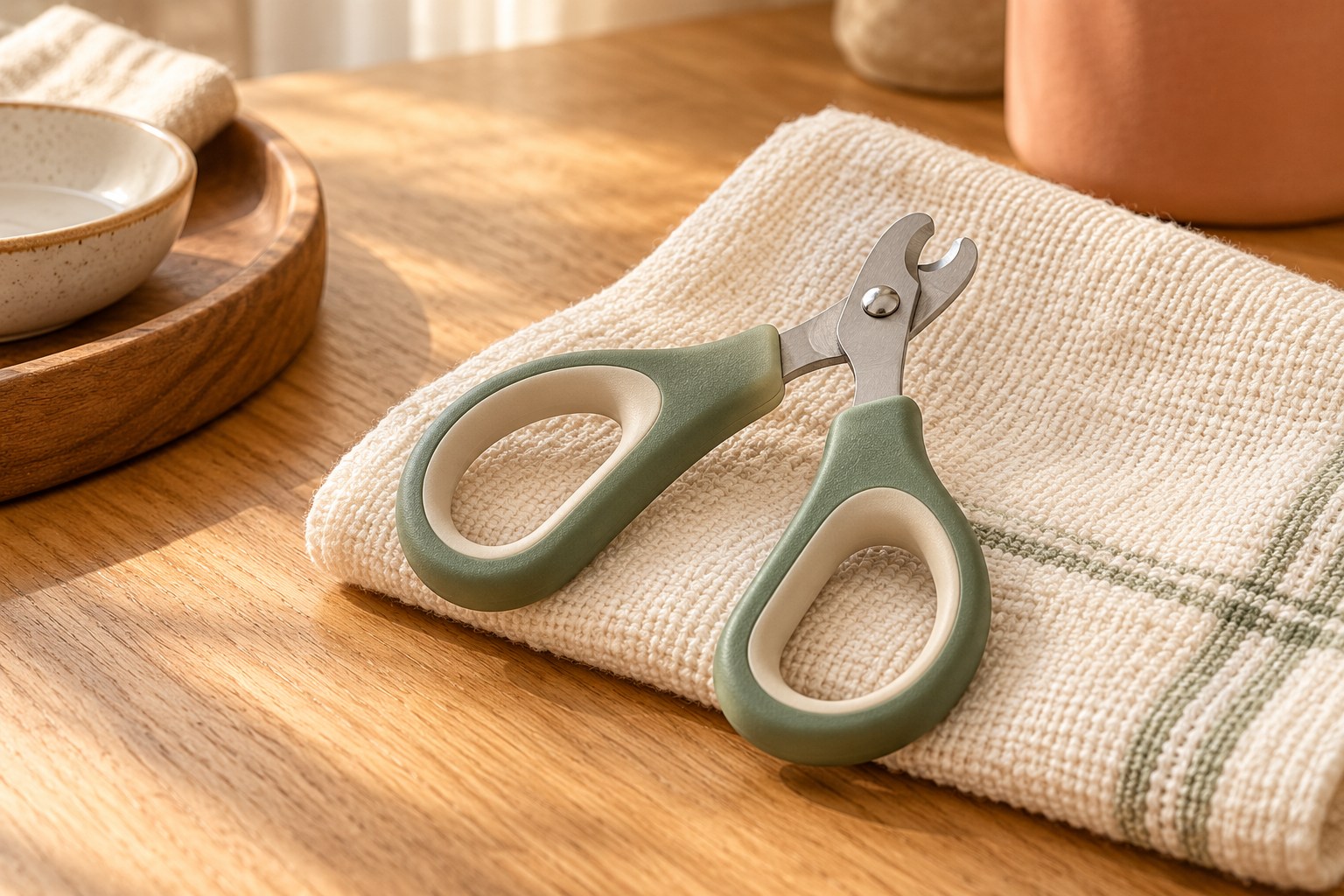
Nail clipper control depends on head size, visibility, blade alignment, and comfortable handling. Compare scissor-style designs as equipment while getting individual trimming instruction from a veterinarian or qualified groomer.
GUIDE 152
Brush & Care
A retracting-pin or ejector plate can make hair removal easier, but moving parts add care requirements. Compare the mechanism, pin condition, cleaning access, and grip before choosing convenience features.
GUIDE 153
Brush & Care
Slicker brushes vary in pin length, spacing, flexibility, and head shape. Compare those details with coat structure and handling needs, while recognizing when a grooming task belongs with a professional.
GUIDE 154
Brush & Care
A compact storage system keeps sharp tools, spare heads, and instructions accessible without mixing them with damp towels. Organize nail-care equipment around inspection, safe handling, and a clear setup routine.
