Not every household needs a permanent grooming table. For an appropriate routine, a quiet low working area may provide better practicality than a large elevated setup that must be stored after every use. The important questions concern stable footing, comfortable access, suitable light, and the ability to stop without creating a scramble around tools.
Choose the working area first
Find a location with enough space for the pet and handler to move naturally. Avoid door swings, narrow passages, and surfaces that rock or slide. A flat compatible non-slip layer may help on a suitable floor, but it needs inspection and a clean dry base. Do not use a stack of cushions or an unstable household table to imitate professional equipment.
Consider the handler's posture as well. A location that requires prolonged bending may encourage fatigue and rushed work. Adjust the session format or use shorter opportunities rather than improvising an unsafe elevated platform. If an appropriate raised setup is needed, seek guidance about suitable equipment and use. An animal should never be left unattended on an elevated grooming surface.
Put tools within deliberate reach
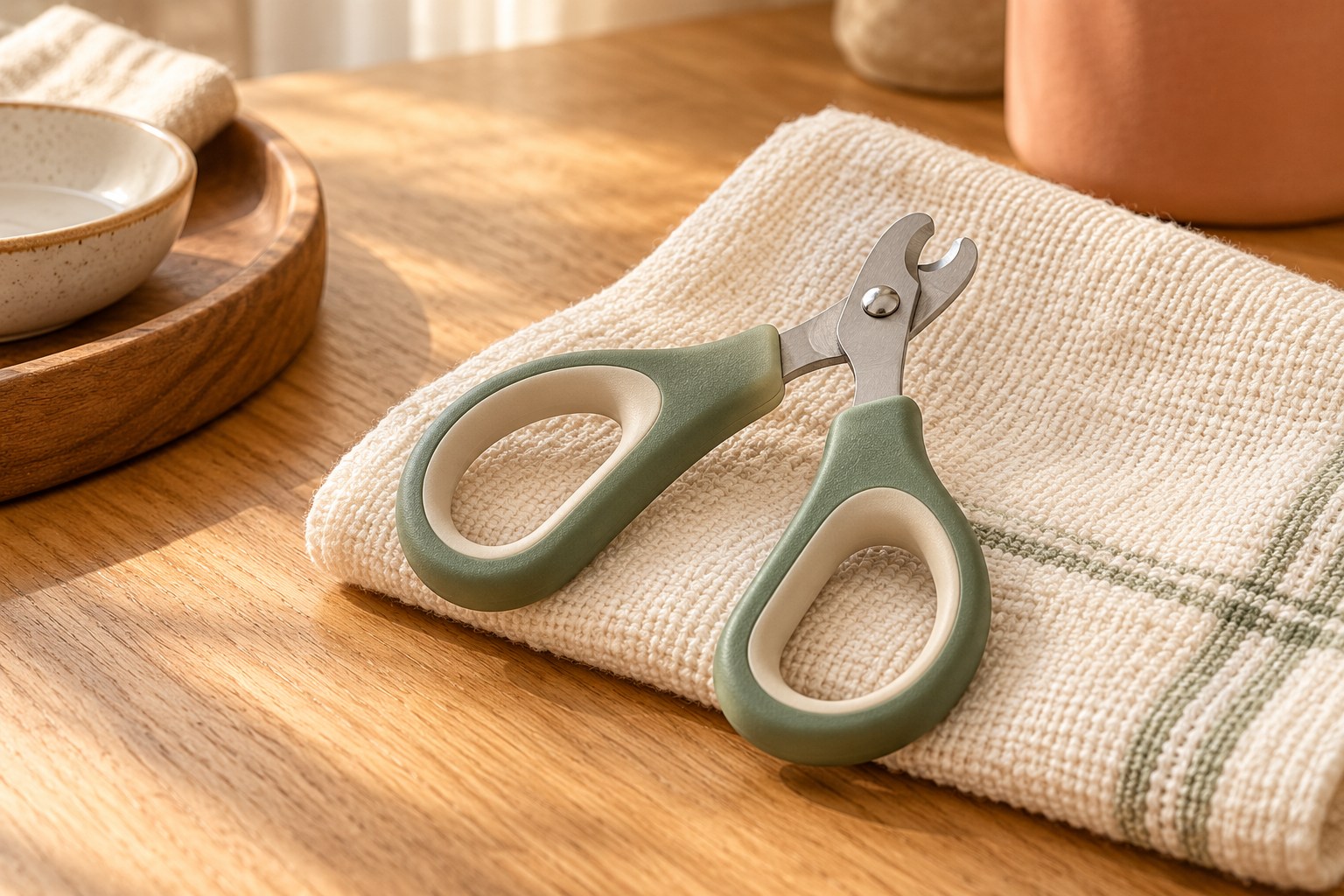
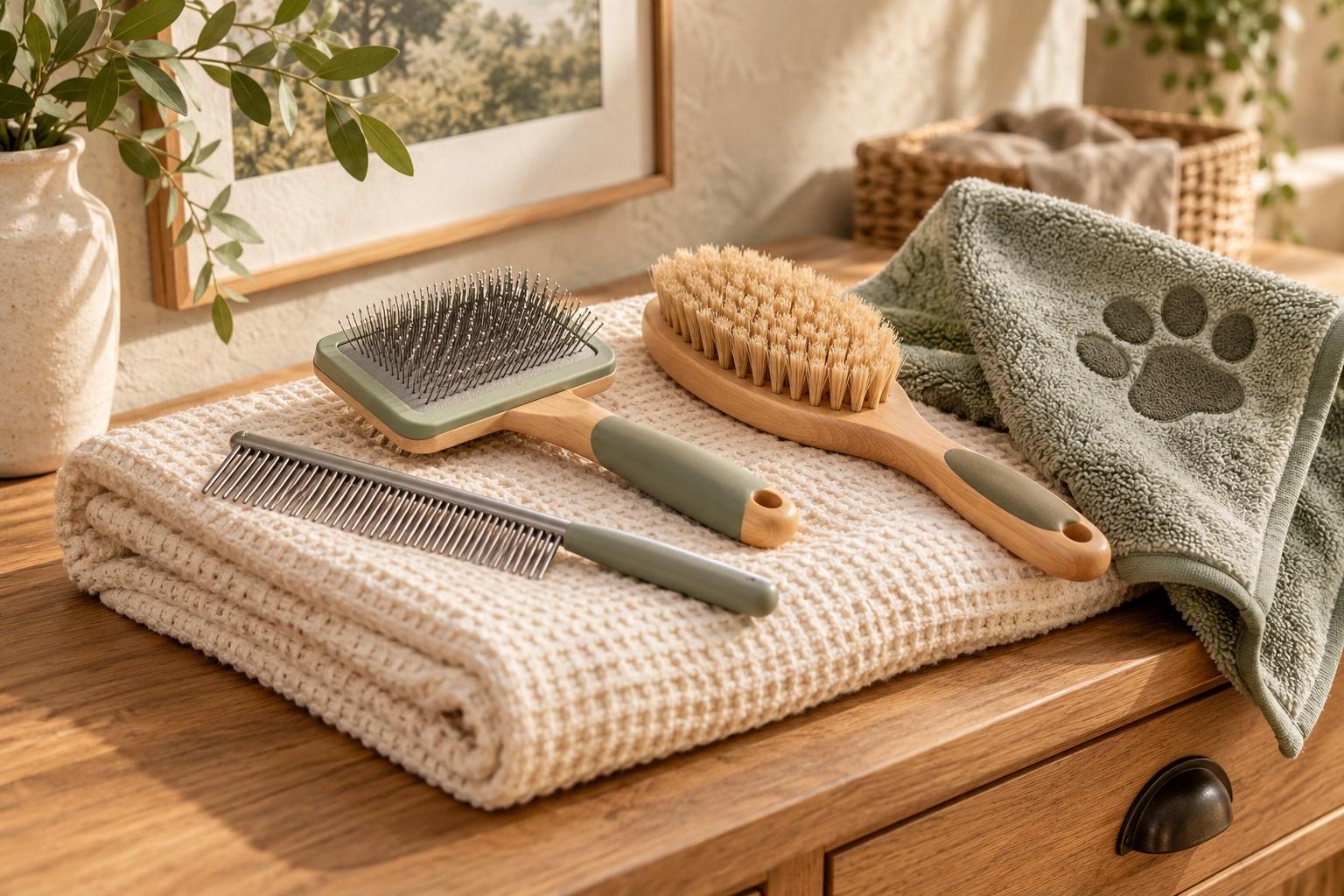
Arrange only the tools required for the planned task. A shallow washable tray keeps a brush or comb visible without placing sharp equipment beneath towels. Keep electrical devices and cords clear of water and moving paws. Bring spare parts and charging cables out only when needed, and store them away from the active working area so they do not become clutter.
Lighting should let the person see the coat and tool clearly without creating glare or dangling cords across the route. A fixed room light is simpler than a loose lamp balanced on the edge of a table. Avoid pointing a bright light directly at the pet's face. The arrangement should support calm careful observation, not add more objects that must be managed simultaneously.
Define an achievable task
An appropriate home session may focus on a manageable part of routine brushing rather than every possible grooming job. Learn technique from a qualified groomer or veterinarian where needed, and choose tools that serve that routine. Dense mats, unfamiliar skin changes, or persistent discomfort are reasons to obtain help rather than expanding the home equipment collection.
Introduce surfaces and tools gradually. The pet should have an appropriate opportunity to move away, and the handler should be able to put the tool down safely when that happens. A mat is a working surface, not a restraint. Avoid adding improvised ties to household furniture. If handling is difficult, seek a suitable plan instead of treating stillness as a product feature to purchase.
Make resetting easy
Choose washable layers that fit your laundry equipment and dry fully between uses. Clean the floor or surface beneath the mat as well as the top. Remove loose hair from tools according to their instructions, inspect working parts, and store them dry. A compact station can be reset quickly when every item has a known place and there are few unnecessary accessories.
After a few sessions, assess what actually helped. A better-positioned tray or a smaller brush may be more useful than a larger workstation. Keep the layout flexible and remove items that are never used. The success of a home grooming area is a suitable routine with a comfortable animal and a manageable cleanup, rather than a room that resembles a salon photograph.
For our approach to product claims and illustrations, see the Editorial Policy.