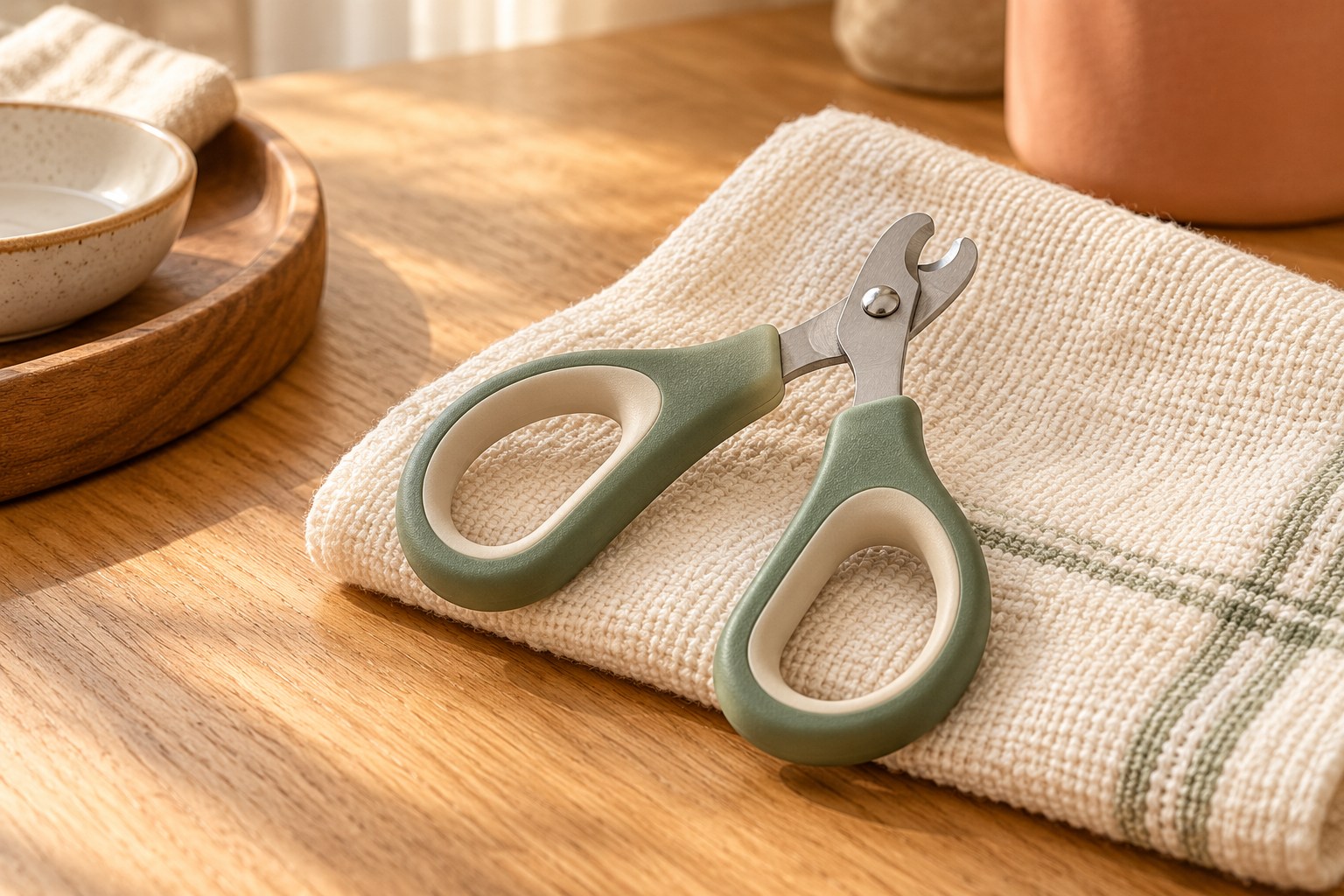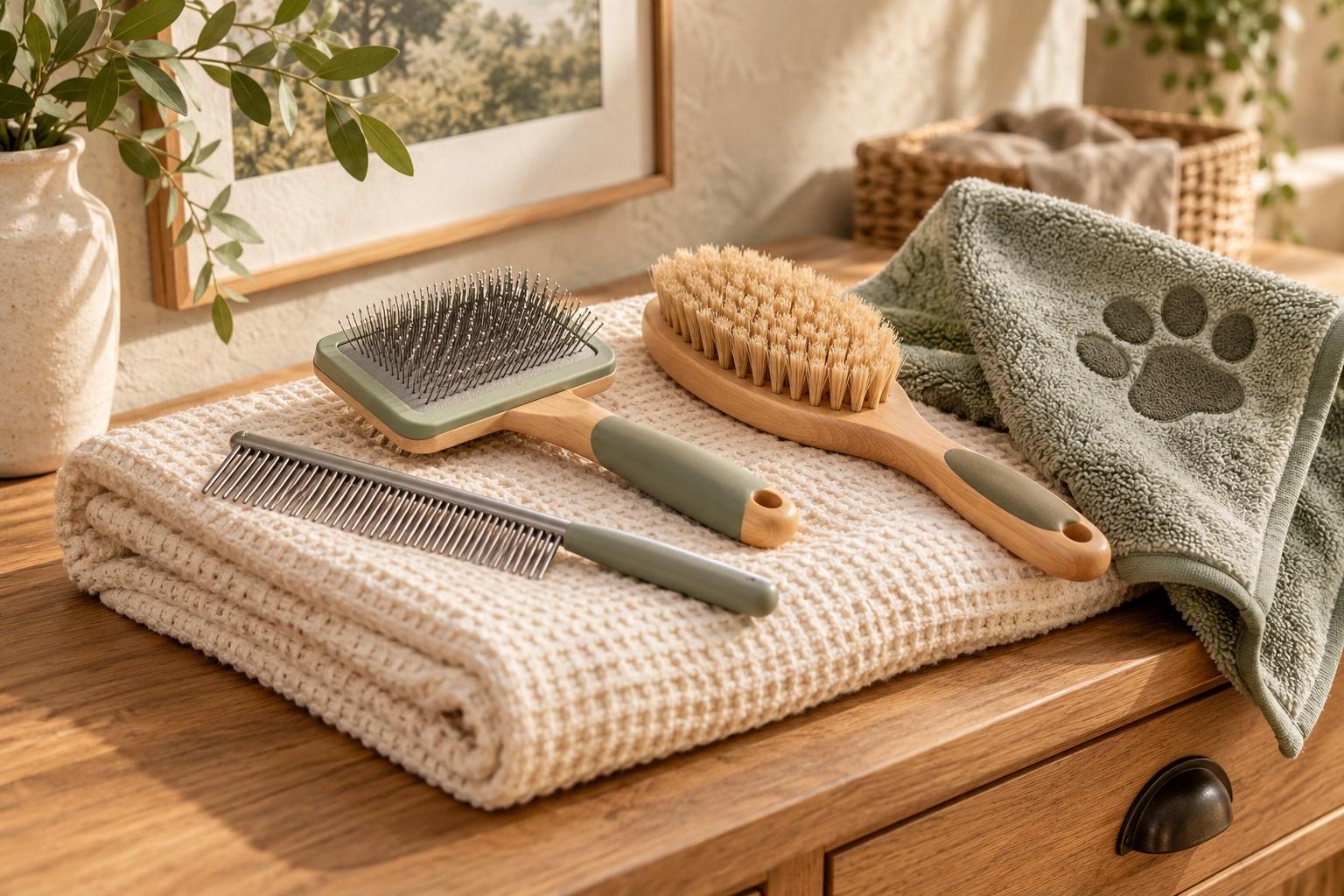
Grooming equipment is often chosen by the working head, leaving the handle as an afterthought. Yet the handle is what lets the person place that head accurately and stop promptly. A grip that causes fatigue or forces an awkward wrist position can make a suitable brush harder to use. Comfort is practical control rather than a decorative extra.
Look at the working position
Hold the tool as it would be used, not as if carrying it across the room. Notice whether the wrist remains reasonably relaxed and whether fingers need to squeeze tightly to prevent rotation. A very narrow handle may encourage pinching; a very thick one may be difficult for a smaller hand to encircle. A product labeled ergonomic still needs to fit the actual handler.
The weight of the head affects balance. A broad metal-backed brush on a short light handle may feel different from a smaller head with weight centered near the grip. If several people groom the pet, choose a shape they can all control or consider separate appropriate tools. A universal household solution should not require one person to compensate with excessive pressure.
Compare grip surfaces realistically
Rubberized panels and raised texture can help a clean dry hand hold the tool, but they may collect hair and residue. Deep grooves require more careful cleaning than a smooth continuous grip. Check whether the textured layer is firmly attached and whether seams create edges that lift. A deteriorating sticky grip can make both handling and hygiene more difficult.
Wood, plastic, and coated handles have different care needs. Read whether wiping is sufficient and whether immersion is prohibited. A smooth finish should not include splinters, sharp molding lines, or exposed fasteners in the contact area. Inspect the joint to the head because movement there can change the working angle unexpectedly even when the grip itself feels comfortable.
Consider palm and offset designs
A palm tool keeps the hand close to the coat and can provide direct feedback about pressure. Its strap should hold securely without compressing fingers or leaving loose loops in the working area. An offset handle may create a useful angle for a particular task, but the angle should suit the handler rather than force the arm into a new awkward position.
Long handles add reach, which can also reduce precision near small contours. Do not choose extra reach merely to avoid changing your own position around the pet. Arrange the setup so the animal and handler are both comfortable, and move the tool deliberately within an appropriate routine. Handle design cannot make a difficult coat problem safe to force through.
Build a small practical trial
If possible, compare two tools with similar working heads but different handles. A brief in-hand assessment can reveal which one needs less gripping effort before involving the pet. Check button placement on tools with release mechanisms: a convenience button should not sit where it is pressed unintentionally during normal use. Test it away from the animal first.
After sessions, notice where discomfort occurs and reassess the setup rather than continuing through fatigue. A lower work surface or shorter session may help more than another heavily advertised grip. Persistent hand problems merit appropriate professional advice for the handler. For the tool itself, store it so the handle and head joint are not strained under heavier equipment between uses.
For our approach to product claims and illustrations, see the Editorial Policy.