
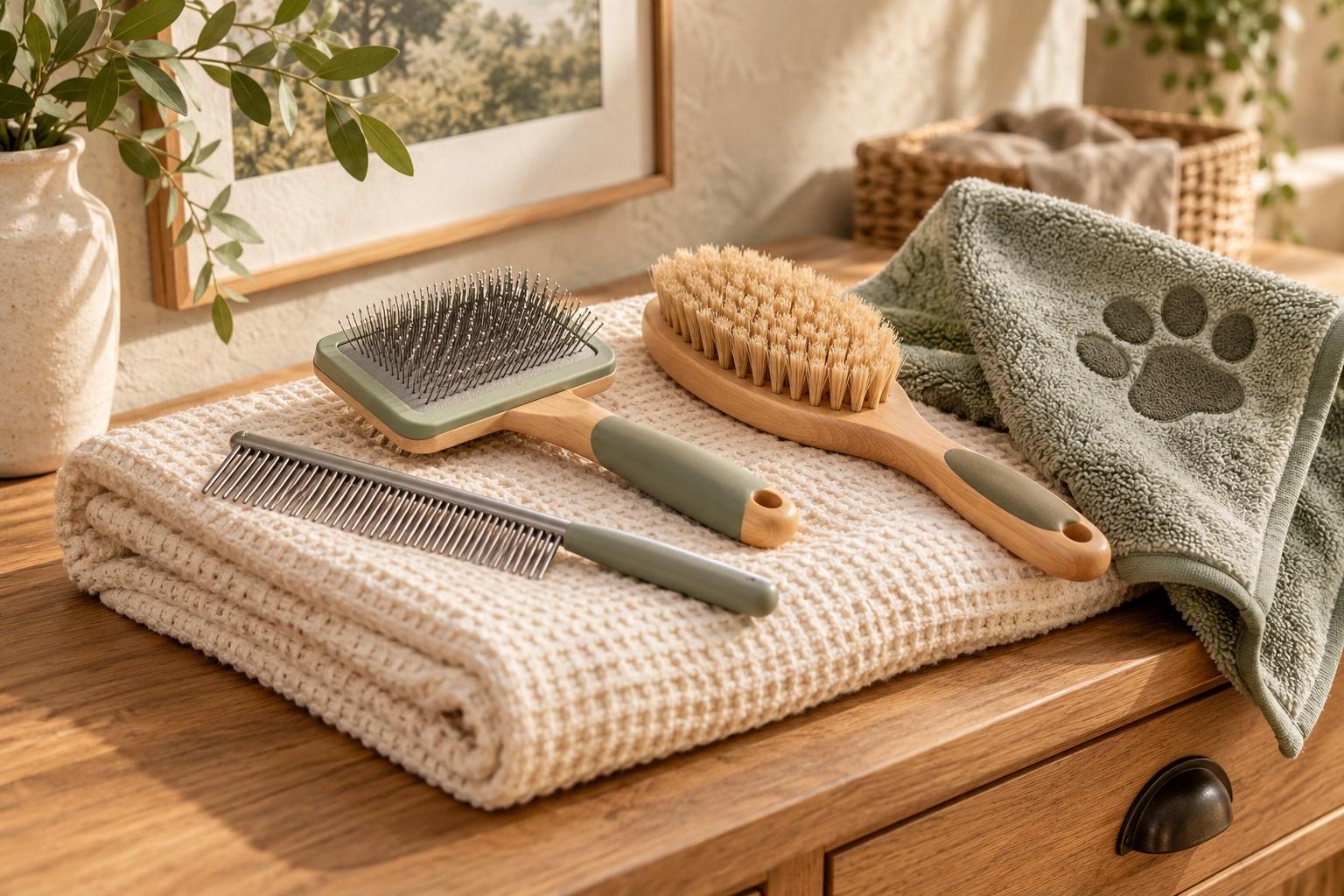
A slicker brush uses many fine bent pins set into a pad. That familiar description hides considerable variation: a broad head with short stiff pins handles differently from a small flexible head with longer pins. Selecting one by color or an all-coats label skips the details that influence how it moves through the coat and feels in the hand.
Pin length and density change the task
Longer pins may reach farther into a fuller coat, but reach is not a reason to push harder. Dense pins contact more strands at once, while wider spacing offers a different degree of engagement. Compare the coat's length and fullness with the maker's intended use. If you cannot tell whether the brush suits your pet, ask a qualified groomer to show an appropriate option and technique.
The pin tips should be even and undamaged. Inspect a new brush under good light before using it, and check periodically for bent or missing pins. A pin that catches a cloth or presents a rough point deserves attention. Do not assume that plastic-tipped pins are automatically suitable for every coat; the entire layout, flexibility, and technique still determine how the tool behaves.
Head shape affects access
A large rectangular head covers a broad back efficiently, but it can be awkward around small contours. A smaller head allows more controlled placement, although it increases the number of strokes needed across a large dog. Some curved heads aim to follow body shape, yet the curvature must still suit the area being brushed. The largest tool is not always the most efficient one in practice.
Look at the edge of the pad where pins meet the frame. Hair can collect there and be difficult to remove if the housing has a deep lip. A brush that is comfortable to clean is more likely to stay in good condition. Follow its cleaning instructions and avoid soaking a cushioned pad unless the manufacturer specifically permits it, because water may remain inside the construction.
The handle deserves a trial
A brush requires repeated small movements, so handle thickness, balance, and grip texture matter. A narrow handle may invite an overly tight hold, while a very bulky one can limit control for smaller hands. If possible, hold the tool in its working position rather than simply lifting it off a shelf. Check whether the brush head feels heavy relative to the grip.
Textured grips can improve handling but may hold hair and residue around seams. A smooth cleanable transition between head and handle is useful. Avoid dangling wrist loops unless they can be kept clear and used as intended. Store the brush so pins are not crushed against heavier equipment; a protective holder or a separate compartment can preserve their alignment.
Know the limit of routine brushing
A brush is for appropriate routine coat care, not for forcing through tight mats. Stop when the tool catches persistently, the skin moves with the coat, or the pet becomes uncomfortable. Do not cut close to the skin with household scissors. A professional groomer or veterinarian can advise on difficult mats and any skin concern without turning a product choice into a home removal experiment.
Keep early sessions brief and voluntary where possible, introducing the tool before attempting a complete grooming routine. The pet's response helps identify whether pressure, location, or handling needs adjustment. A well-selected brush supports that process, but no head design makes discomfort irrelevant. Replace a damaged tool rather than trying to straighten every pin and assume it is restored.
For our approach to product claims and illustrations, see the Editorial Policy.