A nail clipper's handle may be large and reassuring while its cutting head is poorly matched to the pet. The useful comparison begins at that head: how clearly can the person see the nail, how precisely does the mechanism close, and how easily can it be positioned? Choosing equipment is separate from learning a safe trimming technique for an individual animal.
Identify the actual cutting format
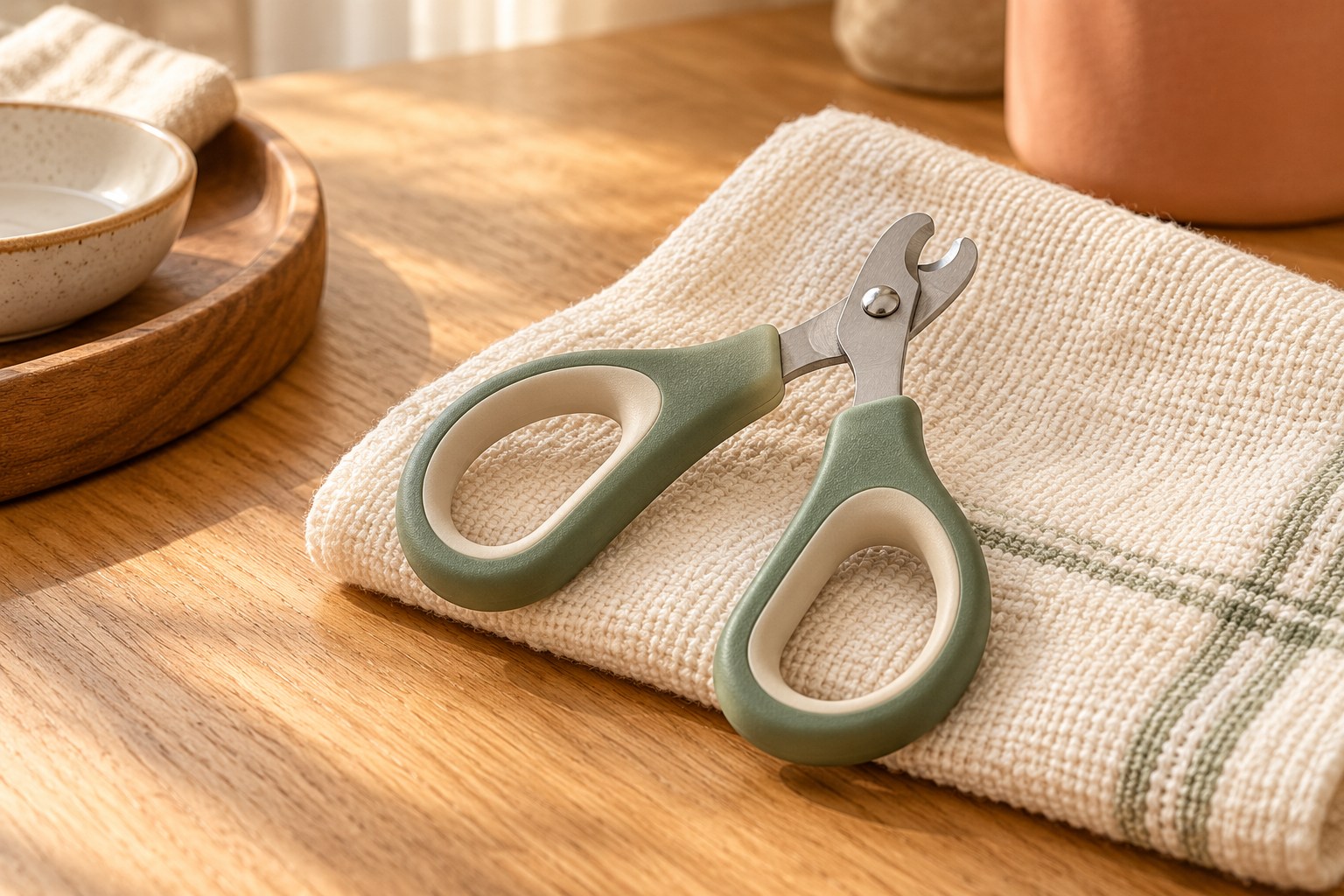
Scissor-style clippers close two opposing blades as the handles move together. Some have simple loop handles, while larger models use sprung grips. Check that the listing clearly identifies the format and intended size range. The product's weight recommendation is only one clue; the dimensions of the working head and the person's ability to control it matter as well.
Visibility around the nail is important. A broad housing or large guard may obscure the area where the blades meet. Photographs from the side and front are more useful than a closed clipper shown on a plain background. If you are unsure which size and format suit the pet, ask a veterinarian or qualified groomer to demonstrate an appropriate tool before buying a more powerful-looking model.
Inspect alignment and movement
With the tool away from the pet, check that it opens and closes smoothly according to its instructions. The blades should meet as designed without obvious sideways play or rough damage. Do not test sharpness on a pet's nail simply to assess the purchase. A defective or poorly aligned new tool should be returned or replaced rather than compensated for with extra squeezing force.
Springs can reduce the effort of reopening handles, but they add a part to inspect. Look for a spring that stays securely seated and does not create a pinch point in the normal grip. A storage lock should hold the empty tool closed as intended. Test the lock before storing it, and keep all sharp equipment away from children and pets.
Treat guards as an aid with limits
A stop plate can change how a nail is positioned in the head, but it does not identify living tissue or guarantee a safe amount to trim. Nail structure and visibility vary. Do not use the presence of a guard as permission to proceed without individual instruction. Ask a professional to explain the relevant anatomy and handling, particularly if the person is inexperienced or the animal is difficult to manage.
The same principle applies to lights and magnifiers. They can alter visibility but cannot turn a product into an automatic decision-maker. Avoid buying features to overcome uncertainty that should instead be resolved through guidance. If the pet is distressed, painful, or resists handling, stop and seek help rather than trying a succession of stronger clamps or restraints.
Think about grip and maintenance
Handle loops should allow controlled movement without forcing fingers into an awkward spread. Large padded handles may suit some hands but feel vague to others. Check the tool in its working position and keep the grip clean and dry. A simple head that can be inspected and cleaned may be more useful than a bulky decorative housing around the blades.
Follow the maker's instructions for cleaning, drying, and any permitted maintenance. Store the clippers in a designated dry compartment rather than wrapped in a damp towel. Inspect blade edges and fasteners regularly, especially after a drop. If performance changes, replace or service the tool through approved means instead of improvising a home sharpening method that may alter its geometry.

For our approach to product claims and illustrations, see the Editorial Policy.