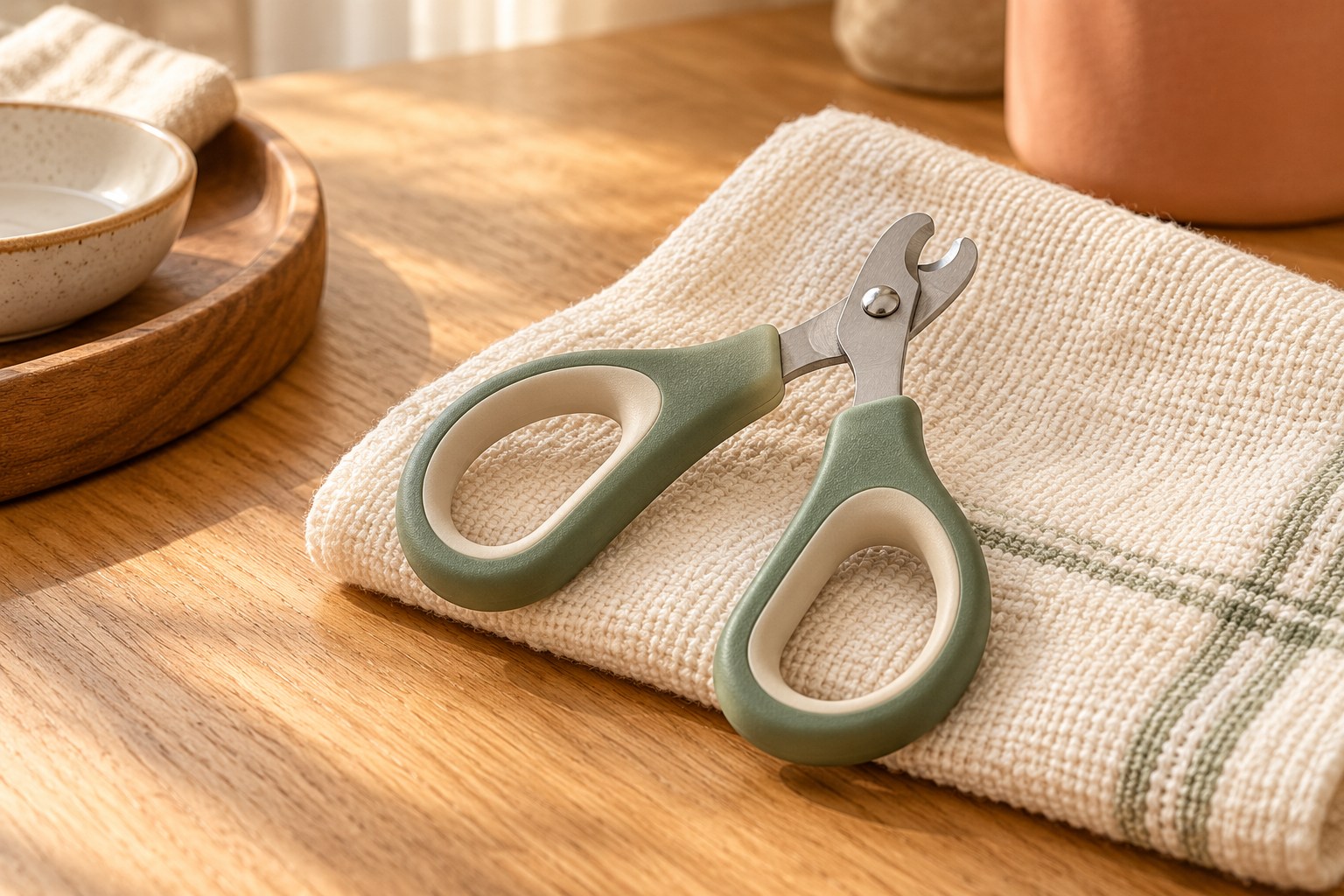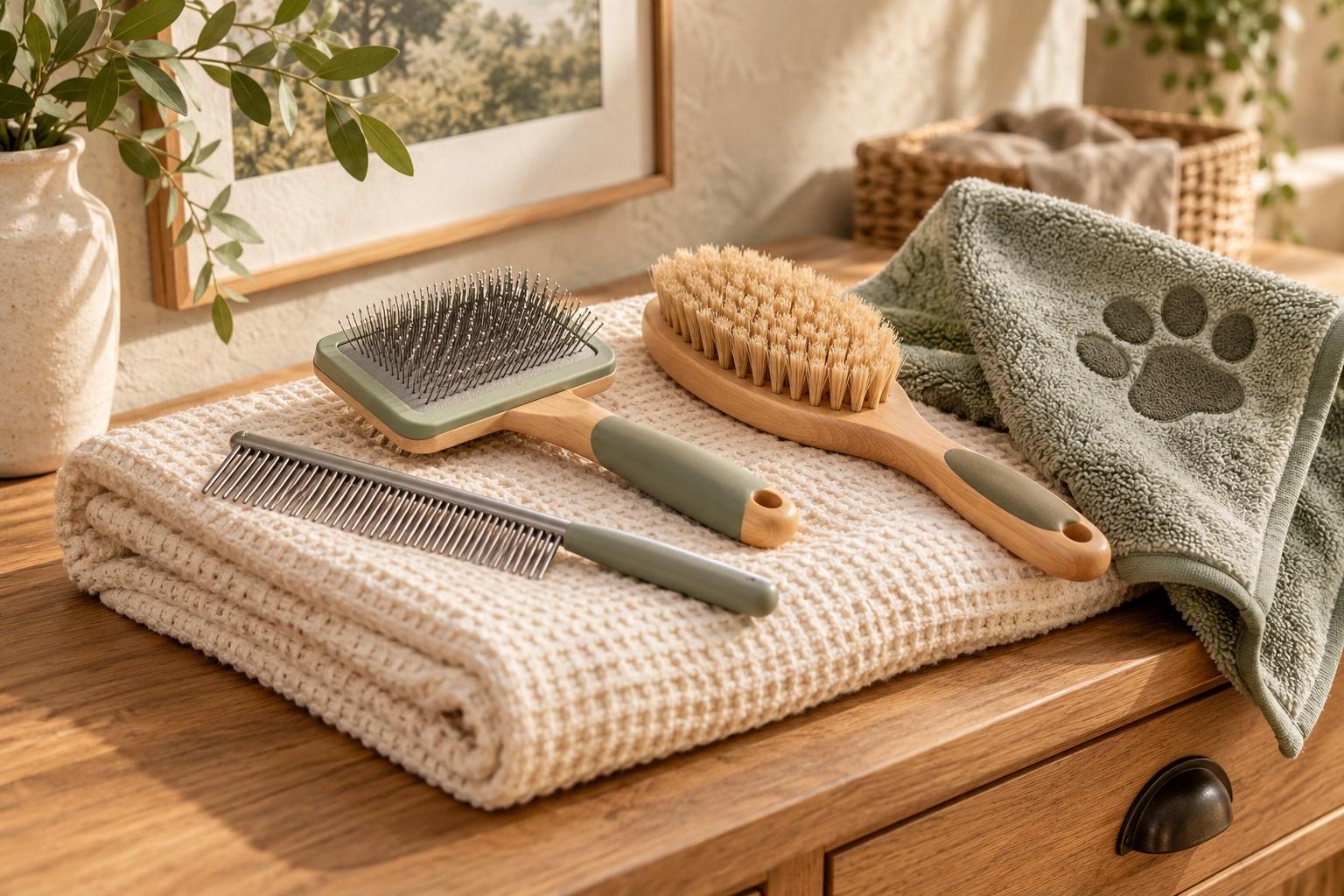
A long-haired cat does not necessarily need a drawer full of grooming tools. It needs equipment appropriate to its coat and a routine that respects comfort and handling limits. A small kit is easier to inspect and clean, and it makes it clearer which tool serves which purpose. Begin with guidance from a qualified groomer or veterinarian familiar with the cat's needs.
Give each tool one role
An appropriate brush and a suitable comb may cover distinct parts of a routine, but the exact types should follow coat structure and instruction. Choose a brush head that can be placed accurately on the cat rather than the largest available. A comb with clearly finished teeth can help with an instructed checking or finishing task when used gently and without forcing through resistance.
Avoid buying several sharp or aggressive-looking tools simply because they are marketed for heavy coats. A product's name does not establish that it is suitable for home use on your cat. If you do not know what a tool is intended to do or how to use it safely, ask before adding it. Keeping the kit small makes that uncertainty easier to notice.
Build the handling setup
A low stable surface in a quiet familiar space may be more manageable than an elaborate raised grooming station. The cat should have secure footing and an appropriate way to move away. Do not leave an animal unattended on an elevated surface. Keep the tools within reach before starting so the session does not become a sequence of interruptions while you search through drawers.
A washable towel or compatible non-slip mat can define the area if it lies flat and the cat accepts the texture. Avoid loose loops, dangling straps, and clutter around paws. Introduce new equipment separately from a long grooming session. A cat investigating a brush calmly is a useful first step; immediately attempting the full coat may create an unnecessarily difficult introduction.
Keep sessions manageable
Work within the cat's comfort and the technique demonstrated by a professional. Stop when the tool catches, the skin moves with the coat, or the cat becomes distressed. Dense mats are a reason to obtain qualified help, particularly when they lie close to the skin. Household scissors and improvised cutting methods are inappropriate solutions to a difficult grooming moment.
A complete routine may be divided into shorter opportunities rather than performed all at once. Product convenience should support that flexibility: a clean brush and comb in a small accessible tray are easier to retrieve than a tightly packed travel case. Do not interpret tolerance of one area as permission to continue everywhere. The cat's response and any professional instructions guide the pace.
Clean the kit and reassess it
Remove hair from tools and follow their individual washing instructions. A cushioned brush may need a different method from a one-piece comb. Dry everything before storage, and keep it separate from damp towels. Inspect tips and teeth under good light for bent, rough, or missing parts. A damaged tool should not stay in use because its handle still appears sturdy.
Retain the names of tools that work well, but reassess as coat condition or handling needs change. If grooming becomes unexpectedly difficult or the cat seems sore, seek veterinary advice rather than adding a more forceful brush. A compact kit is successful when it supports a suitable routine with a comfortable animal, not when it contains every product described as essential.
For our approach to product claims and illustrations, see the Editorial Policy.