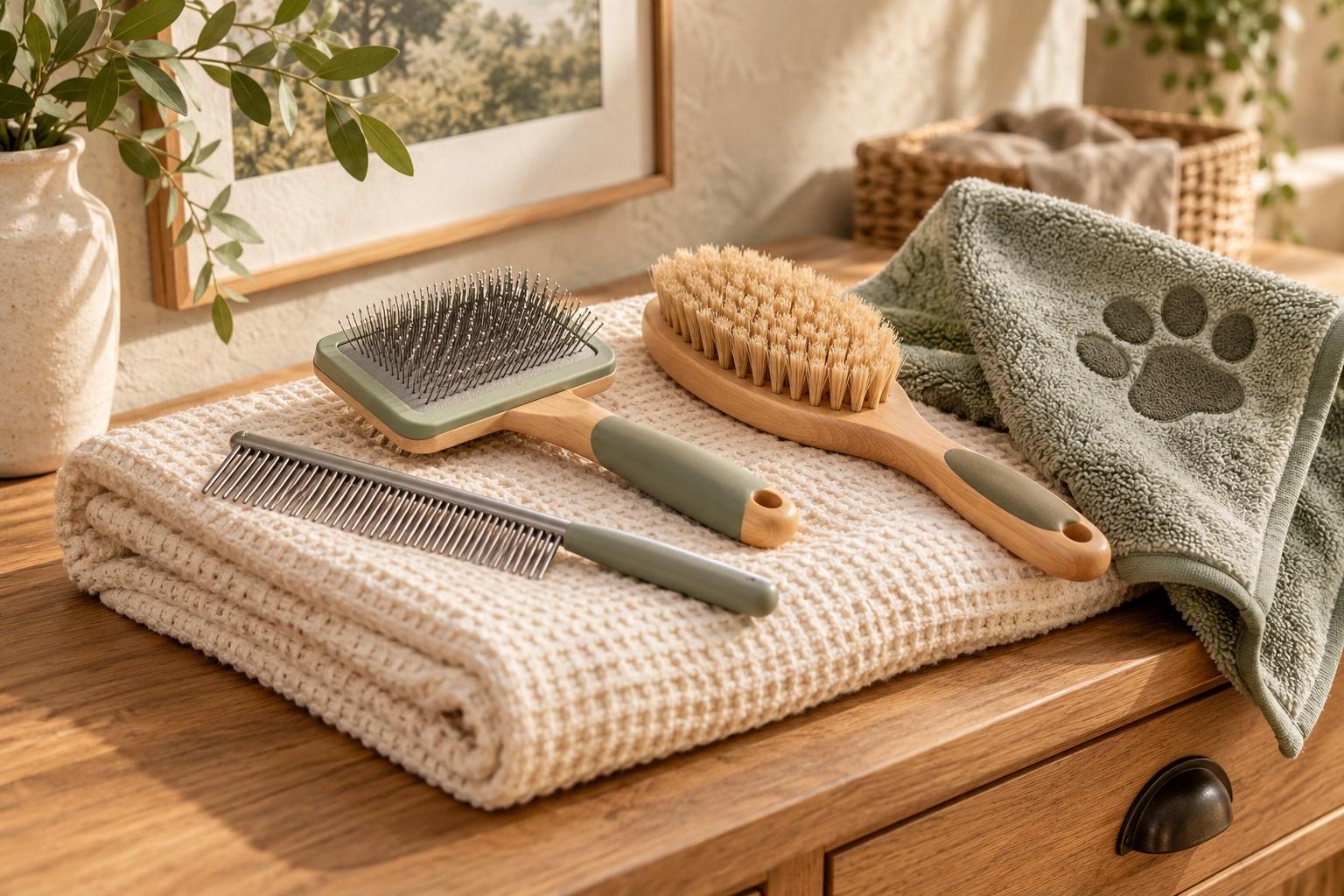
A bristle brush presents a dense field of flexible fibers rather than widely spaced metal pins. It is often chosen for surface grooming and finishing, but the useful task depends on the coat and the brush's construction. It should not be treated as an all-purpose answer simply because it looks less technical than other grooming equipment.
Define the job first
If the goal is to tidy the visible surface after an appropriate coat-care routine, a bristle brush may be relevant. If the goal is to investigate tangles beneath a thick coat, the same brush may provide little information. Ask a qualified groomer which role it should play for your pet. A smooth-looking top layer does not establish that every part of a longer coat has been cared for.
Compare bristle length and stiffness using the maker's description and, where possible, a physical sample. Short dense fibers respond differently from longer flexible tufts. Mixed pin-and-bristle heads combine two working surfaces but can make cleaning more complicated. Choose the construction because it serves a specific need, not because a combination tool appears to provide twice the value automatically.
Examine the base and edges
Look for evenly mounted tufts and a head without rough borders. A rigid frame can contact the pet if the bristles compress completely, so the way the brush is held matters. Inspect new tools for loose fibers and stop using a brush that sheds significant material or develops a broken base. Working parts should remain securely attached during ordinary handling and cleaning.
The base determines how easily hair and residue can be removed. Deep holes between tufts may need a designated cleaning method, and wooden-backed tools may have different moisture limits from molded plastic. Read the instructions before immersion. A rinse that seems convenient can harm a construction not intended to be soaked, and trapped moisture may not be visible from above.
Consider control and session length
A lightweight brush can be easier to place with gentle contact than a heavy ornamental handle. Check the balance in the position used for grooming, with the wrist relaxed rather than bent sharply. A broad head covers more surface per movement but may be clumsy on a small pet. A compact tool can improve control even when it requires a few more passes.
Keep sessions within the pet's comfort and an appropriate routine. Do not repeatedly brush one area to chase a particular glossy appearance. If there is discomfort or a change in skin condition, stop and obtain suitable advice. The brush is a maintenance tool, and appearance alone should not override the animal's response or encourage excessive contact.
Store for the next use
Remove loose hair after each session using a method that does not pull out the tufts. Clean according to the brush's materials and allow it to dry before putting it in a drawer or closed case. Store the head where heavier metal tools cannot crush the bristles. A small separate compartment often protects a simple brush more effectively than an elaborate grooming bag.
For several pets, organize tools so each routine is clear and equipment can be cleaned appropriately between use. Labels on a storage container may help without adding anything to the working head. Retain the brush model information if it suits the coat and the handler well. Replacement should preserve the useful stiffness and size, rather than copying only the color or handle decoration.
For our approach to product claims and illustrations, see the Editorial Policy.