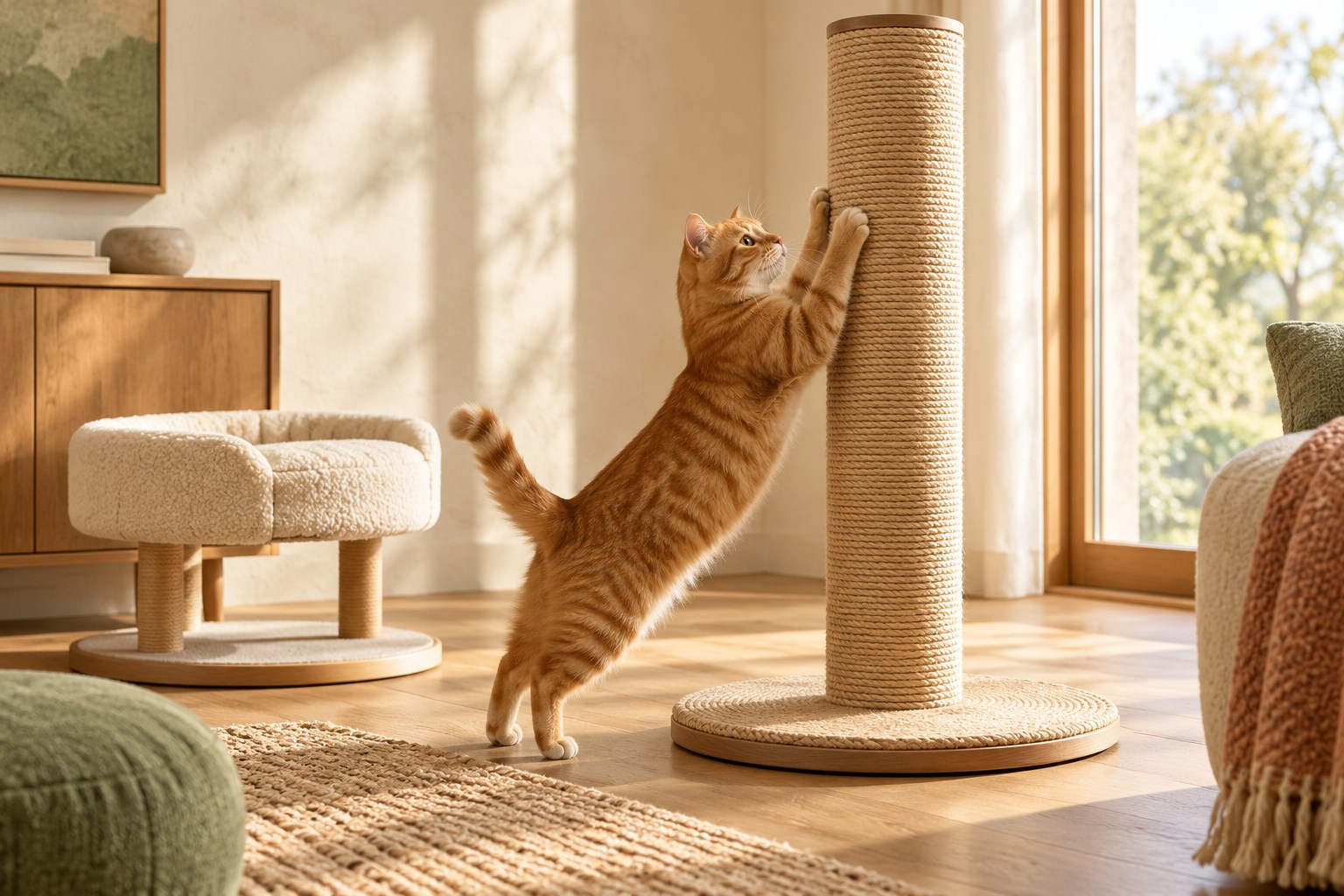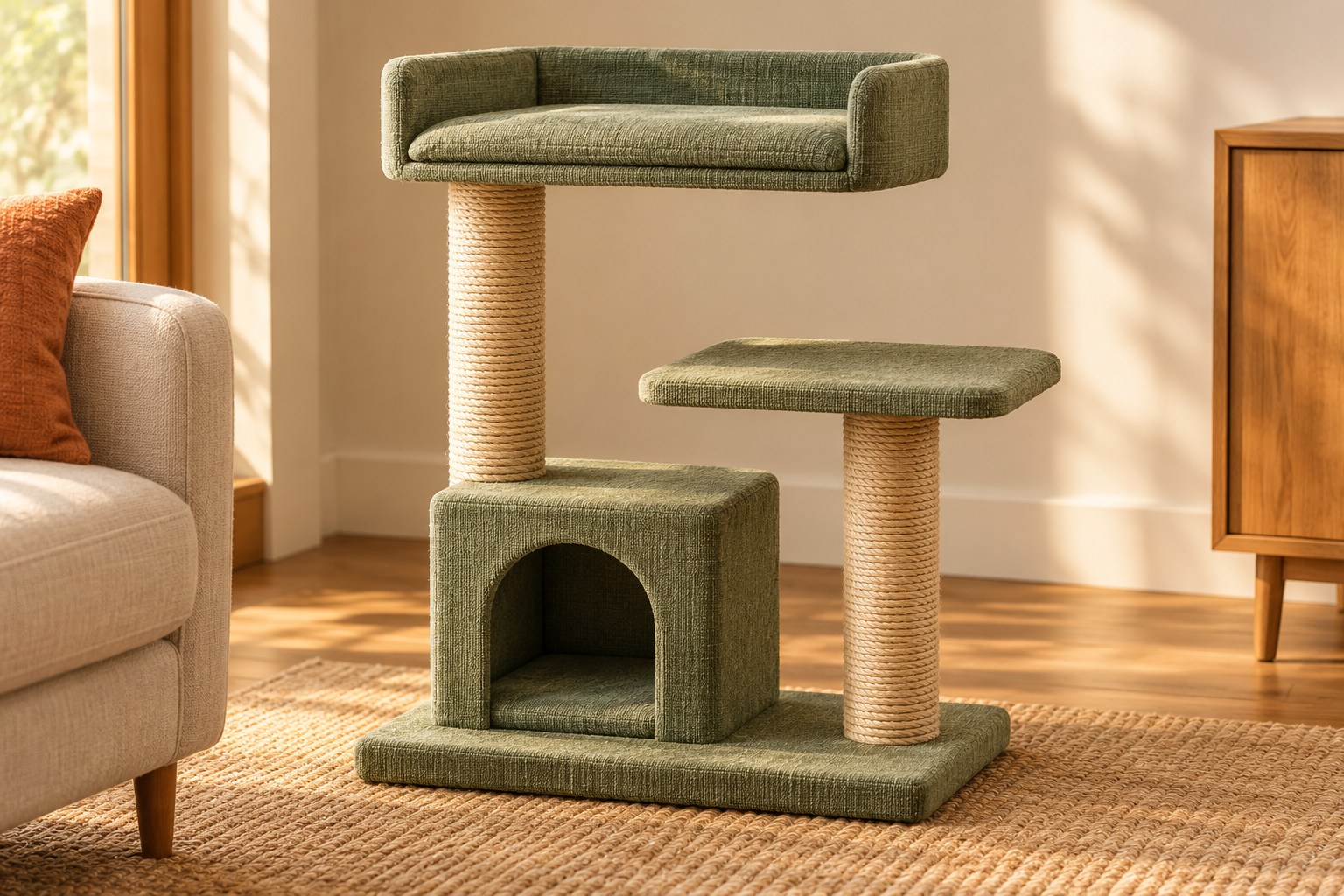
A large cat tree is not always a tree for a large cat. Overall height and floor footprint can conceal small platforms, narrow cubby entrances, and closely spaced posts. A long-bodied cat may fit on a shelf while still having too little room to turn, and a broad cat may avoid an opening that looks generous in a photograph.
Measure the usable spaces and read the stated limits at component level before choosing.
Separate outer size from usable area
A platform listed as wide may include a thick rim or a post occupying one corner. Request interior measurements where they are not shown. Compare them with the cat’s ordinary relaxed outline and turning space on a familiar surface, without forcing the cat into a measuring pose. A hypothetical cat that comfortably occupies a broad windowsill may need a similarly useful platform, not a taller tree with several smaller shelves. More levels do not compensate for inadequate individual areas.
Check openings in two directions
A cubby entrance needs adequate width and height, and the interior must also allow the cat to move. A large entrance leading immediately into a shallow compartment can still be awkward. Avoid relying on a breed label or a photograph of an unidentified cat. Consider whether an open platform is more useful than an enclosed compartment for the individual cat. If a narrow opening is part of the only route upward, it can make the entire upper structure inaccessible.
Read the load information precisely
Look for clearly stated limits for shelves, hammocks, enclosed sections, and the whole structure. Flexible fabric components may have different limits from rigid platforms. Ask the manufacturer when the information is ambiguous, and do not assume a single total rating applies equally to every projecting part. Dynamic movement also affects the structure, so follow the intended use and anchoring guidance. Do not test a shelf by placing a person on it or exceeding its documented conditions.
Assess post spacing and leverage
A broad platform supported far to one side can create considerable leverage when the cat lands at its outer edge. Inspect the base footprint and how posts connect to upper levels. Close posts may reduce clear movement space, while a wide unsupported span may flex. Choose a documented design rather than adding an improvised extension to a smaller tree. The floor and any required wall restraint are part of the stability assessment.
Plan a route that fits the body
Check whether the cat can step between levels without squeezing around a post or making a sharp turn on a narrow shelf. Bigger bodies need room to organize movement, not only a higher load rating. Keep landing zones clear and avoid placing the tree where curtains, cords, or an open window create hazards. A lower, broader arrangement can be more useful than a tall narrow tower if it offers comfortable access and a good view.
Consider service life and replacement
Larger components can be costly to replace, so check availability before purchase. Removable covers should refit securely, and replacement posts need the correct dimensions and fasteners. Inspect joints and platform edges regularly, especially where repeated landings occur. As the cat ages, an easier lower route may become useful even if the structure remains strong. Choose furniture that can remain accessible and maintainable rather than relying solely on an impressive advertised maximum size.

For our approach to product claims and illustrations, see the Editorial Policy.