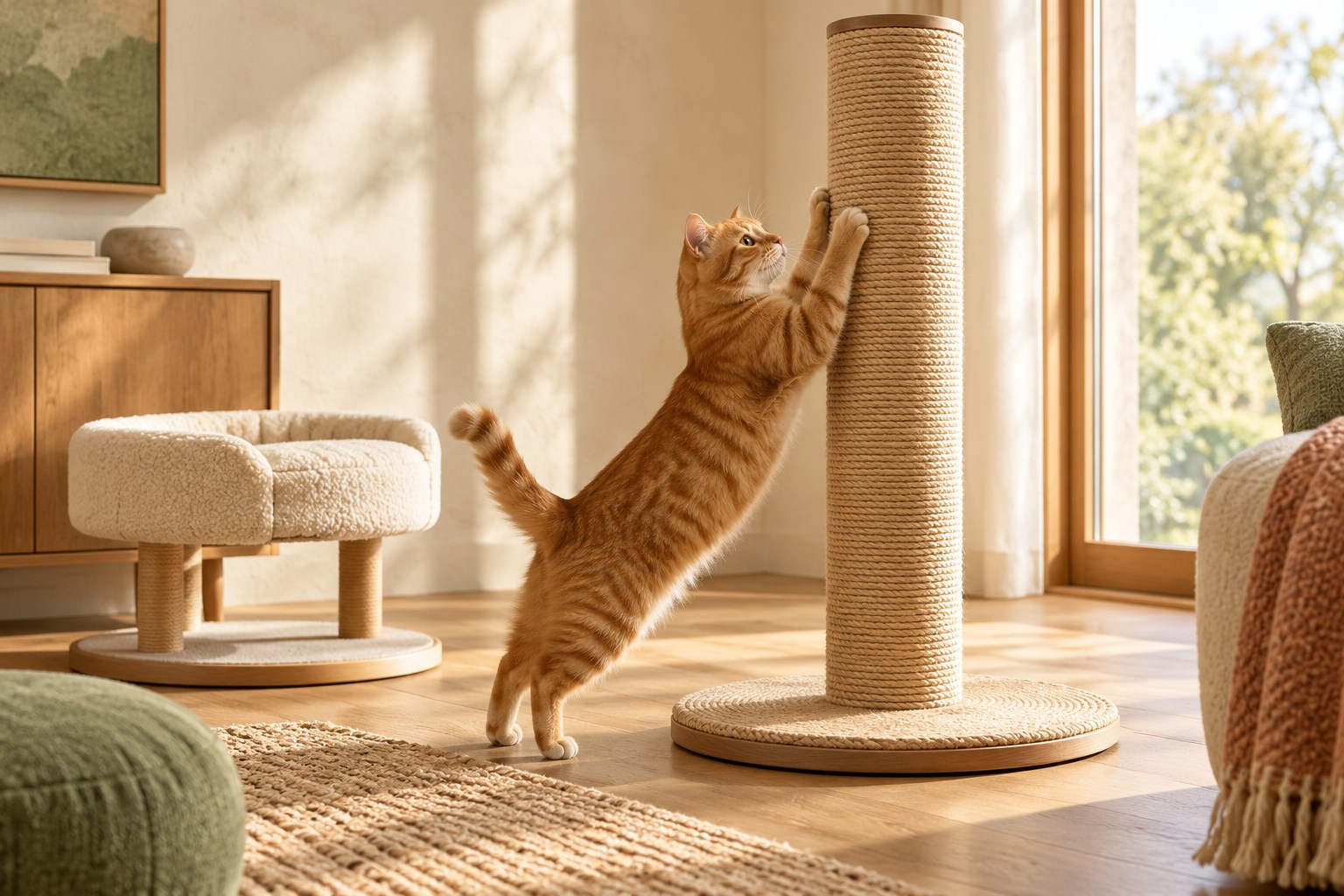
A scratching post is a surface a cat pulls against, not simply a textured ornament. Its usefulness depends on whether the cat can reach, stretch, and apply force while the structure stays predictable. A short post on a narrow base may be ignored even when the covering feels appealing to human fingers.
Start by watching the direction and height of existing scratching, then choose a stable surface that fits that movement.
Measure a useful scratching height
A cat scratching vertically often extends upward through the body before dragging the claws down. Look for a usable covered length that accommodates that stretch without forcing the paws against a decorative cap. The advertised overall height may include an unscratchable top or base. A hypothetical long-bodied cat may outgrow a small kitten post even though the rope remains intact. Choose by reachable working surface, not by a product photograph that makes scale difficult to judge.
Examine the base footprint
A broad heavy base generally offers more resistance to tipping than a light narrow one, but shape and assembly matter too. Check whether the post sits centrally or near an edge and whether the base lies flat on your floor. A thick rug can make a rigid base rock, while a slick floor may let it slide. Follow any anchoring instructions and do not improvise with loose weights that can fall or trap paws. Test the assembled structure gently before inviting the cat to investigate.
Look at how the surface is secured
Rope should sit firmly without large loose loops, and fabric should not peel away at the edges. Inspect transitions near the top and bottom where paws may catch. Avoid exposed staples, screws, and frayed strands hanging freely. Replace or repair the covering using the manufacturer’s supported method rather than wrapping any available cord around it. Material texture influences preference, but secure attachment is what lets the cat use that texture without the surface shifting under a pull.
Place it in a meaningful location
Cats may scratch after waking or near routes they use frequently. A post hidden behind a rarely opened door may be less useful than one beside an established route. If furniture is already being scratched, place an appropriate alternative near that area initially rather than across the room. Keep the base clear enough for the cat to approach and brace comfortably. Avoid turning the post into a crowded storage point for bags or laundry, which changes both access and stability.
Introduce without forcing contact
Let the cat investigate and reward voluntary interest. Do not take the paws and scrape them down the post, since that can make the object unpleasant. If the cat prefers horizontal scratching, a vertical post may need to be offered alongside a horizontal surface rather than replacing it. Observe use over several days and change one feature at a time, such as location, before concluding that the texture is wrong. Individual preference is more useful evidence than a universal claim about what all cats love.
Maintain the structure as it wears
Some surface wear is expected, but loose coverings, exposed fixings, and a post that twists at its joint need attention. Tighten only the fasteners identified in the instructions and inspect the base regularly. If replacement parts are available, compare their cost and dimensions before purchase. Keep useful scent and familiar placement in mind when replacing an old post: introducing the new one beside the old briefly can make the change less abrupt, provided the worn item is still structurally safe.

For our approach to product claims and illustrations, see the Editorial Policy.