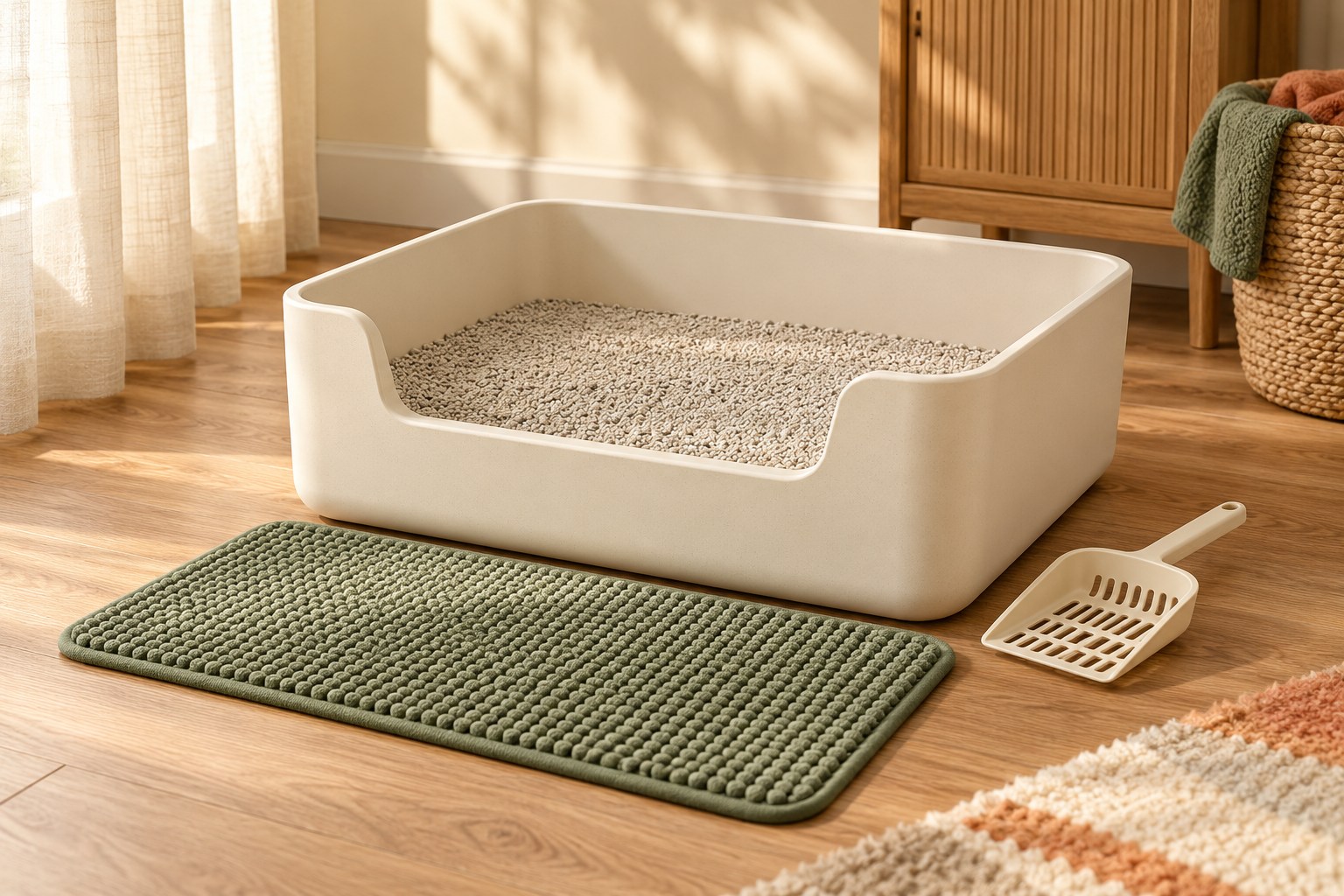
A liner is intended to separate litter from the box surface and sometimes simplify emptying. In practice, the cat digs directly above it, so loose folds and weak material can become part of the working surface. Some households find liners convenient; others find holes, bunching, and trapped litter create more work.
Assess the liner with the actual box and the cat’s behavior rather than assuming it is a necessary accessory.
Start with a compatible shape
A rectangular liner may not sit neatly in a deeply rounded or tapered box. Excess material gathers in corners, while an undersized liner can pull away from the rim. Check dimensions at the base and the top, including any clips or rim needed to hold it. A hypothetical high-sided box with a low doorway may leave a loose liner edge near the entrance unless the product is designed for that geometry.
Inspect how the liner is retained
Some liners fold over the rim; others use a retaining frame or drawstring arrangement. Follow the product instructions and keep loose cords away from the cat. The liner should not slide down when the cat digs. Do not add tape or improvised clips inside the box where pieces can detach or create sharp contact points. If secure fitting requires repeated modification, a compatible liner or an unlined box may be more practical.
Consider digging and claw contact
A cat that digs deeply may puncture a liner even when it is marketed as durable. Tears can let litter collect between the liner and box, making removal less straightforward. Avoid interpreting thicker material as a guarantee. Observe a short trial and inspect beneath the liner when changing it. Do not discourage normal digging simply to preserve an accessory. The accessory should fit the cat’s use of the box rather than asking the cat to protect the accessory.
Separate lifting from safe carrying
A drawstring can help close a liner, but it is not automatically intended to lift the full weight of used litter. Read the stated handling method and support the load as directed. Plan where the filled material will go before loosening the rim. A heavy sagging bag can spill or tear if carried by a narrow edge. Dispose of litter and liner according to local rules, checking material claims rather than assuming a compostable label permits disposal with pet waste.
Compare the complete maintenance sequence
Time and effort include fitting the liner, smoothing corners, checking tears, emptying, and maintaining the box beneath. A liner does not remove the need to inspect and care for the box itself. If moisture or debris becomes trapped below, follow the manufacturer’s cleaning and drying guidance. Compare a short trial with the unlined routine while keeping other variables consistent. The simplest option is the one that remains dependable over repeated changes.
Watch the cat’s response
Rustling film, shifting folds, and a changed floor texture may affect an individual cat’s willingness to use the box. Keep a familiar suitable option available during a trial where practical. Do not repeatedly place the cat inside to make the new setup familiar. Stop the trial if the liner becomes loose or damaged. New avoidance or other toileting changes warrant veterinary attention and a review of the entire setup, rather than assuming the liner is the only possible cause.
For our approach to product claims and illustrations, see the Editorial Policy.