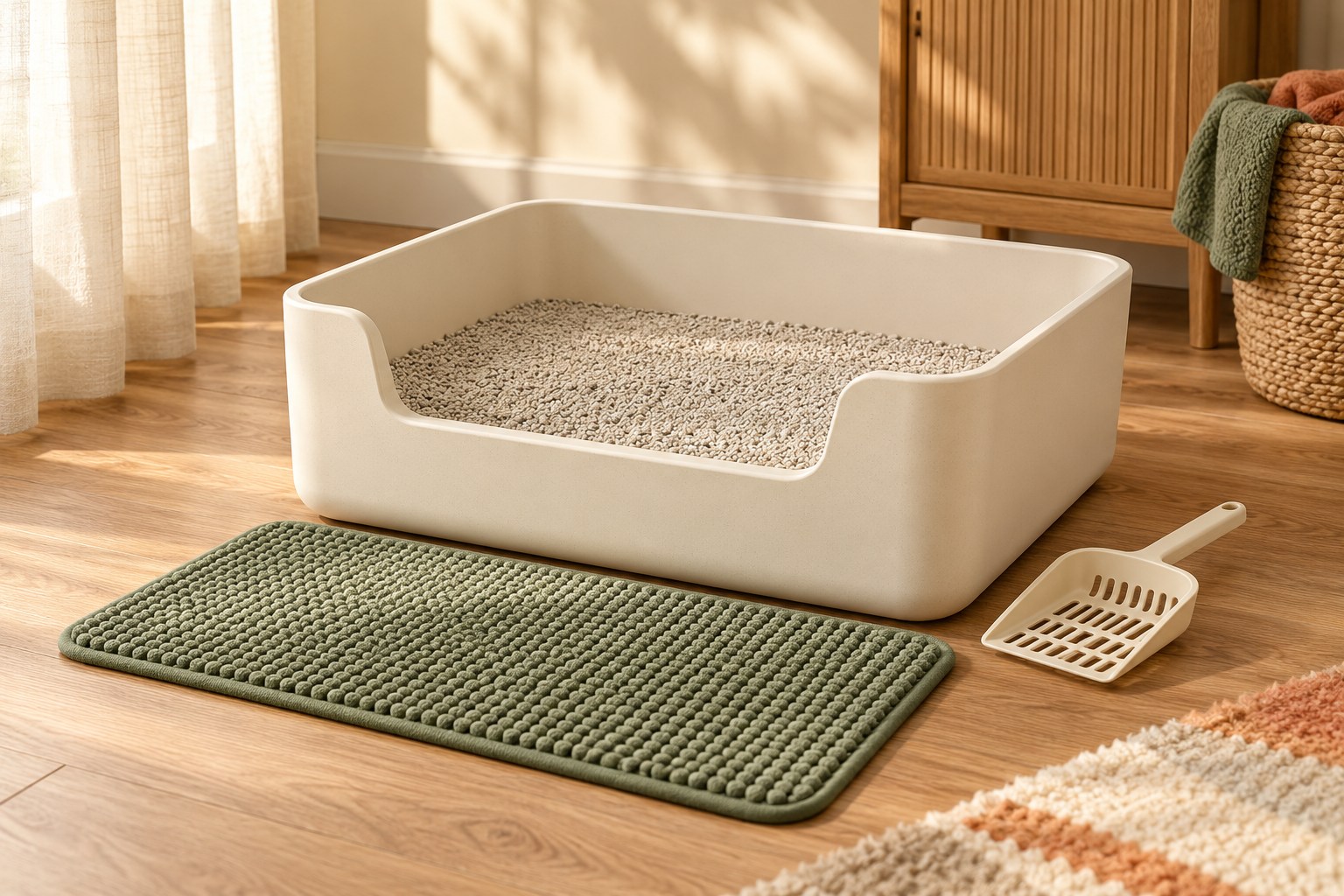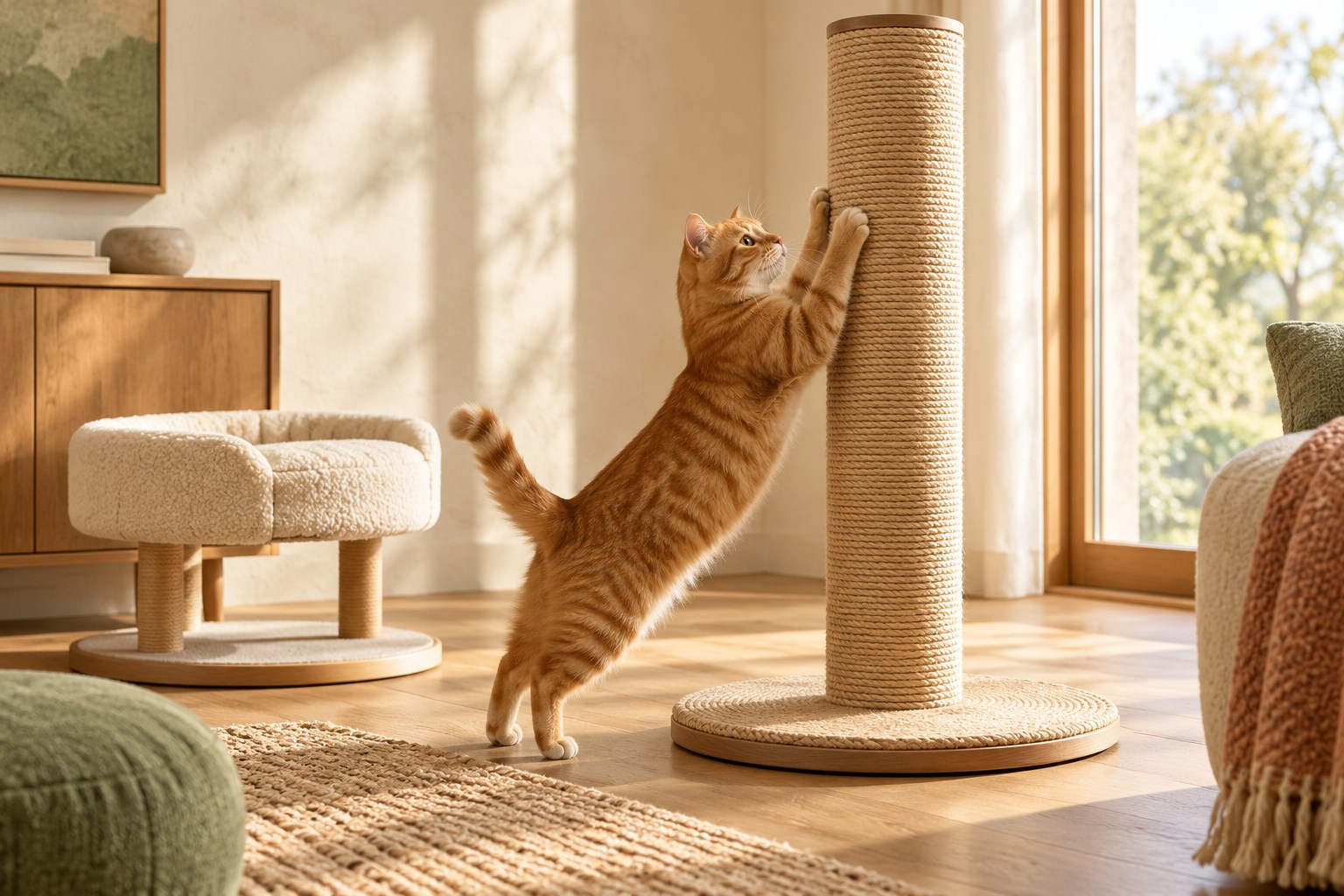
Not every cat wants to reach upward to scratch. Some prefer a horizontal surface that lets them stand over the material, brace with the rear feet, and pull backward. A horizontal scratcher can meet that preference, but a tiny lightweight pad may slide away before the cat can settle into the motion.
Observe where the paws and body go, then choose usable area and stability before choosing a decorative shape.
Give the whole movement room
Measure more than the space between the front paws. The cat needs room to approach, stand, and shift weight without stepping off a narrow platform. A broad rectangular surface may suit a large cat better than a small sculpted shape, even if the latter has a similar advertised length. Check the actual scratchable portion, excluding thick decorative borders. A hypothetical cat scratching a wide rug edge may be responding partly to the room it offers, not only to the rug’s texture.
Control sliding without blocking access
A tray or nonslip backing can help keep a pad from moving, but it must work on the floor you have. Some backings grip hard floors but move on carpet; raised trays can rock if their feet are uneven. Place the product flat and apply a gentle hand pull before use. Avoid sticking down a replaceable pad with an adhesive that the manufacturer does not support, especially where residue or detached pieces could become accessible to the cat.
Compare flat and rimmed designs
A rim can contain some cardboard fragments and hold an insert in place. It can also reduce usable width or make the entry edge awkward for a cat that wants a low surface. A flat mat offers easy approach from every side but may scatter more debris. Check whether an insert can be flipped and whether replacements are available in the exact size. A tray with unavailable refills can become wasteful long before the tray itself wears out.
Choose a location that supports use
Place the scratcher on a route the cat already uses, near an existing scratching area, or beside a favored resting zone without blocking movement. Avoid a noisy appliance corner if the cat avoids it. Give the surface enough clear space that a wall or chair leg does not prevent the normal pulling motion. If the household includes several cats, consider more than one scratching location so access is not controlled by a single narrow approach.
Observe texture preference separately
Horizontal cardboard, woven sisal, and firmly secured fabric create different resistance under the claws. Compare one or two suitable options rather than changing location, shape, and texture all at once. Reward voluntary use and protect vulnerable furniture with appropriate barriers while the alternative becomes established. Do not force the paws onto the material. Scratching is normal behavior; the goal is to offer a workable outlet that fits the cat’s chosen orientation.
Replace before structure fails
Loose crumbs alone do not always mean the scratcher is finished, but a collapsed center, peeling backing, or large detached pieces can change the experience. Follow the product’s maintenance guidance and remove components that have become unsafe or unstable. Keep the familiar tray if it remains sound, and fit the new insert snugly. Compare the cost per usable side rather than judging only the initial price, especially if the design permits both flipping and replacement.
Compare the same surface with two supports
A cat may use a cardboard pad in a firm tray but ignore an identical insert placed loose on the floor. The difference can be movement resistance rather than texture. If you already have a compatible tray, seat the insert securely and compare voluntary use without adding scent or changing the location at the same time.
Keep the working area broad enough for the body to brace. A small insert held firmly is still small, so stability and usable dimensions need separate evaluation. This simple comparison helps identify whether the next purchase should be a different surface, a better support, or a larger format.

For our approach to product claims and illustrations, see the Editorial Policy.