In a small room, every floor object needs to earn its place. A compact cat tree can provide height and scratching space, but squeezing all functions onto a narrow column may leave unusable steps or excessive wobble. The smallest advertised footprint can also be misleading when upper shelves overhang it.
Choose the functions your cat will actually use, then fit a stable structure around those priorities.
Measure the occupied space
Mark the full assembled outline, including platform overhangs, on the floor. Check nearby door swings, drawers, and the path people use through the room. A base that fits beside a sofa may still place the top perch in a curtain or walkway. Leave a clear approach for the cat and a sensible descent area. A hypothetical corner near a window may be attractive, but blind cords and unsecured openings must be addressed independently of the furniture choice.
Prioritize one or two real functions
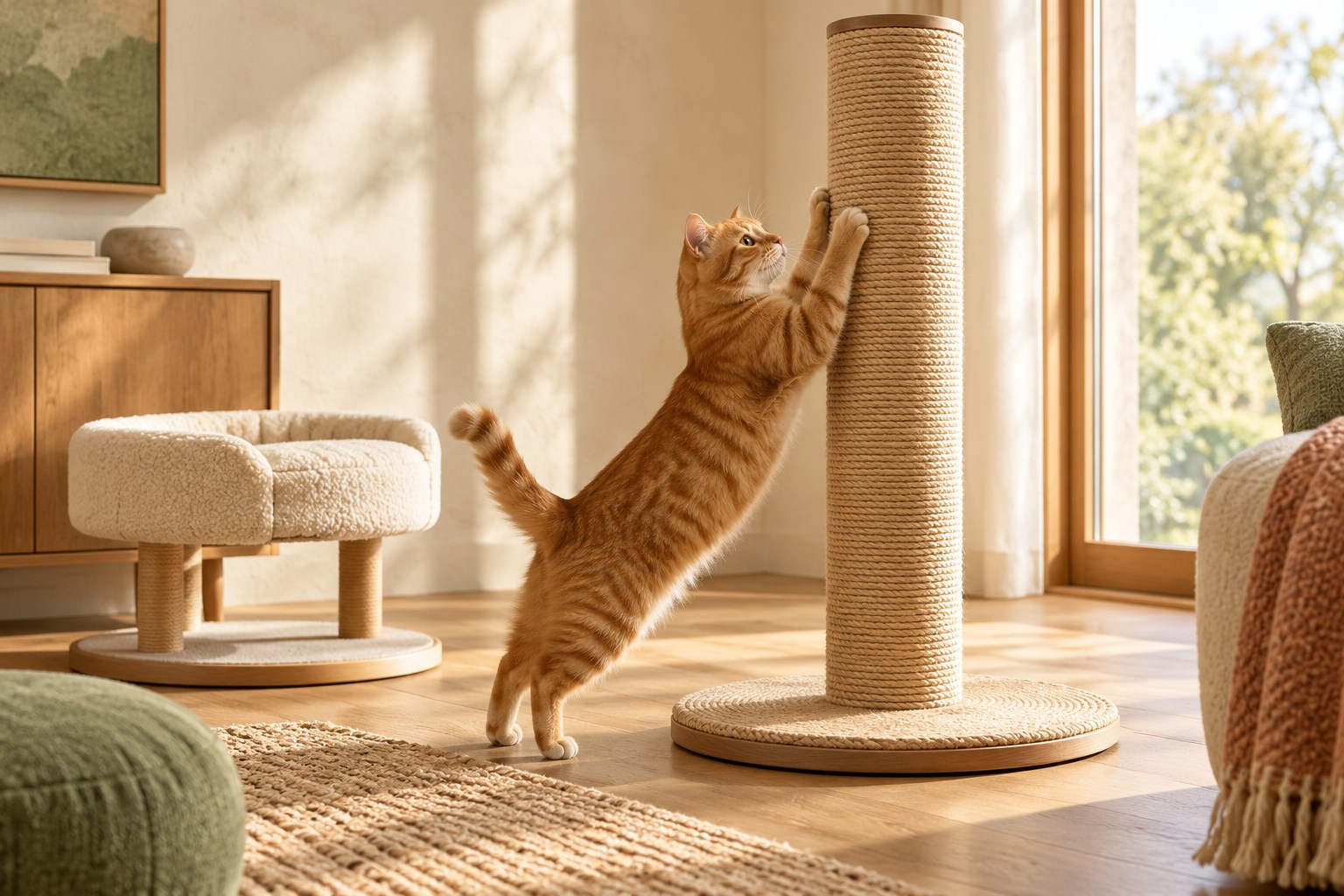
A broad observation platform and a usable scratching post may be more valuable than a tiny cubby, narrow hammock, and several token shelves. Look at the cat’s existing choices. If it prefers horizontal scratching, a separate flat pad may fit the room better than a short rope column hidden beneath the platform. Avoid buying a complex tower solely because it lists many features. Each feature needs dimensions and access that make it useful.
Compare support with height
A narrow base becomes more demanding as height and side projection increase. Read anchoring instructions and component limits, and install any required restraint using appropriate fixings. Do not place a tall tree on a small table to save floor space unless the product explicitly supports that arrangement. Check how the base sits on the actual flooring. A lower stable platform can provide a worthwhile view without the leverage of a tall cantilevered perch.
Keep the route understandable
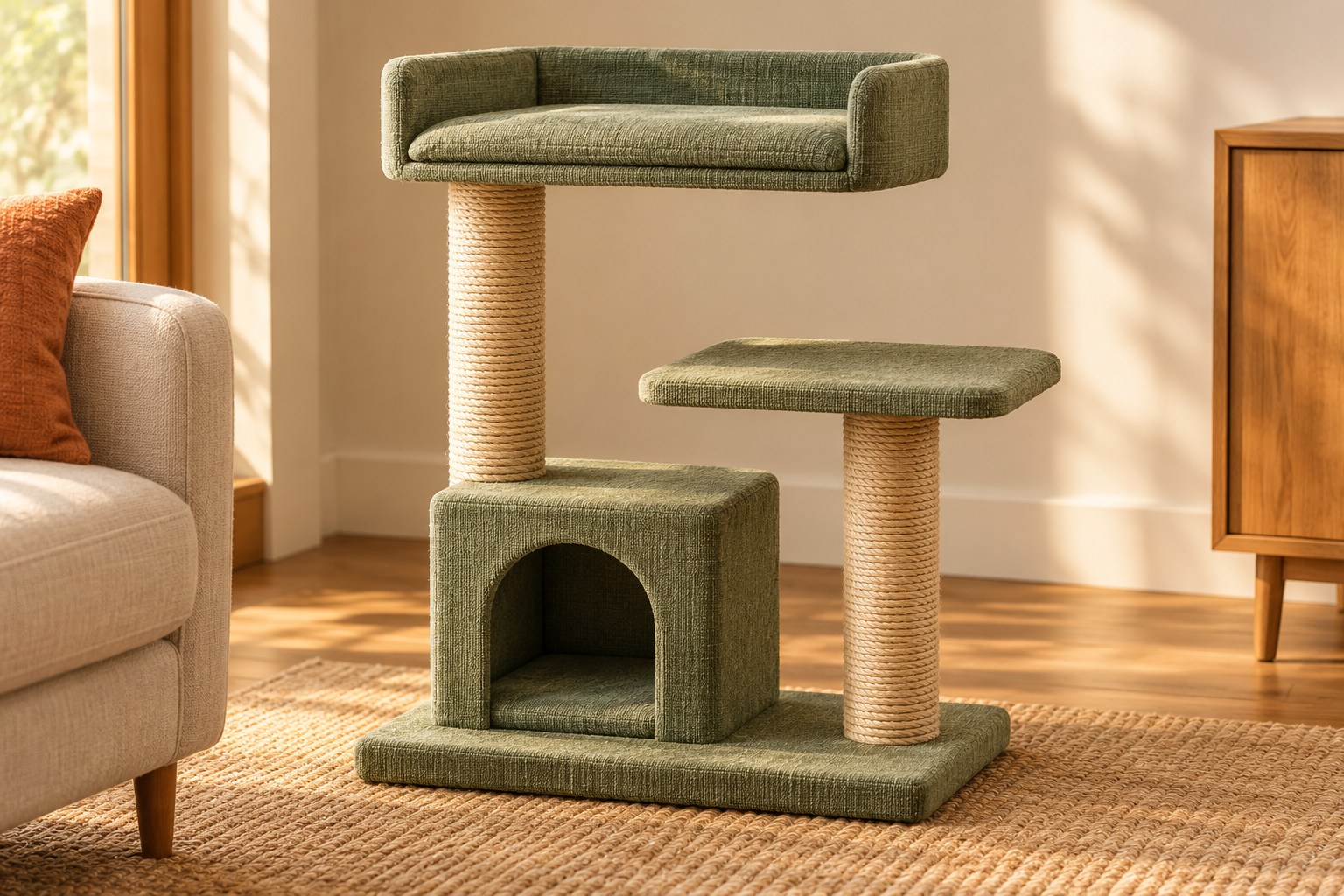
Compact trees sometimes stack platforms directly above one another with little room for the cat to move between them. Examine a side view and imagine both ascent and descent. The cat should not need to squeeze around a post or jump blind through a small opening. If nearby furniture forms an optional route, it must be stable and remain available. Avoid building the plan around a lightweight chair that is moved every day.
Consider visual openness and access
A tree with open sides can preserve light and allow the cat to see approaching people. Enclosed sections may offer privacy but should not become inaccessible dead ends, especially in a multi-cat home. Keep the base clear of stored items. The room’s limited space makes it tempting to tuck bags under platforms, yet doing so may block the very access that makes the tree useful. Choose a location that can remain dedicated to the cat’s movement.
Evaluate alternatives honestly
A stable low perch plus a separate scratching resource may use space more efficiently than one all-in-one tower. A professionally installed wall system can be another option where the wall and permissions allow, but it introduces its own structural requirements. Compare the whole arrangement, including maintenance access and replacement parts. The best compact solution may be simpler and broader than the narrow tower first suggested by a small floor plan.

For our approach to product claims and illustrations, see the Editorial Policy.