Sisal appears on both rope-wrapped posts and flat woven panels, but those surfaces do not feel identical under a cat’s claws. Rope creates repeated horizontal ridges; woven material offers a more continuous plane. The way each is attached can matter as much as the fiber itself.
Use the cat’s existing scratching choices as a starting point, then inspect the product for stable attachment and manageable wear.
Notice the direction of resistance
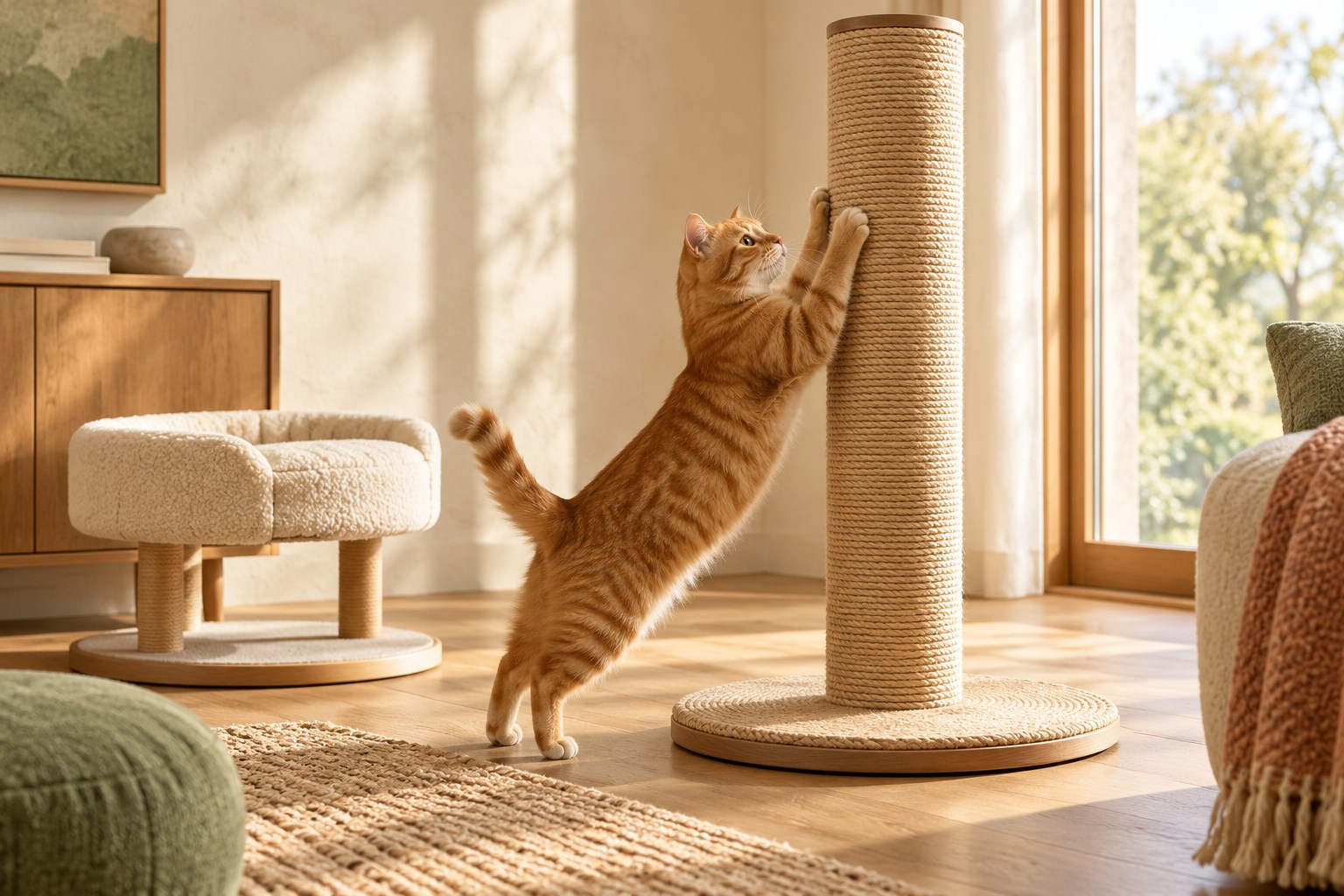
On a rope-wrapped post, claws travel across or between coils. Some cats readily use that ridged surface, while others favor a flatter panel. Woven sisal can provide uninterrupted strokes but may develop a lifted edge if poorly secured. A hypothetical cat repeatedly scratching a flat furniture panel may respond to orientation, texture, or both. Compare those features separately where possible, rather than concluding that a particular fiber is universally preferred.
Inspect rope tension and termination
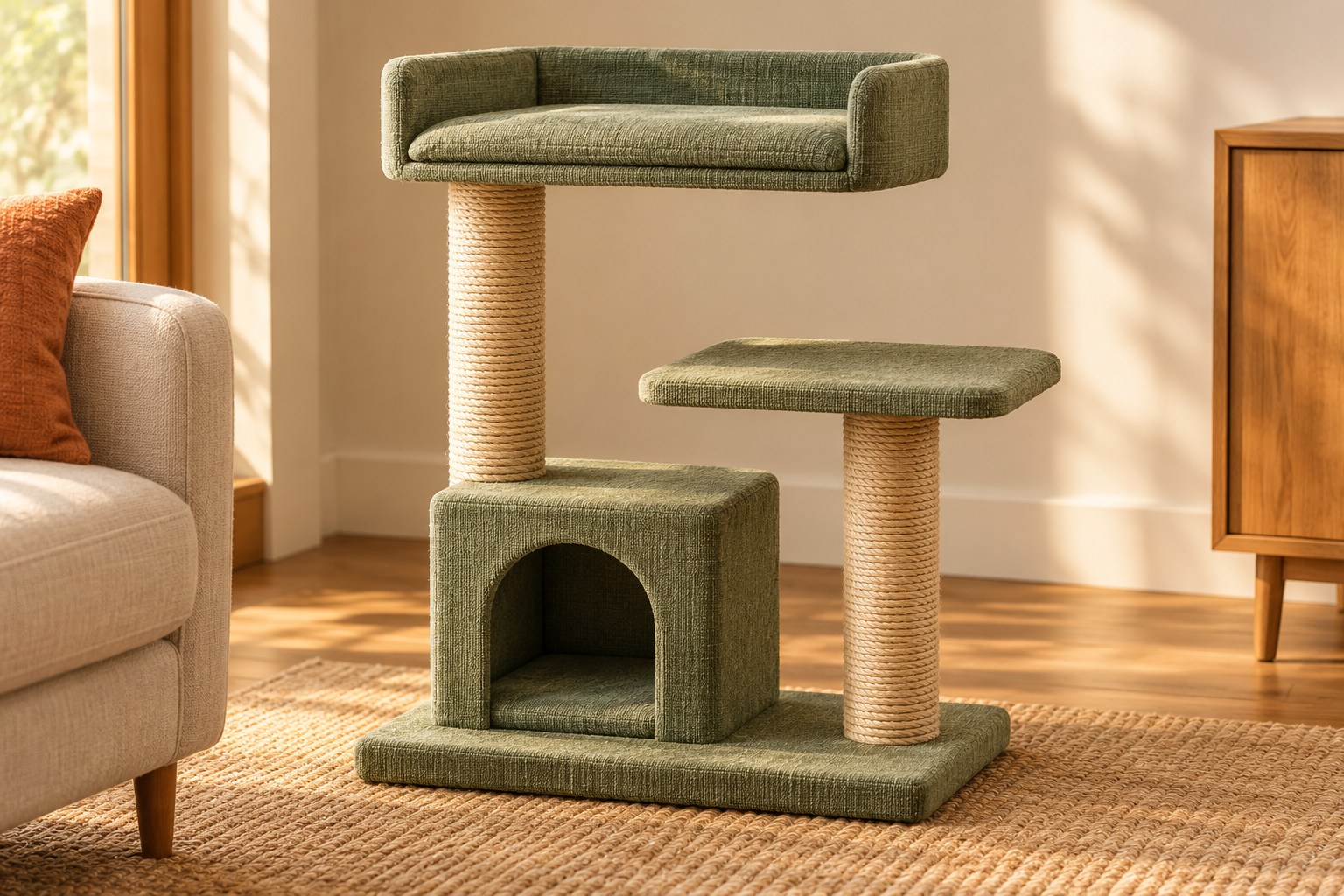
Coils should sit firmly against the post without loose loops or exposed gaps that reveal hard fixings. The top and bottom ends need secure termination. As rope wears, inspect for long strands or sections that unwind. Do not leave hanging lengths that can catch a paw. If the manufacturer supports replacement rope, follow its material and fastening guidance; arbitrary cord, adhesives, or staples can introduce a different surface and new hazards. Replacement work should leave no accessible sharp points.
Look closely at woven edges
A woven panel should be secured around its perimeter and lie flat under hand pressure. A decorative border can protect the edge, but it should not project into the scratching path. Check corners where repeated pulls may lift the fabric first. Some panels are replaceable; others are bonded permanently to the frame. Ask about supported replacement before purchase if long service life is important. A removable panel is only useful when it can be refitted firmly without leaving a gap.
Evaluate the supporting structure
A preferred texture will still be difficult to use on a wobbling post or sliding board. Assess the base, mounting system, and usable scratching area before focusing on fiber claims. A rough surface may also sit in an inaccessible place behind furniture. Give the cat room to stretch and brace, and provide appropriate orientations. If multiple cats use the home, spread scratching opportunities so one location does not become the only route to a favored surface.
Avoid making scent the whole strategy
Some products arrive with an attractant or suggest adding one. Individual responses vary, and scent does not fix an unstable or awkward surface. Introduce the object calmly and reward voluntary use. Never force the paws onto the material. If the cat ignores it, first reconsider position, orientation, and usable dimensions. A small trial panel can be a more informative purchase than a large structure chosen solely because it uses a heavily advertised fiber.
Replace based on functional wear
A fuzzy surface is not necessarily unusable, but unwrapping rope, lifted woven fabric, exposed fixings, and a loose support require action. Inspect the surface at the cat’s usual scratching height, where wear may be concentrated. Keep replacement materials and model details recorded if the system is serviceable. When replacing the entire scratcher, preserve a suitable location and offer a familiar orientation so the cat is not asked to accept a new texture, shape, and place all at once.

For our approach to product claims and illustrations, see the Editorial Policy.