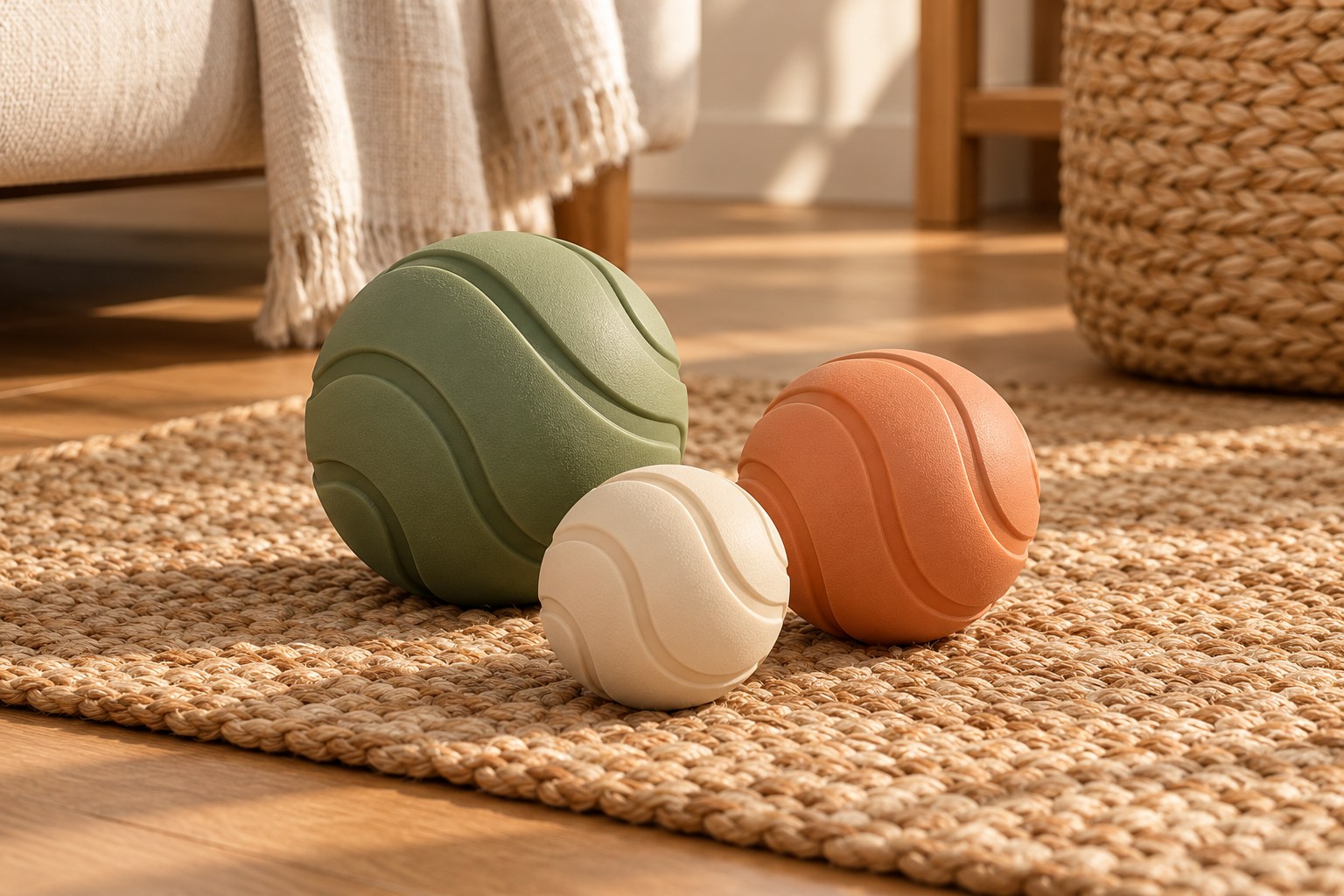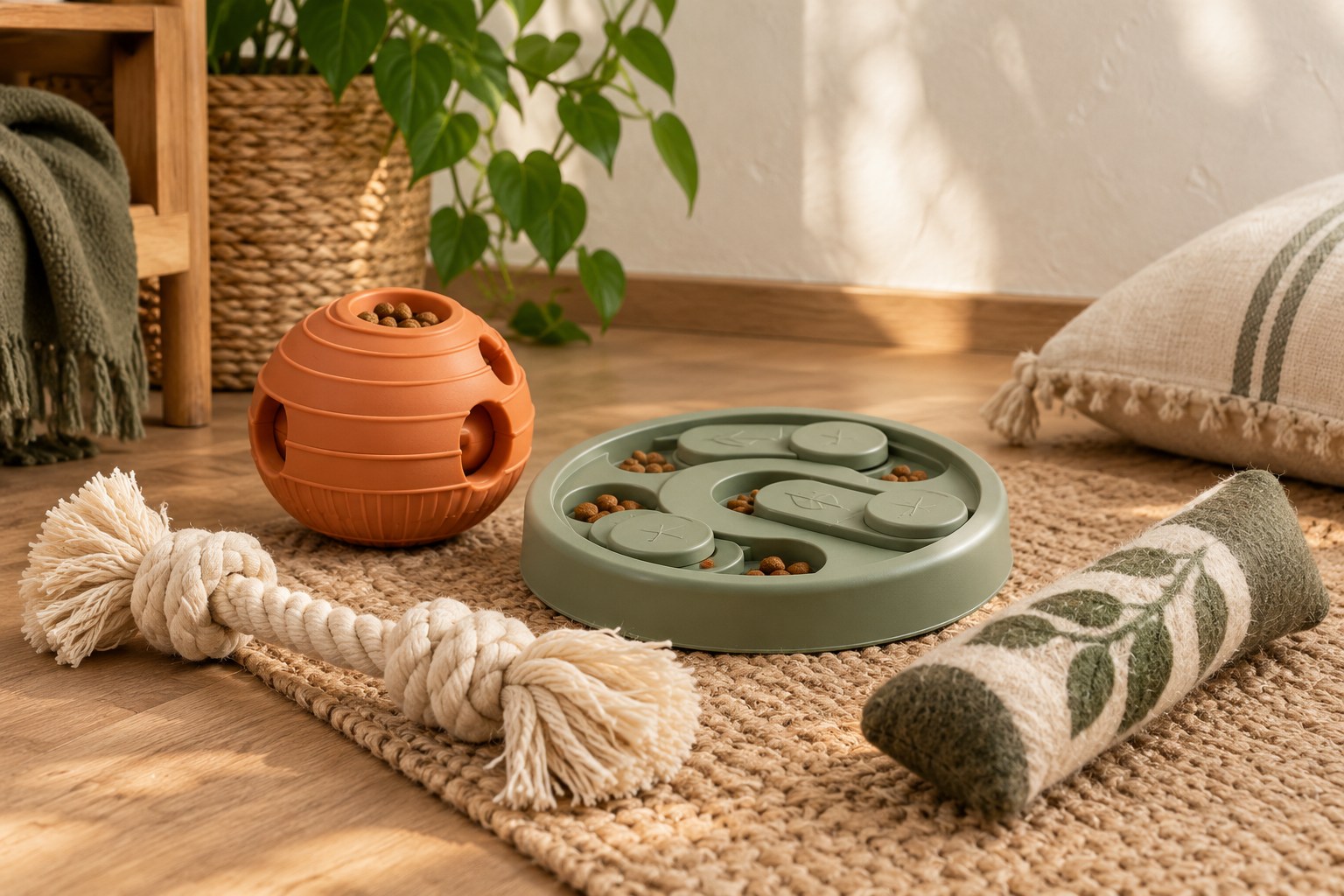
Toy rotation is most useful when it changes the kind of activity available. Replacing one blue ball with a red ball may change appearance without changing much else. A smaller selection that supports retrieving, shared tugging, searching, and guided puzzle work can be easier to manage than a large unexamined basket.
There is no universal number of toys or fixed rotation schedule. Start with the individual animal's interests, the household's available space, and which activities require a person. Keep products intended only for supervised use stored separately from anything approved for appropriate independent access.
Sort by action before brand
Lay out clean, inspected toys and group them by what the animal does with them. A rope tug and a rubber tug may belong to the same action group, while a rolling dispenser and a stationary puzzle ask for different movements despite both involving food.
This exercise reveals duplicates. Three launchable balls can be useful spares, but they do not automatically provide three distinct activities. Label the storage groups plainly so another household member can choose a suitable object for the available time and location.
Inspect before deciding what to keep
Check seams, closures, handles, moving pieces, and any parts that can detach. Remove damaged toys instead of rotating them back into view after a few weeks. Time in a cupboard does not restore worn material or make an unsuitable size acceptable.
Keep product information for toys with replacement parts or special washing requirements. If an object cannot be identified and its intended use is unclear, reconsider its place in the collection. A familiar appearance is not the same as a verified safe construction for the current animal.
Match the selection to real opportunities
A long tug needs shared play space and a person. A wand needs supervised use and secure storage afterward. A large puzzle needs a clear surface and cleanup time. Choose the available set around activities the household can actually provide.
For a hypothetical apartment week, two quiet indoor options and one shared outdoor toy may be more practical than a basket dominated by high-bounce balls. On a travel day, a familiar compact puzzle might be useful if its food handling and supervision needs can be met. The rotation should follow the setting.
Keep observation specific
Record what happens with each toy: retrieves twice then begins chewing, uses broad slider wells comfortably, or ignores the wand when it moves overhead. These notes are more useful than rating the animal as bored or the toy as universally popular.
Change presentation before assuming a purchase is needed. A different supported puzzle setup, a shorter shared session, or a clearer play area can alter the interaction. Avoid creating novelty through unsafe modifications such as extra cords, loose decorations, or smaller detachable pieces.
Decide what stays available
Some equipment belongs in a closed supervised-play cupboard. Do not leave strings, ribbons, elastic components, or damaged soft toys accessible after a session. Follow each product's use guidance and the individual animal's observed behaviour when deciding storage.
An open basket may be convenient for appropriate items, but inspect it too. Broken handles, accessible liners, and accumulated debris can become part of the pet's interaction. The container should help you see what is present rather than hide a dense pile of forgotten toys.
Use purchases to fill a clear gap
If the collection lacks a washable shared tug, buy for that role rather than for a sale price. If several puzzles remain unused because cleaning is awkward, another complex board may not solve the issue. A simpler design could fit the routine better.
Review the rotation when the household, animal, or play environment changes. Keep the selection flexible and modest. A successful system makes suitable activities easier to offer and condition checks easier to complete, rather than turning novelty into a continuous shopping requirement.
For our approach to product claims and illustrations, see the Editorial Policy.