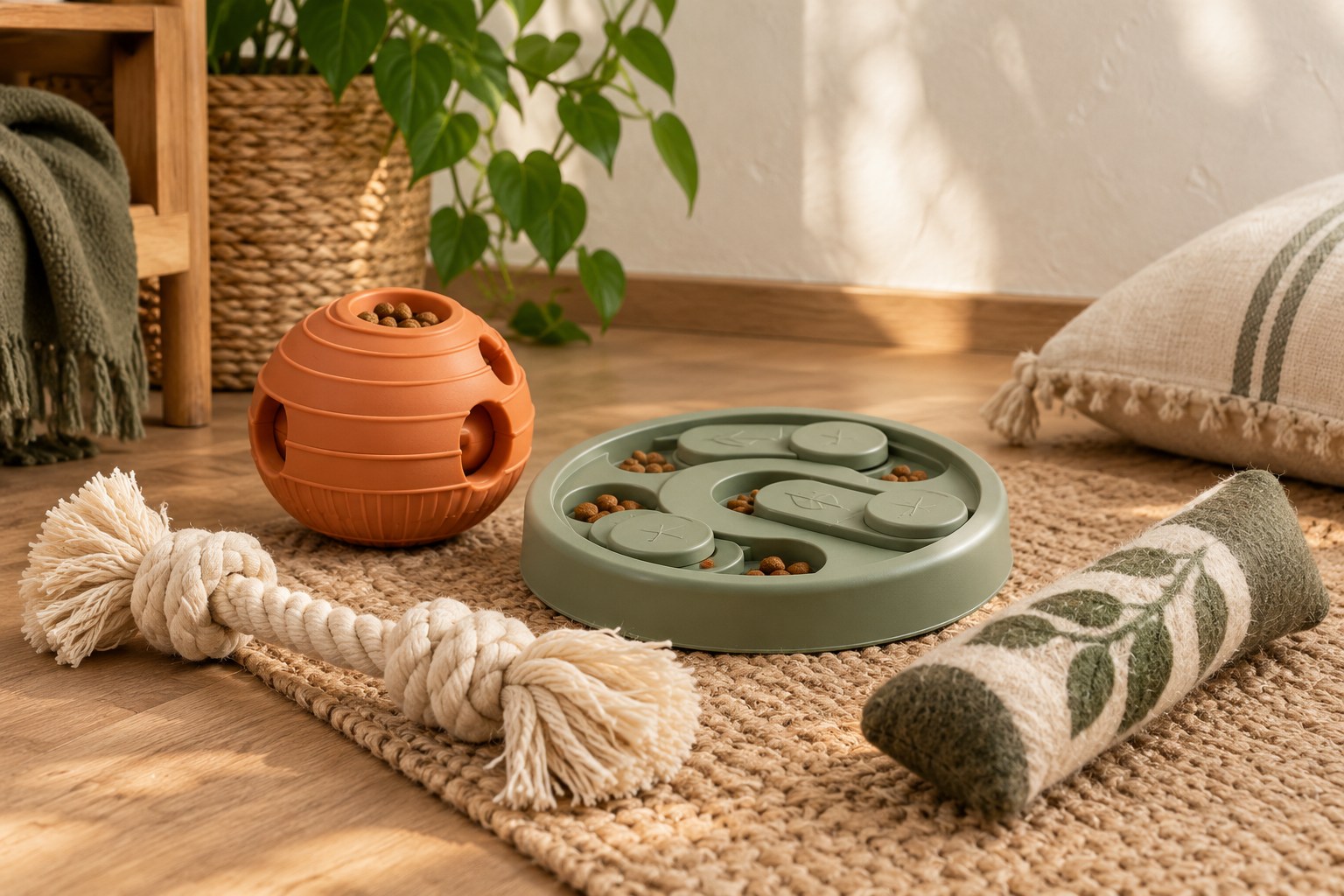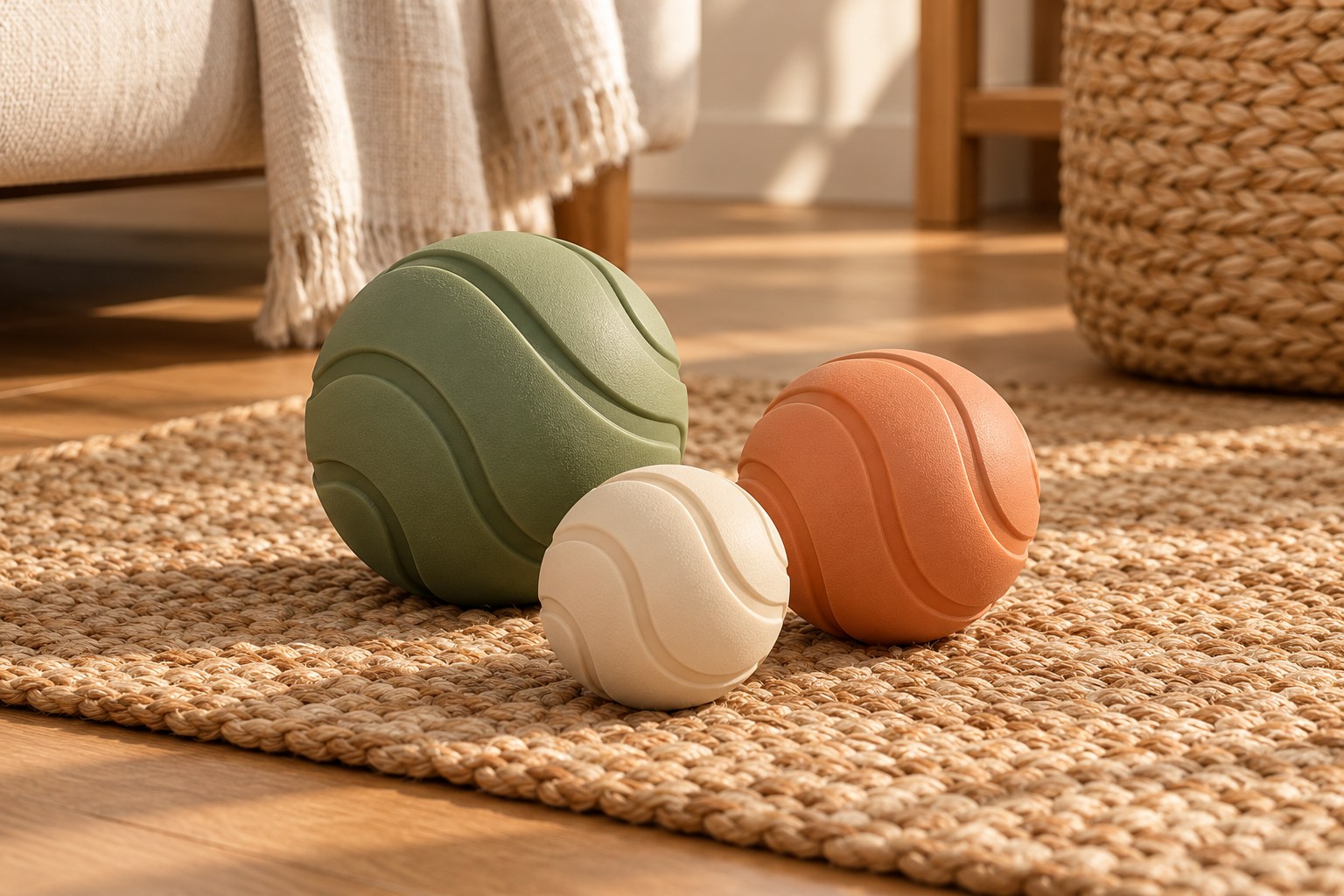
Ball material changes the feel of a game, but a label such as rubber or foam does not describe the complete product. Density, coatings, seams, and internal construction can vary widely. Begin with a pet toy intended for the animal and activity, then compare how its surface behaves in your setting.
A fetch toy is not necessarily a chew toy. Whatever the outer material, remove it if the animal begins tearing off or swallowing pieces. The useful comparison is supervised performance followed by a clear condition check.
Rubber surfaces: consider shape and dirt traps
A smooth rubber surface can be straightforward to wipe, while ribs or grooves add grip and alter the bounce. Inspect the lowest points of the pattern because soil can pack into them. A hollow rubber ball also needs any openings inspected; debris may enter without being obvious from outside.
Check the maker's cleaning and intended-use instructions. Some balls are designed for water play, some for land, and some for food dispensing. Do not assume the same construction suits all three. If a surface becomes sticky, cracked, or damaged, stop using it and follow the replacement guidance rather than adding a coating to restore the feel.
Foam surfaces: distinguish softness from durability
Foam can make a ball light and change its bounce, but soft appearance does not prove it will tolerate chewing. Look for the specified size and activity, and inspect for punctures, splitting, or pieces missing from the surface. Dense and open-cell constructions can behave differently when wet.
If the maker permits washing, follow the drying instructions for the complete ball. A surface that feels dry may not tell you what remains inside. For a hypothetical indoor game where low impact and short rolls matter, a suitable foam toy may be useful; that does not make it an outdoor toy that can be left in rain indefinitely.
Fabric surfaces: inspect seams and retained debris
Fabric-covered balls can offer a different grip and quieter movement on some floors. Their seams, labels, and decorative patches add inspection points. Outdoor grit can cling to the surface, so examine the ball before bringing it back into an indoor session.
Read whether the cover is washable and whether it is removable. Do not unzip or dismantle a ball unless that is part of its intended care procedure. A loose covering can become a separate object, and a torn seam may reveal an inner ball of a different size or construction.
Choose the simplest surface that suits the game and your cleaning routine. Keep separate toys if indoor and outdoor conditions create very different maintenance needs. Material comparison should lead to an easier activity, not to the assumption that any one surface can tolerate every kind of use.

For our approach to product claims and illustrations, see the Editorial Policy.