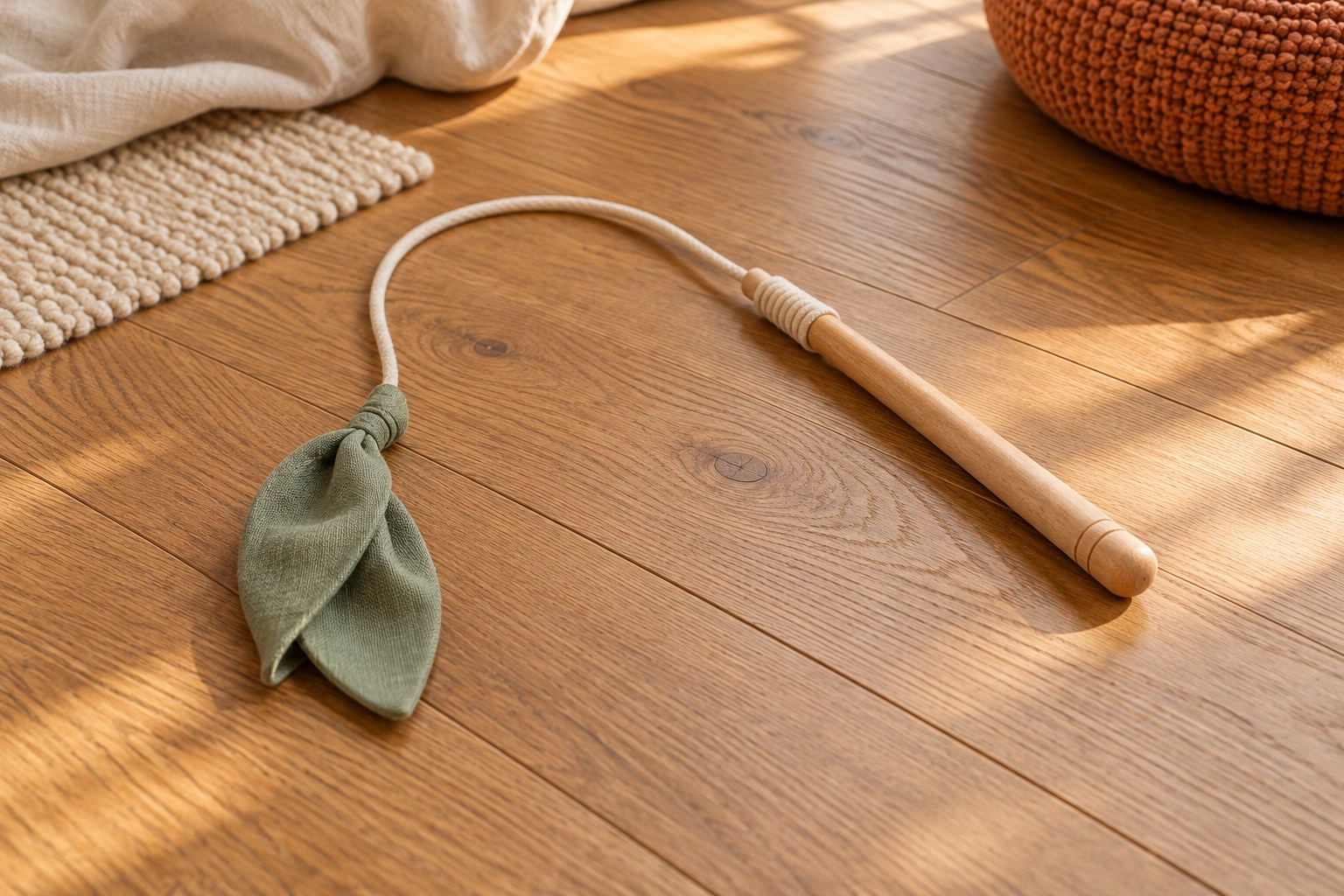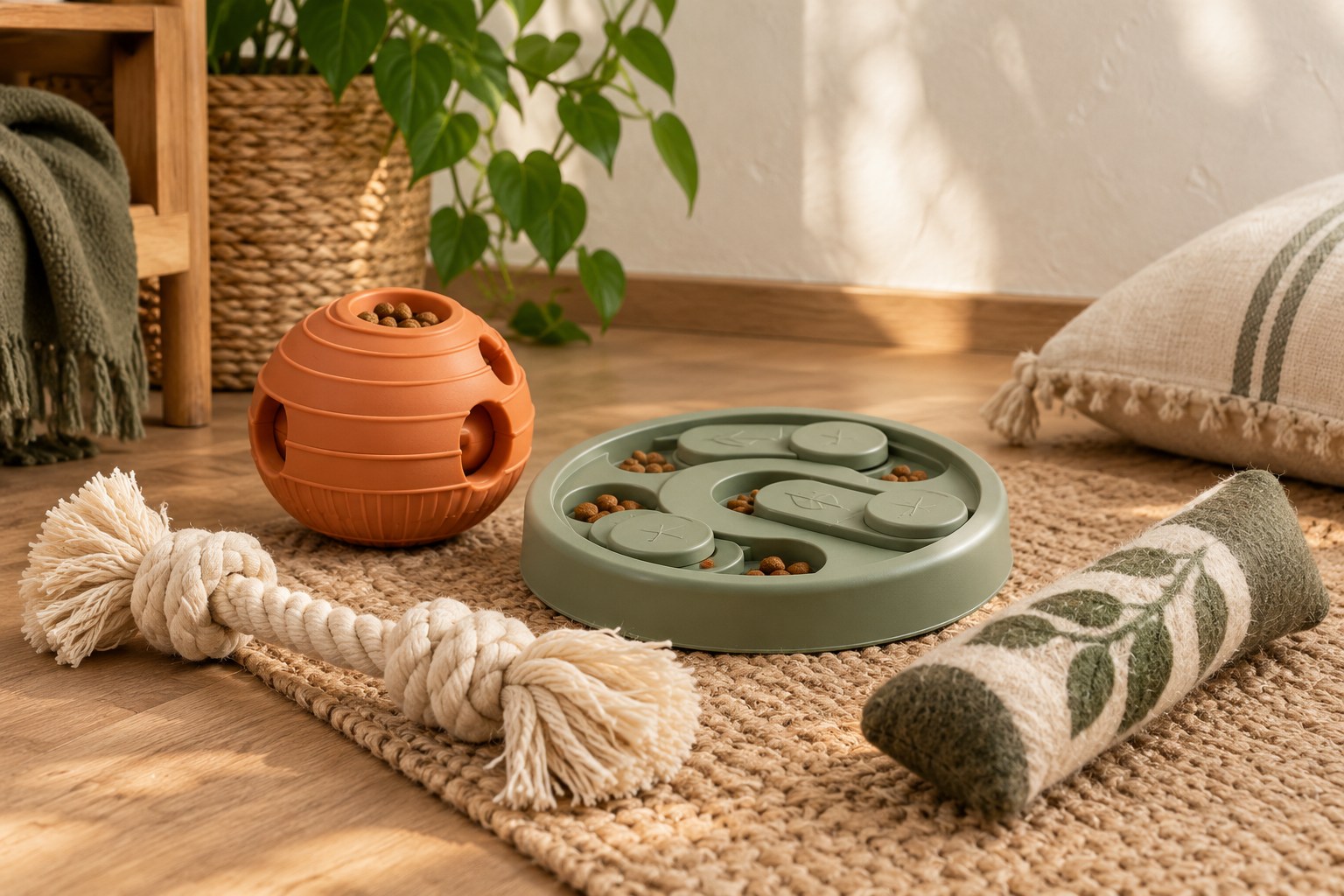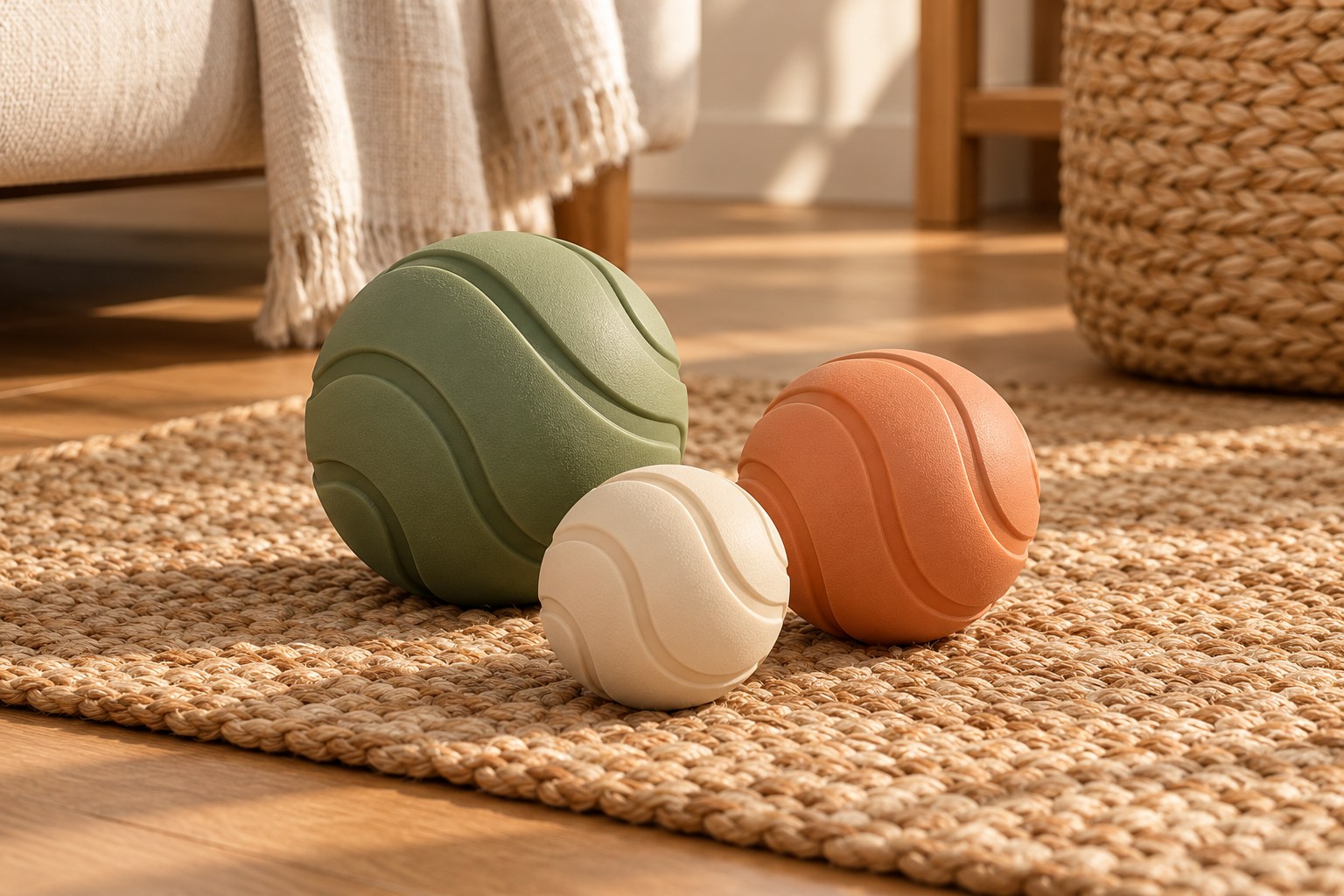
A batting toy turns a small contact into movement. Shape controls much of what happens next: a sphere rolls readily, an oval can arc, and an uneven form may stop or change direction. The most energetic motion is not automatically the best match for a room or cat.
Start with a purpose-made pet toy whose size, construction, and intended use suit the animal. Avoid small household objects that happen to roll. Caps, craft pieces, and loose packaging can introduce unsuitable dimensions, sharp edges, or detachable material.
Choose a travel pattern
A round ball can cover distance quickly on a smooth floor. That may suit a clear room but become frustrating near low furniture. An elongated toy may travel less predictably or come to rest on its side. A broad flat shape can stay local while offering a different contact area.
Test motion yourself on the intended surface. The same toy may barely move on a thick rug and travel across tile. Use that test to choose a location rather than throwing the toy harder to compensate for a mismatch.
Compare contact surfaces
Smooth surfaces can roll freely but may be slippery to grip. Textured fabric can provide a different feel while collecting hair and debris. Raised nubs, seams, and decorations change both the motion and the places that need inspection.
Read the complete construction details. A soft exterior can hide a small hard core, and a lightweight shell may contain a sound component. If the outer layer tears, the remaining internal object may no longer be an appropriate toy. Remove damaged items instead of offering the exposed centre separately.
Consider visibility and sound
A toy should be easy for the person to locate after play. High contrast against the floor can help, while a dark small object may disappear beneath furniture. A distinctive outline can be useful when several similar household items are nearby.
Sound is another variable. A bell or rattling insert may attract attention, cause avoidance, or disturb the household. For a hypothetical quiet apartment evening, a simple soft batting shape may be more practical than a hard noisy ball. Choose from observed response rather than assuming more sound means better engagement.
Offer a small comparison
Introduce one or two inspected toys rather than scattering a large pile. Watch which movement the cat follows and how it handles the object once caught. A toy that prompts immediate chewing or attempts to swallow material is unsuitable even if the initial chase looks enthusiastic.
You can change the starting location or make a gentle roll to vary presentation. Keep the route clear and avoid directing the toy toward stairs, cables, or fragile furnishings. Do not attach string to make an ordinary batting toy more interesting; that creates a different supervised equipment requirement.
Collect and inspect deliberately
At the end, account for the offered toys and check seams, openings, and internal components as applicable. Look beneath nearby furniture for lost pieces. A toy that remains out of sight can deteriorate or become an unexpected object during unsupervised exploration.
Store the collection so appropriate toys are easy to identify and damaged ones cannot return accidentally. Wash according to each product's instructions and dry fully. A few verified shapes with different travel patterns usually provide a clearer selection than many nearly identical small objects.

For our approach to product claims and illustrations, see the Editorial Policy.