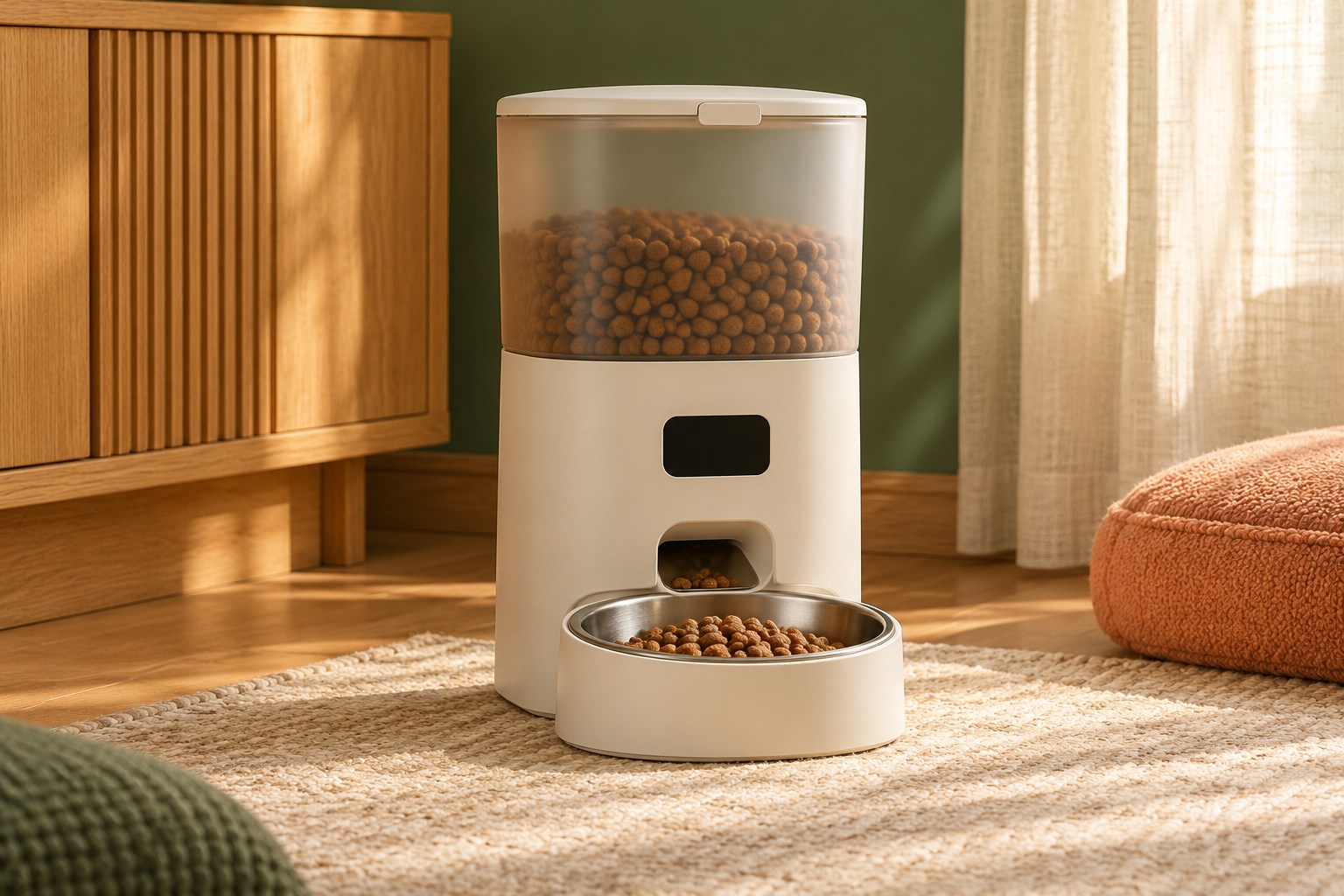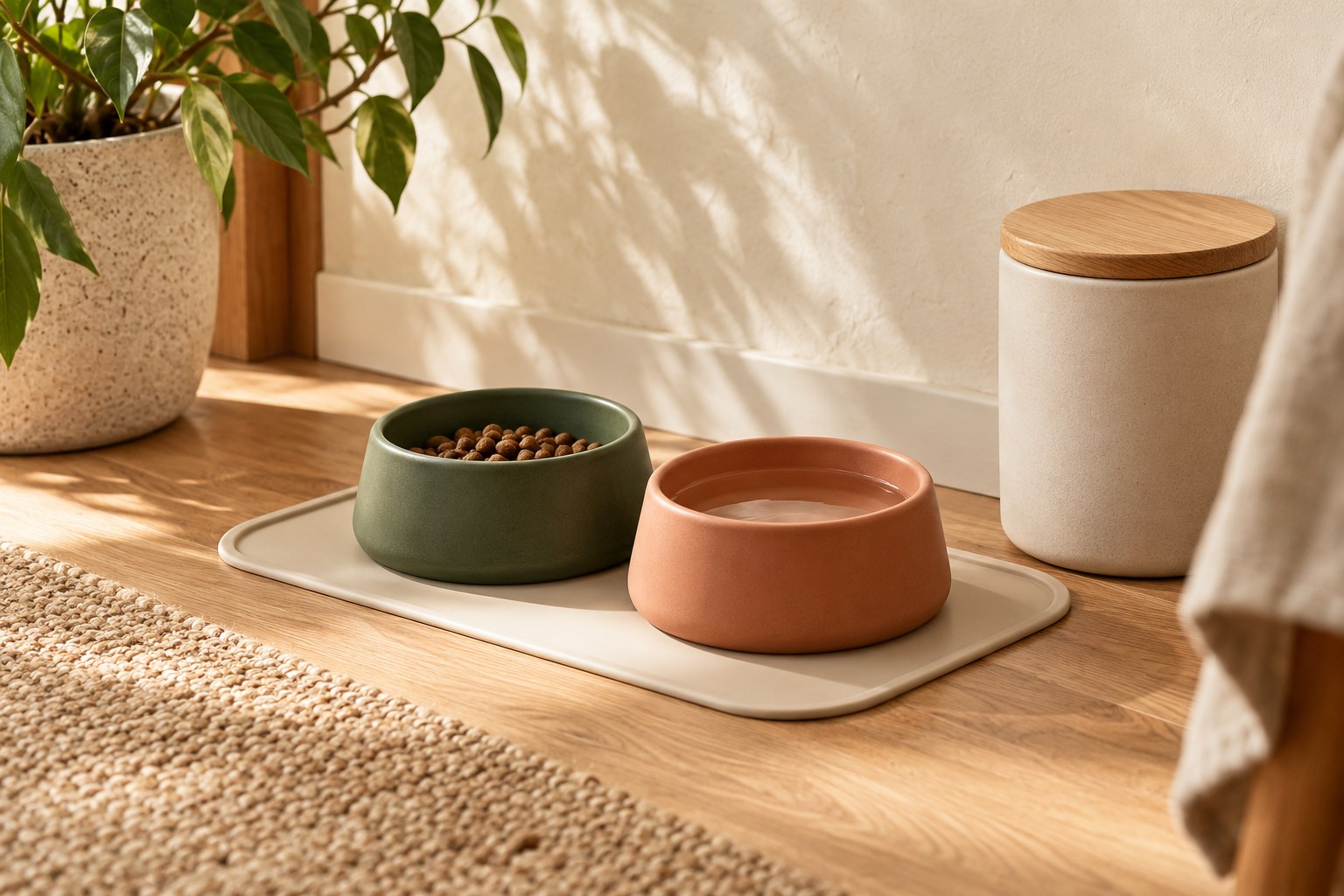
A slow feeder is a physical obstacle course for food. Its pattern determines where pieces settle and how they can be retrieved. A complicated design is not automatically a better choice; if the channels are too narrow or the obstacles too tall, the bowl can become frustrating or difficult to clean.
Choose from the actual dimensions of the food and the animal's approach. Product photographs often show an empty bowl from above, which makes deep barriers look less substantial than they are. Side views and channel measurements deserve equal attention.
Compare channels, not decorative themes
Look for the narrowest usable gap, including spaces near the outer wall. A maze can have generous main channels and tiny dead ends where food collects. Rounded turns are generally easier to reach and brush than sharply pointed corners or undercut shapes.
Use a few pieces of the usual food as a physical reference. A gap that accepts one piece tightly may behave differently once several pieces are piled together. Do not solve a poor fit by forcing food into inaccessible spaces; choose a less restrictive pattern instead.
Begin with a shallow challenge
A simple raised centre or several low ridges gives you information about how the pet interacts with obstacles. Watch whether the animal works around the shape, tries to overturn it, or abandons food in one area. The aim is manageable engagement, not the longest possible session.
For a hypothetical dog accustomed to an ordinary bowl, a broad three-channel design may be a more practical starting point than a dense spiral. You can compare behaviour without introducing multiple moving parts at the same time. Stop using a product if it encourages chewing the bowl itself.
Check the serving depth
The stated capacity may include space above the ridges. If you fill to the top, the pattern can disappear beneath a mound, defeating the intended interaction. Look for a usable serving amount that leaves the obstacles exposed while keeping food inside the rim.
Deep central wells can also concentrate the last pieces in one place. Inspect the empty bowl at eye level and imagine the final few pieces, not just the full portion. An uncomplicated pattern with enough working area may be more useful than a large bowl with one inaccessible pocket.
Budget time for cleaning
Try to identify a brush path through every channel. If your usual sponge cannot reach the bottom, consider whether a dedicated brush is realistic in daily use. Check material and dishwasher instructions, including any removable grip ring.
After washing, turn the bowl over and inspect the base. A wide feeder can trap water against a mat or inside its foot. Let both surfaces dry before putting them together. Replace damaged products, particularly when ridges become rough or pieces loosen during use.
Compare fixed and adjustable patterns honestly
Some feeders offer removable obstacles or alternative inserts. These can provide useful variation, but they also add separate parts and new edges to clean. Check whether every supported configuration remains stable and whether loose components are appropriate for the intended animal. Do not remove a structural piece simply because doing so appears to make access easier.
A hypothetical simple bowl with four broad channels may be easier to maintain than an adjustable design with ten removable pegs. The latter earns its added complexity only if you will use its supported configurations and can inspect each part. If one fixed pattern already provides manageable access, buying more adjustment does not automatically improve the experience.
For our approach to product claims and illustrations, see the Editorial Policy.