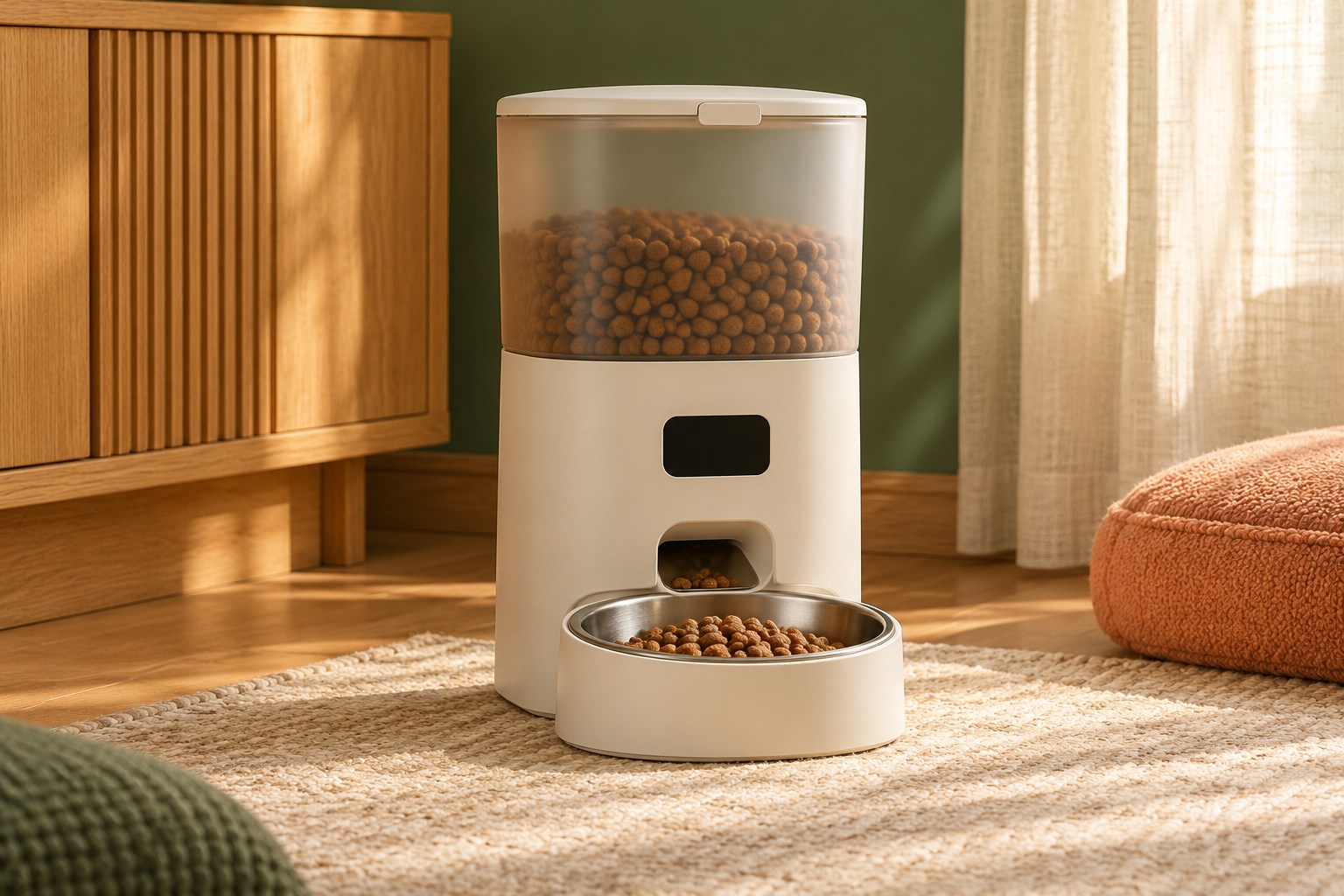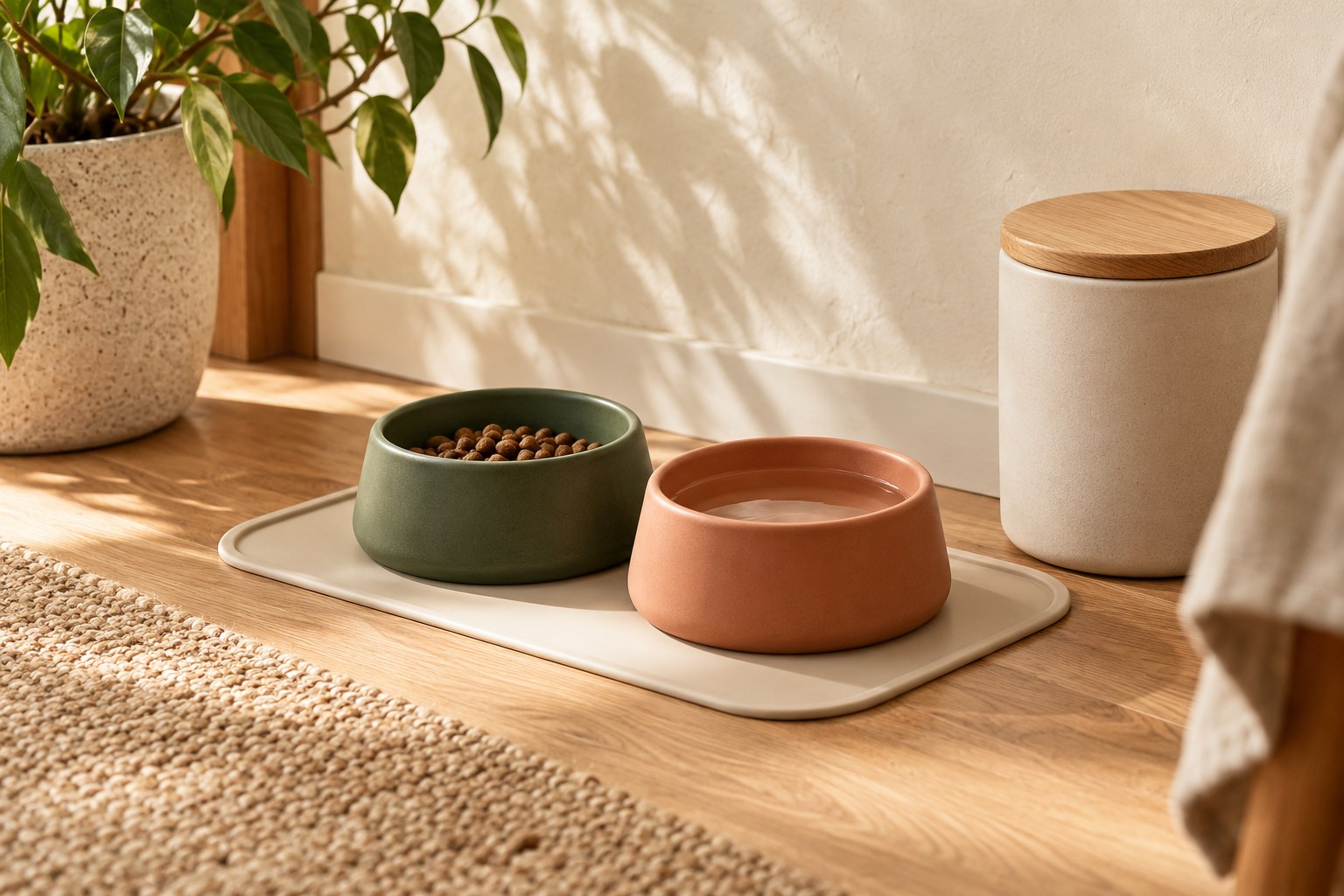
A bowl stand can keep two dishes in a defined place and make a feeding corner look organised. Its usefulness depends on how the bowl meets the frame. A loose insert can rattle, a tight one can be difficult to remove, and a decorative ledge can collect spills around the rim.
Choose the arrangement for practical access and household use. Do not assume that raising a bowl automatically produces a health benefit. If a particular feeding height has been recommended for an individual animal, use that guidance when checking the product dimensions.
Measure the whole fit
There are at least three useful bowl measurements: outer rim diameter, body diameter at the support point, and depth below the rim. The frame's opening must support the rim while allowing the body to sit without bottoming out or tilting.
A hypothetical replacement bowl with the same advertised capacity may have a narrower rim and fall through the opening. Another may sit high because its body flares outward. Keep a drawing with all three measurements if replacement availability matters to your purchase.
Check removal clearance
Look for enough space to get fingers beneath the bowl rim or a documented lifting notch in the frame. If the insert sits flush against a wide wooden top, wet hands may make removal awkward. Handles on the bowl can help only if the frame allows room for them.
Test the removal motion with the stand in its intended place. A low shelf above the station may prevent a deep insert from lifting straight out. The result can be daily tilting and spills even though the stand's footprint fits perfectly on the floor.
Inspect spill collection points
Water can gather between the bowl and support ring. Remove inserts during cleaning and wipe the frame beneath them. Examine joints, screw heads, decorative cutouts, and any hollow feet that may hold moisture out of sight.
Different frame materials have different care requirements. Follow instructions for coated metal, wood, plastic, or composite surfaces rather than treating them like the removable bowl. A frame that tolerates wiping may still be unsuitable for soaking or a dishwasher.
Evaluate stability as an assembly
The stand, inserts, feet, and floor all work together. Check for rocking before filling the bowls and again under normal load. Adjustable feet can be useful when designed for the product, but improvised wedges can create new gaps or be displaced during cleaning.
If inserts rattle, ask whether the manufacturer supplies compatible rings or pads. Do not attach household material where it can loosen into the bowl. A quieter fit should remain accessible and cleanable, with no unsupported change to the intended seating depth.
Decide whether the organisation is worth it
A stand adds one more object to wash and move. In a narrow kitchen, a mat and separate bowls may be easier to rearrange. In a defined feeding alcove, a simple low frame may help keep dishes predictably positioned.
Use a paper footprint and simulate bowl removal before ordering. That short exercise tests more than the stand's appearance: it shows whether the system will be comfortable to service every day.
For our approach to product claims and illustrations, see the Editorial Policy.