Pet supplies can spread across a house because each object is used in a different place. A storage bin helps only when its location and internal layout follow those routines. Buying several identical containers may make a shelf look coordinated while leaving damp towels beside clean brushes. Start with the objects and their use before choosing the boxes around them.
Group by the next task
Place ordinary outdoor accessories near the exit where they are used, clean grooming tools near the working area, and spare bed covers where laundry is folded. These groups need different container shapes. A shallow tray may serve brushes better than a deep basket, while folded textiles fit a wider bin. The aim is easy retrieval without emptying a container to reach its bottom.
Measure the actual items in their stored form. Rolled mats, rigid comb sleeves, and bulky spare covers occupy space differently. Include the clearance needed to lift a lid or slide a drawer fully open. A bin that fits a shelf but cannot be opened there will likely migrate to the floor. Handles should be reachable and appropriate for the loaded container's intended use.
Keep frequently used items at a comfortable height for the handler, while maintaining appropriate pet and child access control. A basket with an open top is convenient but does not protect sharp tools, chemicals, or chewable small parts. Those need suitable secure storage according to their own instructions. A decorative pet-themed box is not automatically a safety container.
Separate clean, used, and still-damp items
Clean dry textiles should not share a closed bin with towels waiting to be washed. Give used items a distinct temporary location and process them promptly. Ventilation can help some storage arrangements, but it does not make a wet pile ready for long-term storage. Wash and dry fabrics fully before folding them into a cupboard or lidded container.
Grooming tools need their own care and inspection before storage. A metal comb beside a damp towel can be overlooked for days, while a sharp clipper hidden among blankets is hard to retrieve safely. Use protected working ends and designated compartments as appropriate. Keep exact-model spare parts identifiable rather than letting similar clips and blades accumulate loose at the bottom.
For items with labels, retain those labels and relevant care instructions. Do not transfer cleaning products into anonymous decorative bottles for the sake of visual consistency. If equipment has an individual health or care role, follow professional guidance for storage. General organizing should make identification clearer, not replace useful information with a matching color scheme.
Choose an interior you can maintain
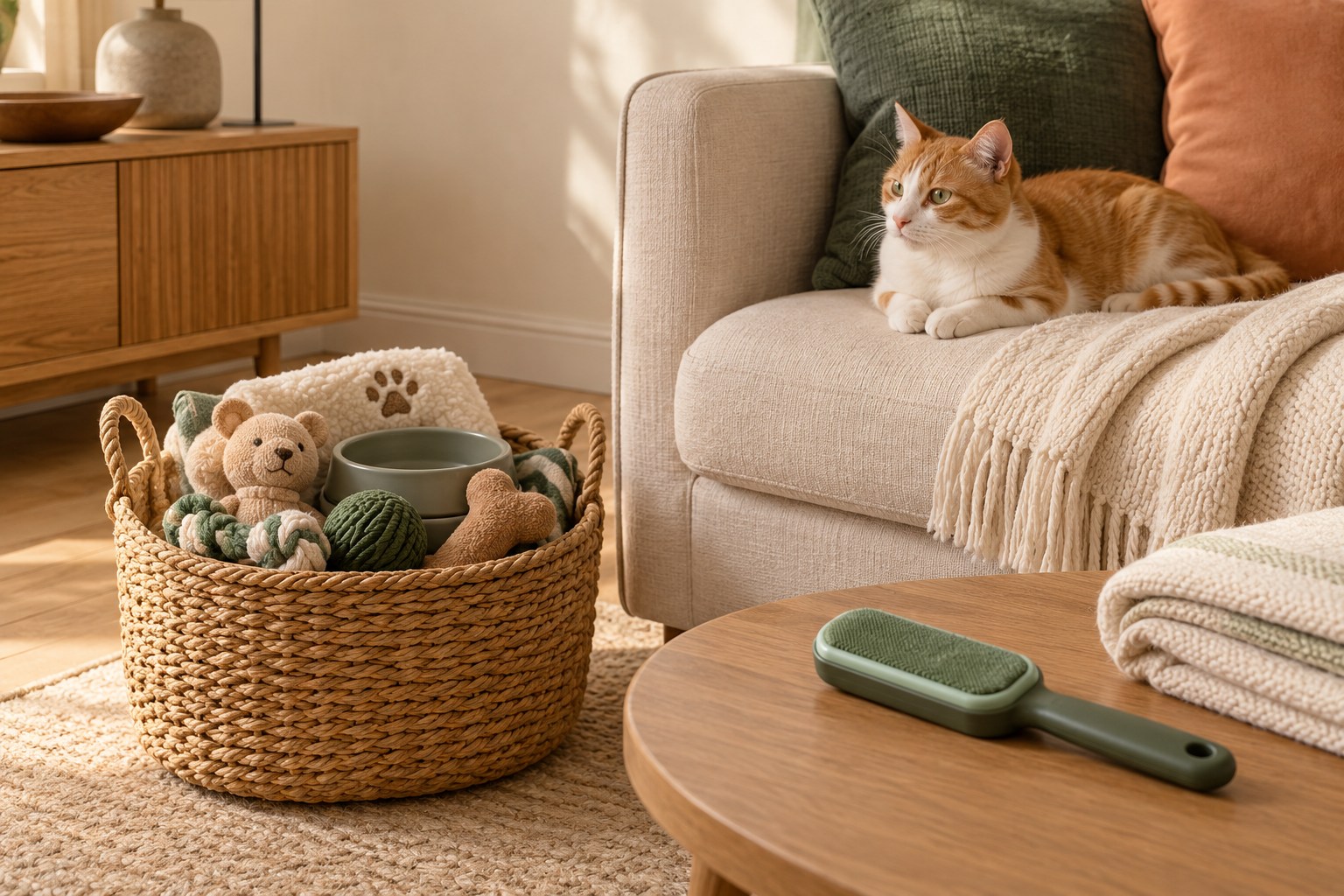
Smooth washable bins can be easier to wipe than deeply woven baskets, though each has different aesthetic and ventilation qualities. A removable fabric liner may be convenient if it fits securely and can dry fully. Inspect seams and corners where hair gathers. Deep dividers can organize small objects but also add surfaces that must be cleaned, so include them only when they serve a real purpose.
The outside and underside matter too. A loaded container should sit stably without sharp edges against flooring or furniture. Avoid stacking bins beyond their intended design or placing heavy supplies where a pet can pull them down. If wheels are provided, check their locking method and the location's suitability. Mobility is useful when it remains controlled rather than turning storage into a moving obstacle.
Review the system after ordinary use. If supplies repeatedly remain outside the bin, the opening may be awkward, the location too distant, or the categories too complicated. Simplify before adding more containers. A successful storage arrangement is one that household members can reset easily, with clean items ready and used items moving through a clear cleaning routine instead of disappearing into an attractive box.

For our approach to product claims and illustrations, see the Editorial Policy.