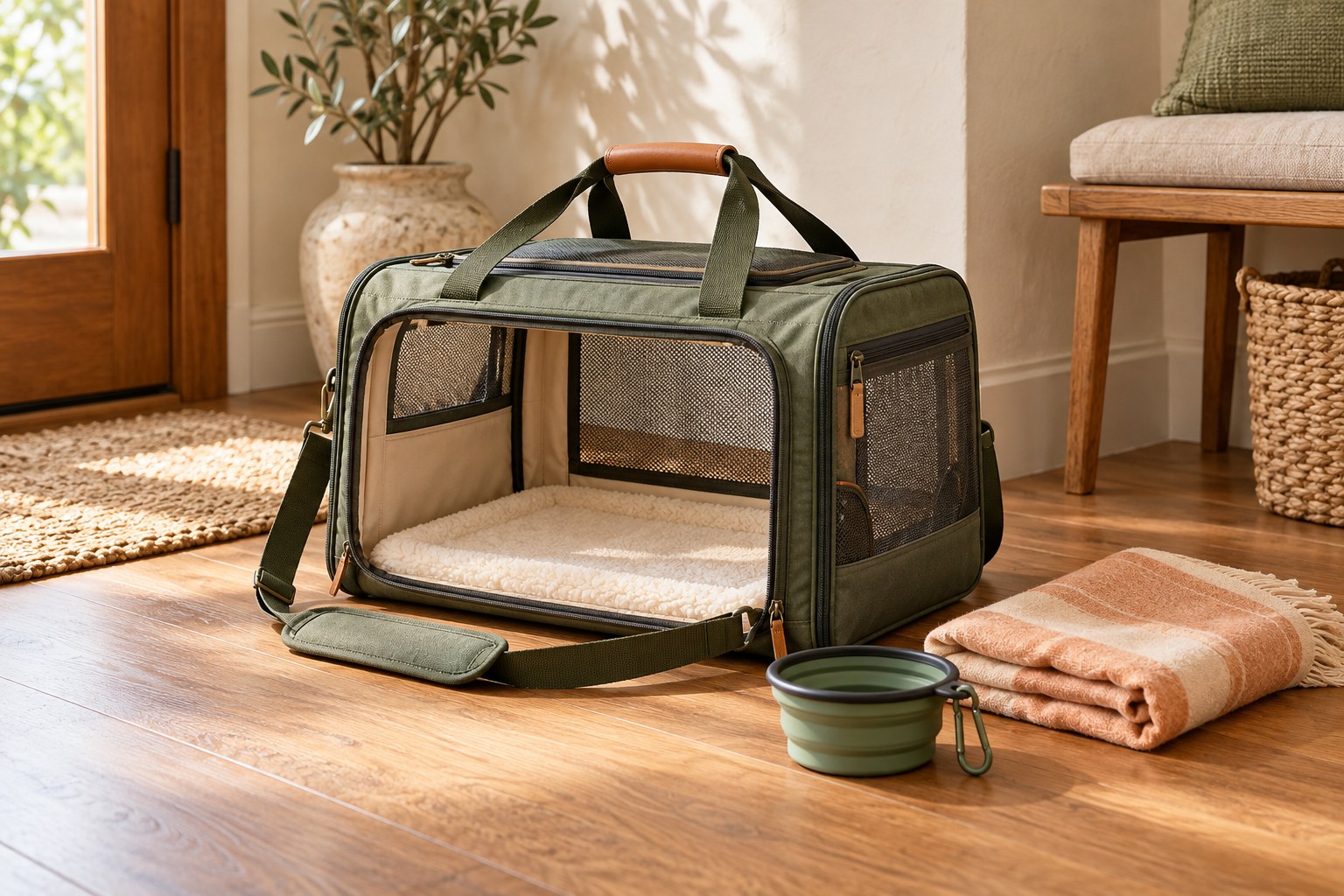
A rigid carrier can provide a predictable interior shape and a shell that is easier to inspect than a heavily padded bag. That does not make every hard carrier equivalent. A front door, top opening, handle, and series of side fasteners all form one system. The quality of any weak connection can matter more than the apparent strength of the broad plastic panels.
Size the interior and the entrance
Begin with the pet's measurements and the maker's sizing guidance. Check enough usable floor length and height for normal positions appropriate to the intended transport, rather than choosing from weight alone. A sloped roof or rounded rear wall can reduce usable space. Ask whether listed measurements include protruding handles and door housings, because external dimensions do not explain the space the animal will occupy.
The doorway should allow a suitable entry without squeezing through a narrow decorative frame. A removable top can be useful for gradual introduction and some handling situations, but it should be opened only in a secure setting where the animal cannot escape. A top-loading door offers a different type of access from removing the whole upper shell; compare the mechanism actually provided.
Inspect how the shell stays together
Some carriers join their halves with screws, others use latches, and some use both. Follow the assembly instructions exactly and confirm that every required fastener is present. Do not omit hardware to make future opening easier. A handle attached to the upper shell depends on the complete shell connection during carrying, so the joints deserve the same inspection as the handle itself.
Check whether replacement fasteners are available for the exact model. Ordinary hardware of a similar appearance may not have the intended fit or load characteristics. If a latch is cracked or a screw housing is damaged, stop using the carrier until the maker's repair guidance is followed. A strap wrapped around the shell is not a reliable substitute for a sound original connection.
Evaluate the door as working hardware
Open and close the empty carrier several times to understand the latch. Door pins should engage as designed, and the door should not pop out when gently checked according to the instructions. Look for exposed sharp edges or distorted bars. A multi-directional door can be convenient, but it also needs clear orientation and secure engagement on every intended side.
Consider emergency access as well as everyday loading. An elaborate added lock may make it difficult to open the carrier quickly, while a weak improvised clip may offer little benefit. Use only closures intended for the product and the journey. If air travel is planned, verify the exact airline and flight requirements directly before purchasing or modifying any carrier; generic suitability claims do not settle those rules.
Keep ventilation clear in the actual setting
Count ventilation areas by location, not merely by the number of slots. A carrier placed against luggage can lose access to one side, so the surrounding setup matters. Do not cover the shell completely with blankets or stack items against openings. Any cover used for a particular purpose should follow suitable guidance and leave the required airflow and inspection access intact.
A removable pad can make the floor more comfortable, but thick bedding reduces internal space and can bunch around the doorway. Choose a flat compatible layer and inspect beneath it after use. A carrier is not automatically a vehicle restraint: if it will travel in a car, use the maker's specified installation method and assess relevant evidence separately from its suitability as a hand-carried enclosure.
Clean the joins, not just the broad panels
Hard surfaces may wipe clean readily, yet door housings, seam lips, and fastener recesses can retain dirt. Read the maker's cleaning instructions and avoid products that could damage the material. Disassemble only as directed and keep track of every part. Dry both shell halves and all bedding fully before rebuilding and storing the carrier.
Before the next trip, inspect for brittle areas, cracks, damaged door hardware, and handle movement. A carrier stored for a long period can still need replacement even if it has seen little recent use. Keep identifying labels and contact information legible without blocking ventilation. A well-maintained rigid shell is useful because its condition can be assessed clearly, not because plastic construction makes inspection unnecessary.

For our approach to product claims and illustrations, see the Editorial Policy.