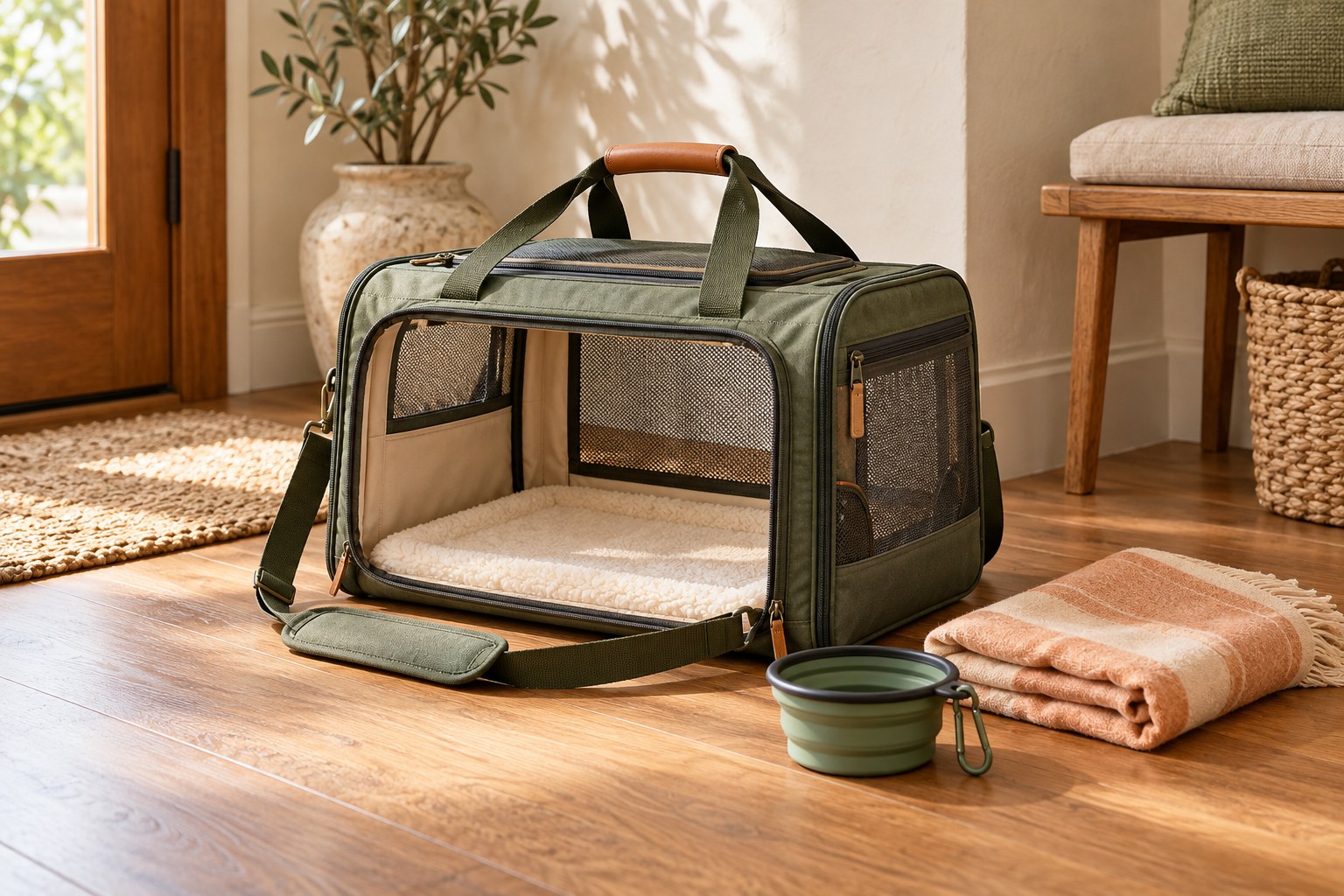
A backpack carrier can free the handler's hands, but it also places the pet behind or in front of the person's body where inspection and communication are different. Stylish transparent windows and compact silhouettes may dominate product photographs. The first assessment should instead concern the animal's usable space, ventilation, and stable support in the actual worn configuration.
Establish what positions the carrier permits
Check the intended species, weight capacity, and body measurements. A backpack's tall exterior does not necessarily provide enough floor length for a pet to turn and lie naturally. Tapering, curved panels, and internal shelves can further reduce usable space. Read the maker's instructions for intended posture and duration, and discuss individual suitability with a veterinarian when the pet's comfort or health is uncertain.
Do not assume the animal will tolerate an upright-looking arrangement because a promotional image shows one sitting. A product should offer an appropriate position without forcing the body into a display pose. If the pet cannot adopt normal positions for the intended use, choose another format. Adding a thick cushion to raise it toward a window can reduce space and alter the intended center of gravity.
Look at ventilation while it is worn
Mesh on the rear face may be partly covered by the wearer's back. External pockets can overlap side panels, and expandable sections may be unavailable when the bag is on the body. Compare the closed working configuration with the expanded display photograph. Ventilation openings should stay unobstructed according to the maker's instructions, and clear plastic panels should not be mistaken for airflow.
Environmental conditions still matter. A carrier does not create a safe temperature simply because it has holes or a small fan. Avoid direct heat exposure and monitor the pet appropriately. Powered additions introduce charging and failure questions and should not become the reason to continue in uncomfortable conditions. If the animal seems unwell, stop and seek suitable veterinary advice promptly.
Examine the base and access points
A supported base helps prevent the floor from folding when the bag is lifted. Look for a removable panel that fits securely and a liner that lies flat. Inspect seams at the base corners and the attachment of each opening. Top access can help inspection in a secure location, while side doors may allow a different loading approach. Every zipper needs a reliable intended closure.
An internal tether, where provided, requires careful reading of the instructions and does not make an open carrier escape-proof or suitable for every pet. Do not attach improvised straps or assume a collar connection is appropriate. Keep the enclosure closed during transport as directed and open it only in a secure setting. A carrier's retention features should support a sound enclosure rather than compensate for insecure doors.
Fit the human load system
Shoulder straps, chest straps, and waist belts should be positioned as the maker intends and adjusted without loose tails near the animal. A comfortable empty backpack can feel very different at its permitted load. Consider the handler's strength, balance, and the distance to be traveled. A pet carried high and away from the body can change stability on stairs or uneven ground.
Practice the setup in a controlled familiar place before any important outing. The handler should be able to put the backpack down level without trapping straps beneath the base. Keep another suitable transport option available if the animal does not accept the format. Hands-free convenience is valuable only when both pet and person can use the equipment comfortably and securely.
Plan observation and maintenance
Determine how the handler will check the pet without repeatedly opening the bag in public. A companion may improve observation, but do not rely on a tiny rear window as a complete welfare check. Keep outings proportionate to the animal's tolerance and the product's intended use. If the carrier is not suitable, a different format may be a better answer than more accessories.
Clean liners, straps, and the shell according to their separate instructions, then dry the entire bag before storage. Inspect load-bearing seams, buckles, mesh, and base attachments before each use. Remove damaged equipment from service. Keep model details and any replacement-part information available, because generic strap or buckle substitutions can change the carrying system in ways a polished exterior does not reveal.

For our approach to product claims and illustrations, see the Editorial Policy.