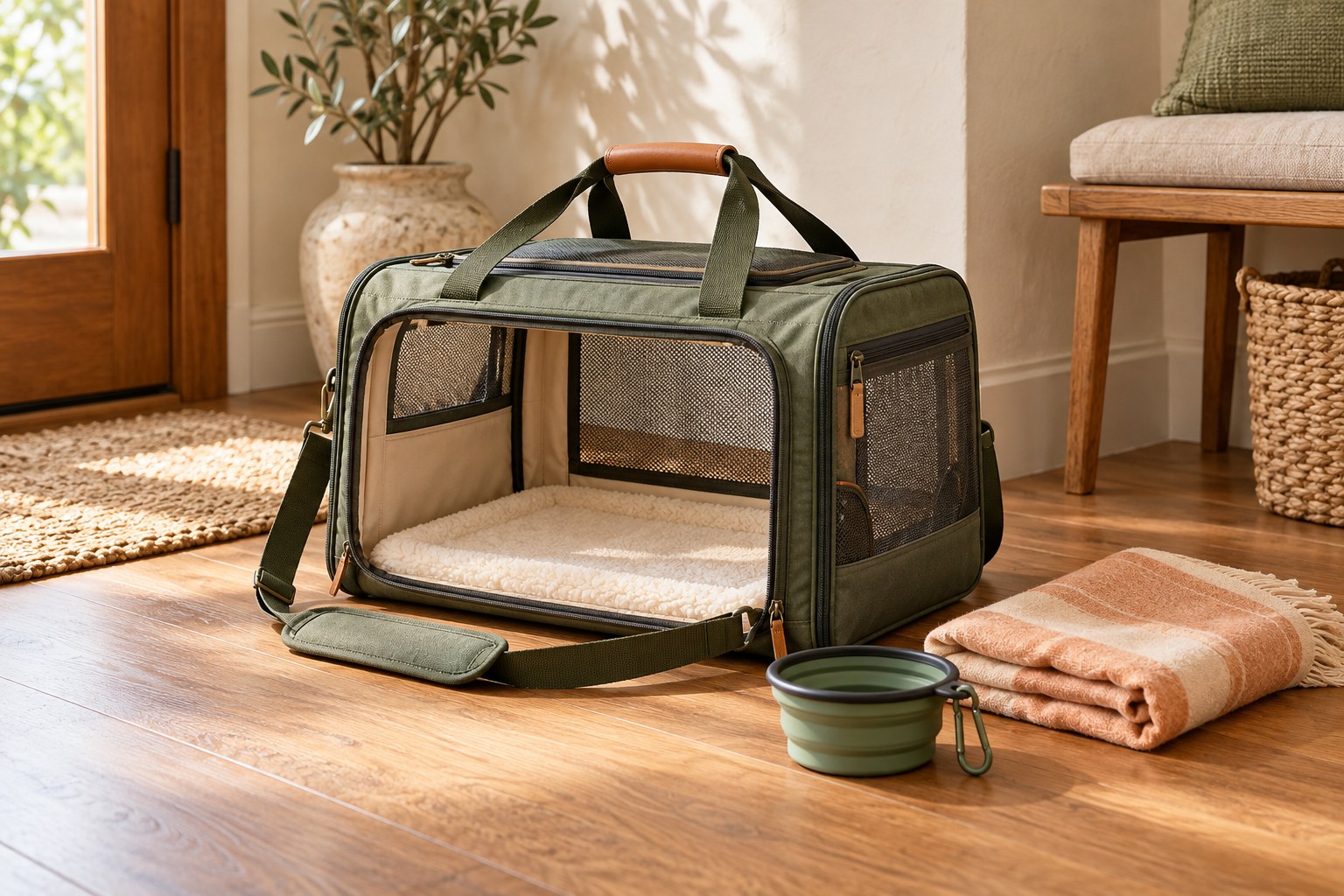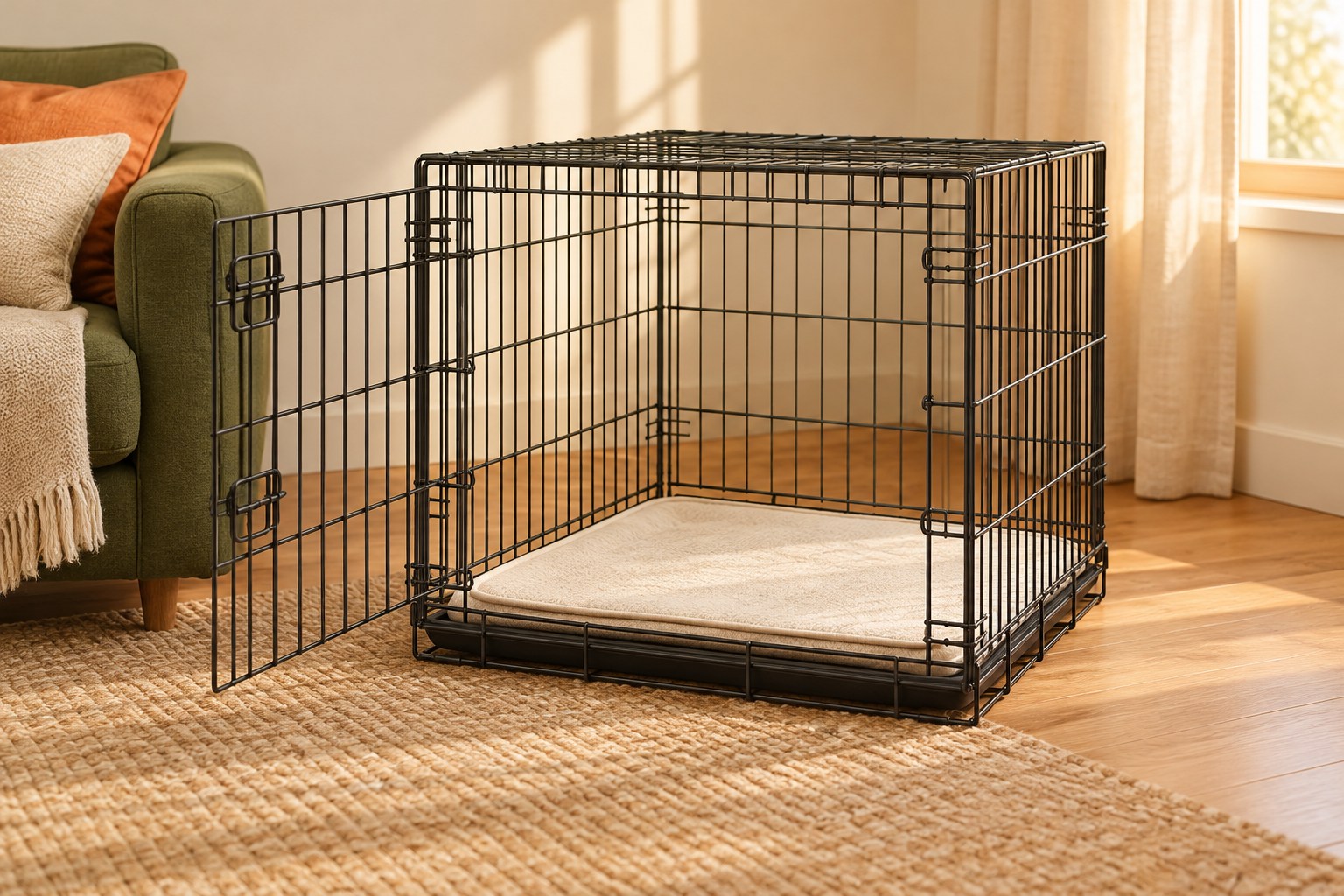
A folding crate can create a familiar temporary enclosure during an appropriate supervised stay, yet not every foldable product is designed for the same purpose. Soft fabric frames, wire panels, and rigid folding shells differ substantially. Begin by identifying the manufacturer's intended use, particularly when the crate may be placed in a vehicle rather than used only at a destination.
Separate destination containment from transport restraint
A crate described as portable may simply be easier to carry empty and store flat. That wording does not establish vehicle restraint performance. If it will be used while a car is moving, assess the exact product's installation instructions and relevant evidence. Do not assume that a folding mechanism designed for convenience provides the same behavior as a documented secured travel system.
At a destination, consider the pet's existing experience with enclosures. A light fabric crate may not suit an animal that scratches, chews, or pushes at doors. No ordinary soft structure should be treated as escape-proof because a zipper is closed. Choose an appropriate containment plan and supervise introductions rather than discovering the product's limits when the household is already distracted.
Practice assembly while the crate is empty
Follow the setup sequence and confirm that every required latch or support reaches its intended position. A frame can look open while one joint remains incompletely engaged. Check for clear visual or tactile indicators where the manufacturer provides them. Do not let the pet enter during unfolding, and keep paws and fingers clear of hinges and scissor-like moving sections.
Consider the time and strength required. A compact folding package may need substantial force or awkward reach to assemble correctly. If setup is frustrating in a quiet room, it will not become easier in a cramped guest space. A slightly larger packed crate with a simpler reliable process may be more practical than the smallest advertised package.
Compare floor and doorway details
Measure usable interior dimensions with the intended pad installed. A raised frame, sloping fabric wall, or thick tray lip can reduce space. The door should provide an appropriate entry and remain accessible where the crate will sit. Roll-up fabric doors need a secure intended method of holding them clear during voluntary introduction; loose flaps and ties should not hang into the entrance.
For wire products, inspect panel joins and the tray retaining method. For soft products, look at mesh attachment and zipper endings. Rigid folding shells require attention to their panel locks. Each format has a different inspection route, so retain the exact instructions rather than relying on familiarity with another crate. A similar appearance does not guarantee the same setup method.
Keep packing and cleaning compatible
A crate should be clean and fully dry before folding for storage. Fabric seams and frame sleeves may retain moisture after the broad panels feel dry. Remove any pad as directed and inspect the floor beneath it. If the frame must be removed for cleaning, photograph or label its orientation so the correct assembly is easy to restore later.
Check packed dimensions including its carrying bag and protruding handles. The bag should protect the empty crate without forcing hinges under strain. Keep it separate from sharp tools that could damage fabric or scratch a coating. If the crate will be stored for months, inspect it again before the next use rather than assuming it remains ready simply because it has stayed folded.
Review after ordinary use
Watch whether the pet settles voluntarily and whether the frame remains stable on the actual floor. Avoid placing it on uneven ground, in direct heat, or where a doorway repeatedly strikes it. Do not stack luggage against ventilation panels. A portable enclosure still needs a thoughtful location with an unobstructed approach and an appropriate opportunity for the pet to leave when the routine allows.
Retire or repair damaged parts only through suitable instructions. Bent joints, torn mesh, and unreliable latches should not be hidden by the carrying bag between trips. If the product's limitations do not match the pet's behavior or the setting, choose another format. Portability is useful when it preserves a sound appropriate enclosure, not when it becomes the deciding feature over every other requirement.

For our approach to product claims and illustrations, see the Editorial Policy.