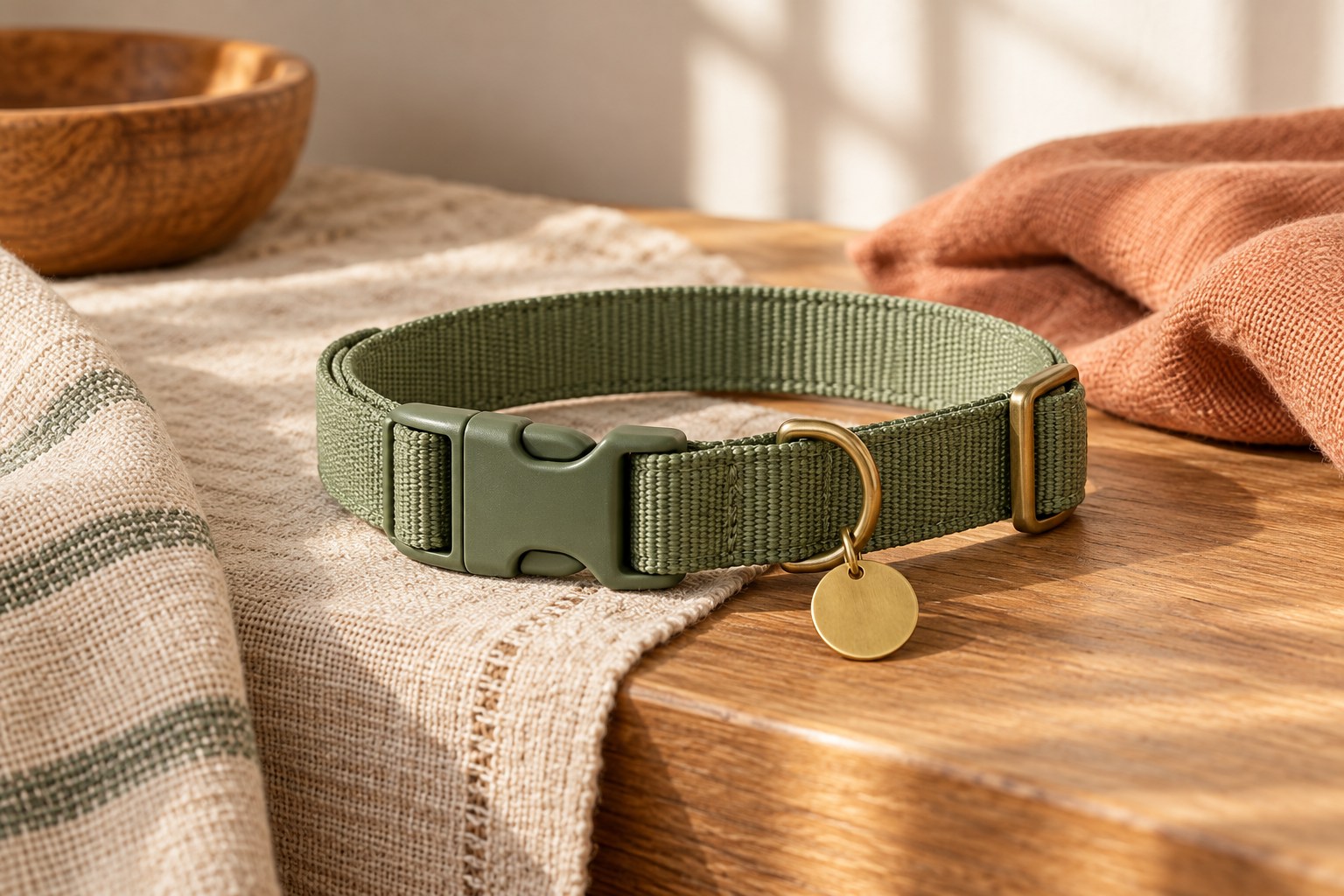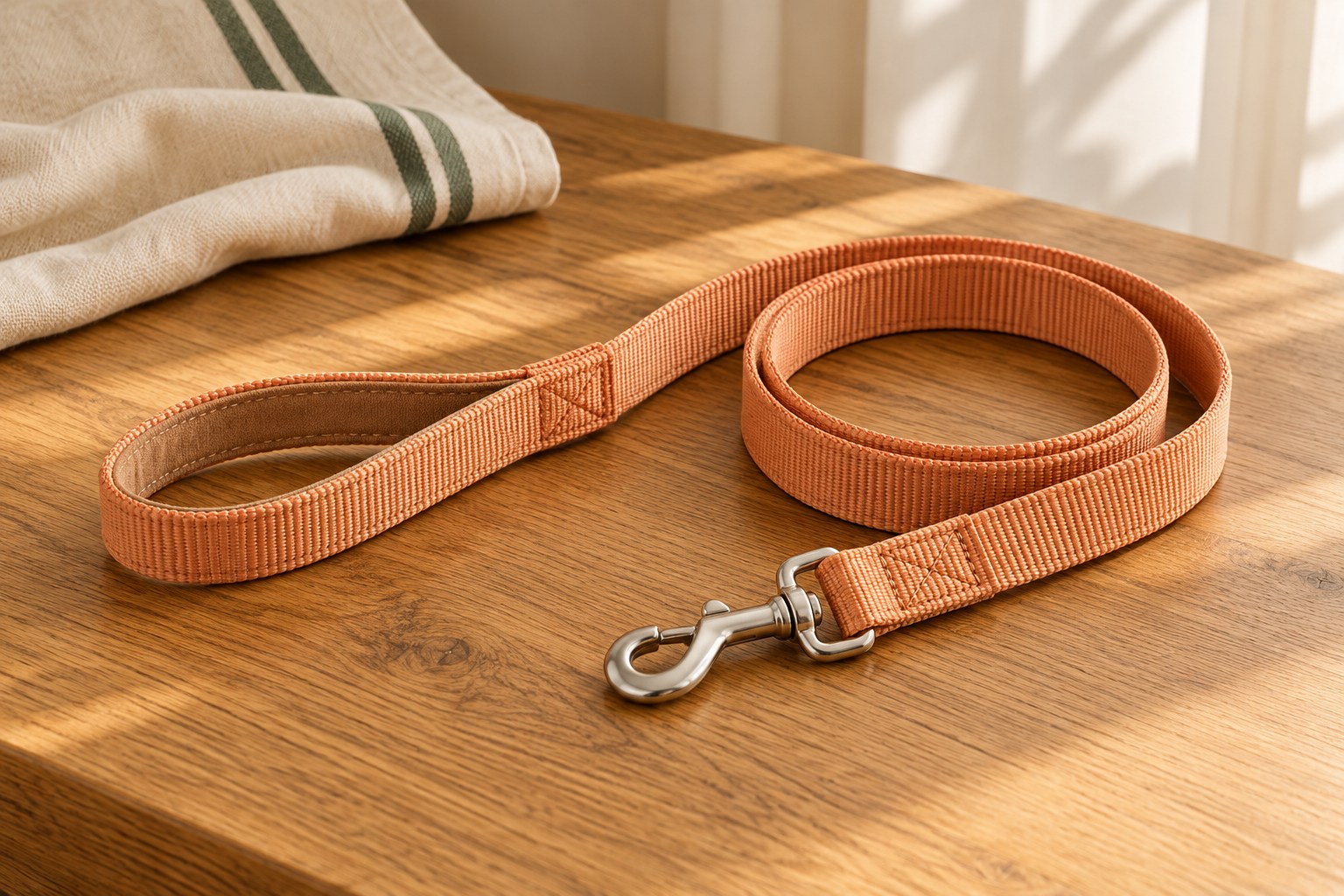
A double-ended leash has a clip at each end and usually several rings along its length. Reconnecting one clip to a ring changes the working length or creates a handle. Connecting both ends to suitable harness points creates a two-point arrangement. These options can be useful, but they ask the handler to understand where every loop and clip goes.
Learn one configuration at home before attempting to change it beside a busy road.
Identify load-bearing rings
Look at the manufacturer’s diagram to distinguish adjustment rings from decorative fittings. Check whether both end clips are identical and whether the leash is intended for the connection you have in mind. Lay it flat and build the shortest and longest recommended configurations without a dog attached. This makes it easier to spot a twisted loop, a clip connected to the wrong ring, or an arrangement that leaves a heavy unused end swinging close to the dog’s face.
Set a useful handle size
A large loop may fit around a shoulder but create too much slack for normal hand use. A small loop may be comfortable barehanded yet impossible to reposition with winter gloves. Assess the configuration while wearing your usual walking clothes. Keep the handle out of the dog’s reach and avoid wrapping material around your wrist. If the ring position forces an awkward grip at the length you actually need, a conventional fixed leash may be simpler.
Practice two-point connections
When attaching to front and back harness rings, organize the leash so each branch can remain slack during ordinary walking. Constant opposing tension can rotate the harness and make handling confusing. Practice quiet turns indoors and observe which section moves first as you change direction. A hypothetical dog with a low chest attachment may need careful management to prevent the front branch entering the forelegs. Follow the harness instructions and use gentle contact instead of attempting abrupt steering corrections.
Decide which flexibility you will use
Frequent reconfiguration is inconvenient if clips are stiff, rings are small, or your dog cannot comfortably wait. Set the leash before leaving when possible. Check for fingers caught between a clip and ring, and inspect moving gates for hair or grit. Do not improvise a hands-free or two-dog arrangement simply because the parts can connect; those uses place different demands on balance and hardware. A versatile product is valuable when its documented configurations genuinely match your daily tasks.
Compare a preset length with repeated adjustment
A hypothetical walk may require one short setting from home to the park and one longer setting inside. That is a clear use for adjustment, provided there is a secure place to stop and reconnect the clip. If the route changes width every few steps, repeatedly rebuilding the leash may be less convenient than gathering ordinary slack by hand. Versatility is useful when its timing matches the route.
Set out the recommended configurations on a table and photograph the one you intend to use. Check whether the ring is easily distinguished from a neighboring ring in poor light. If another household member walks the dog, make sure they can reproduce the same arrangement without guessing. A mistaken connection can create a much longer leash than expected or leave an end without a proper handle.
After reconfiguring, look along the entire leash before moving on: both clips fully closed, intended ring captured, no twist around a leg, and sufficient comfortable slack. This brief pause is part of using the adjustable feature, so include it when deciding whether the product genuinely simplifies your routine.
For our approach to product claims and illustrations, see the Editorial Policy.