Identification works when someone can read the useful information quickly. Tiny decorative lettering, crowded layouts, and several overlapping tags can make that harder. Noise is another practical issue: metal pieces striking each other may bother the dog or the household, but covering every tag can hide the information it was meant to carry.
Design the identification arrangement as a small readable system, then check any local legal requirements separately.
Prioritize information over decoration
A clear contact number is usually easier to act on than a social handle or a long slogan. Choose lettering with enough contrast and spacing, and ask how many characters fit at a genuinely readable size. Include legally required details for your location, checking current rules rather than copying another owner’s tag. Keep private information limited to what serves the purpose. A tag does not need a life story, and an unfamiliar finder should not need an app simply to reach the owner.
Match shape to the collar
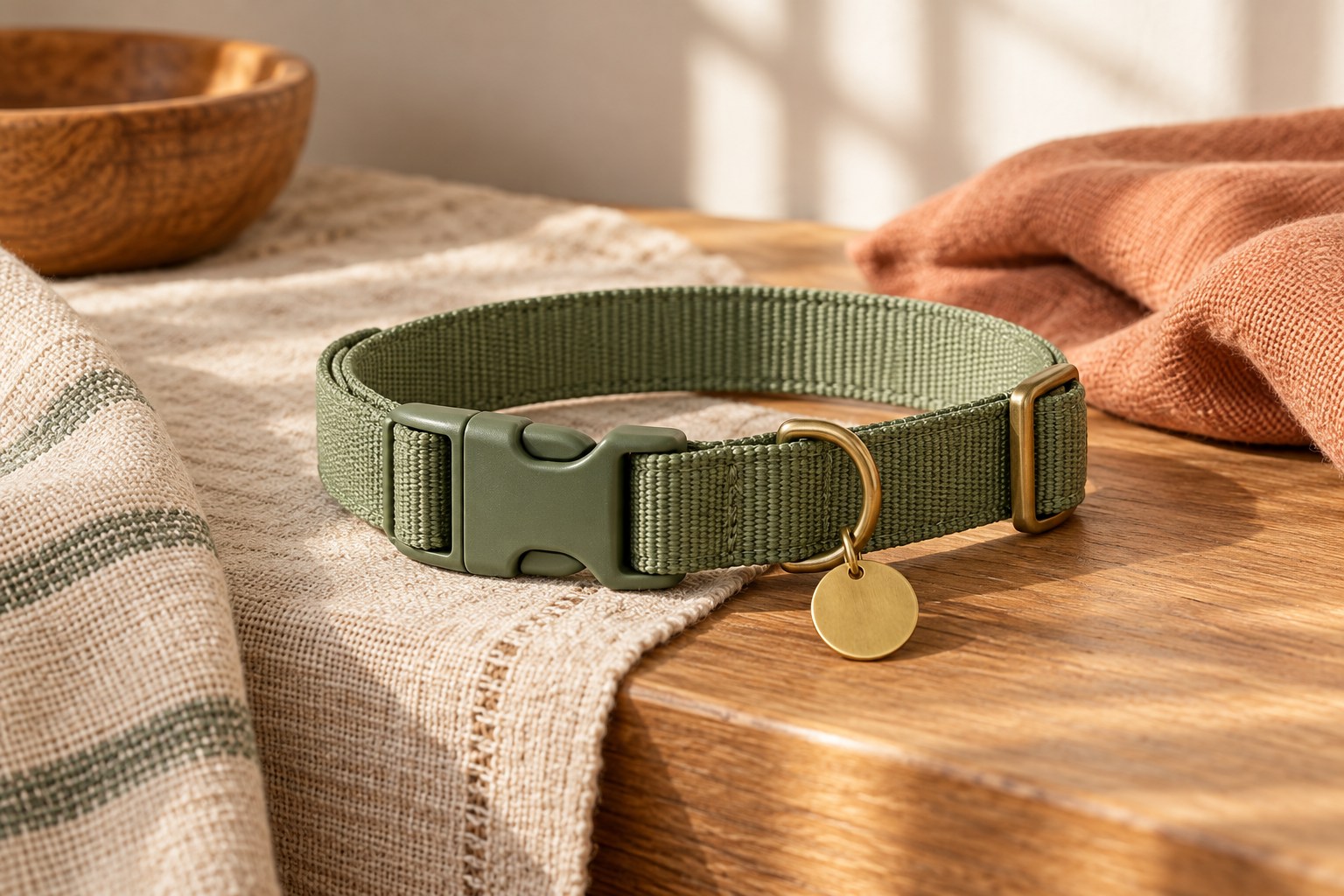
Large hanging tags can strike the chest of a small dog or catch in low openings. A compact round or rounded rectangle may move more predictably than a long shape with projecting points. Slide-on plates reduce swinging but must fit the collar width and material. Some sit securely on flat webbing but are unsuitable for thick padding or a buckle that blocks installation. Check that the identification plate does not interfere with the adjustment slider or make the inner surface rigid.
Reduce collisions rather than hiding text
A silicone edge silencer may soften metal-on-metal contact while leaving engraving visible. A fabric pouch can quiet several tags, but it introduces an opening that a finder must discover and it can retain moisture. If multiple required tags are present, separate their contact points or use an appropriate organizer. Avoid stacking decorative charms that add weight without adding useful information. Check the arrangement while the dog walks and shakes, since a quiet collar held still may sound very different in motion.
Inspect the small attachment
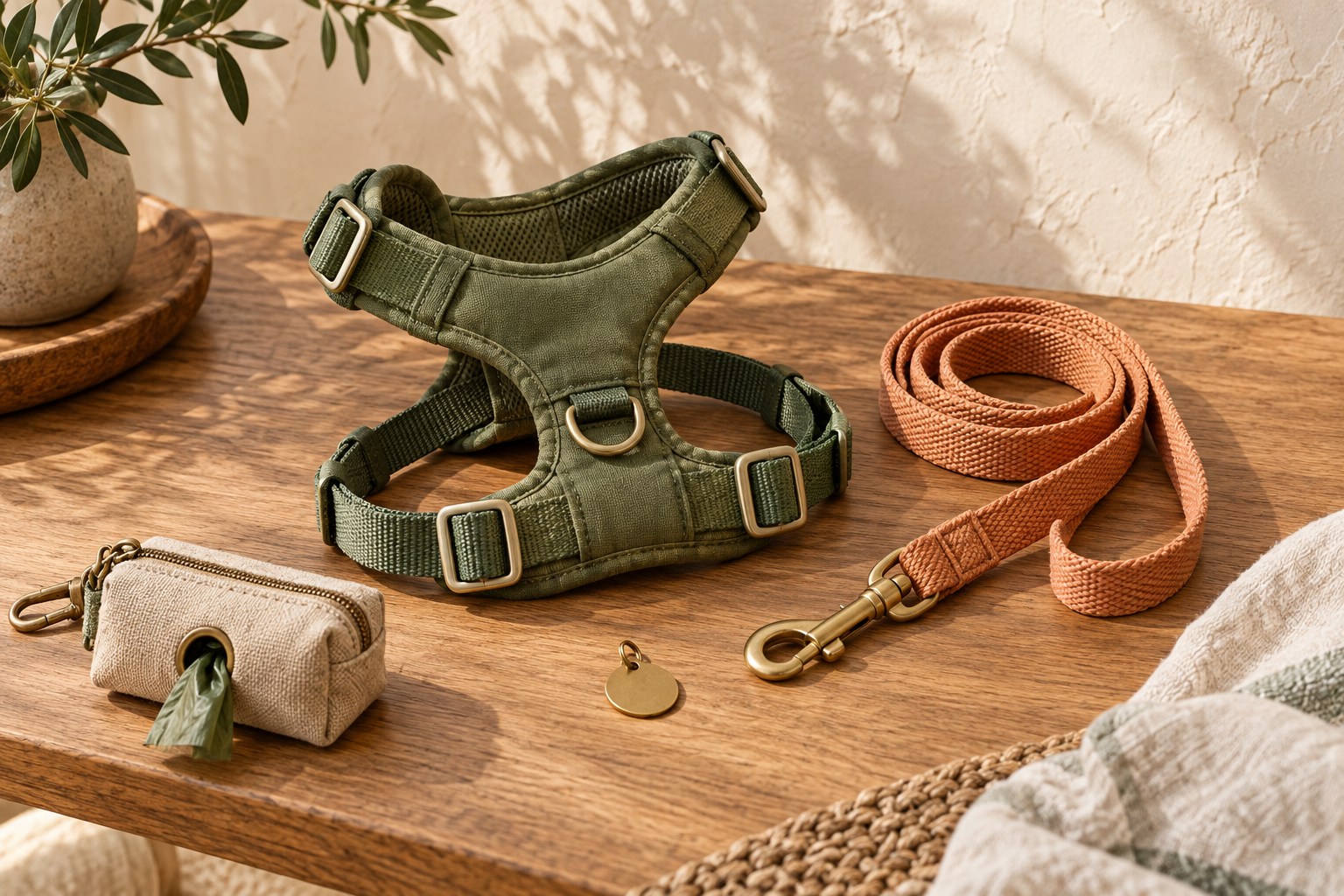
A split ring can gradually open, distort, or wear where it rubs against another ring. Inspect that joint when you check the collar buckle. Use hardware intended for tags and the product’s specified attachment; the tag ring is not a leash connection. After swimming or a wet walk, make sure covered tags can dry and remain legible. A hypothetical address change is also a good prompt to inspect the physical hardware rather than replacing the engraved plate and keeping a weakened old connector.
Keep the contact route current
Read the tag as though you had never seen it before. Is the number complete, including a country code where that is helpful? Does a QR service require an account or subscription, and will conventional information remain if the service is unavailable? Maintain any microchip registration separately; a tag and a registered microchip serve different circumstances. Recheck engraving as surface wear develops, particularly on tags that frequently rub against one another or drag against bowls and hard surfaces.

For our approach to product claims and illustrations, see the Editorial Policy.