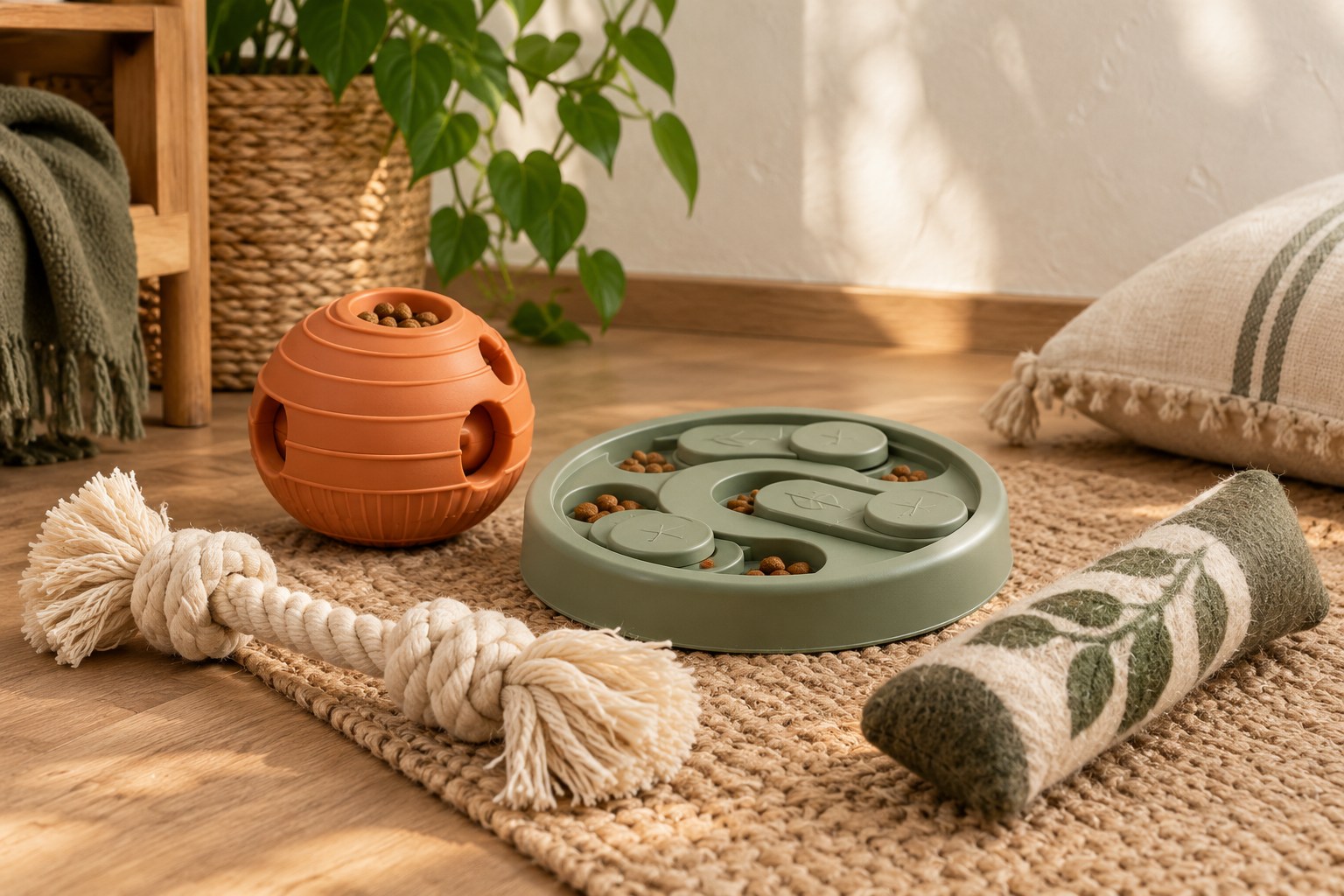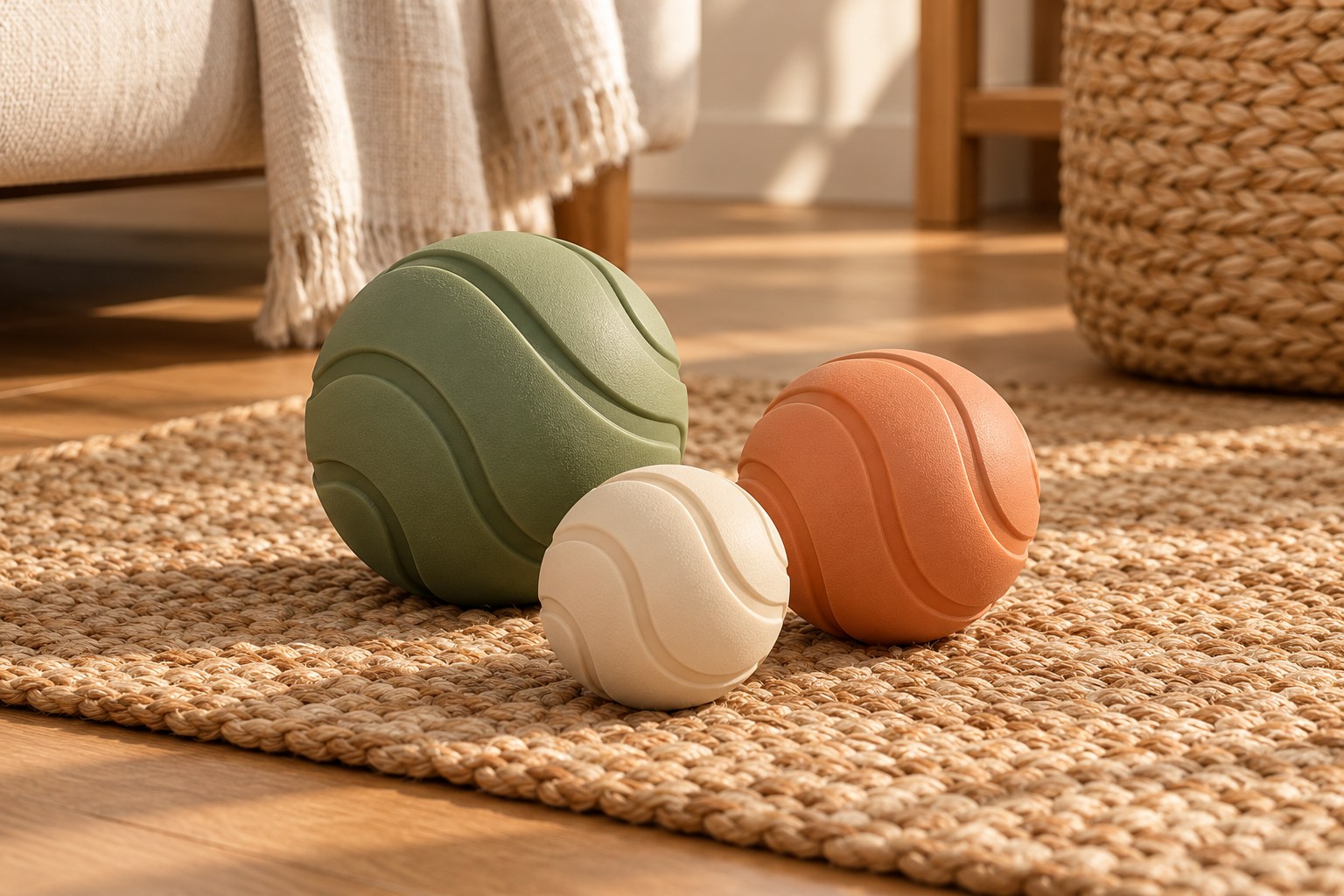
A rolling food toy uses movement to bring food toward an opening. The size of that opening matters, but so do the internal path, the food's shape, and the surface beneath the toy. A narrow setting is not automatically more engaging; it can simply prevent anything from coming out.
Use food already suitable for the individual pet and account for it within the established feeding plan. This is an equipment adjustment, not a reason to add an unplanned serving. Keep the activity supervised and choose a toy whose size and materials suit the animal's intended use.
Find the smallest passage
The visible opening may not be the narrowest point. Some toys use an internal baffle or channel before food reaches the outer hole. Read the assembly diagram and inspect the empty product to see where pieces might gather.
Compare those passages with the actual contents. A small round piece and a thin flat piece can behave differently even when their longest dimensions match. Avoid crushing food to make an unsuitable design work unless the manufacturer supports that approach and it suits the intended food handling.
Run a hand test first
With a small amount loaded, move the toy gently over the intended surface while watching the release. Begin with the most accessible supported setting. If nothing appears, inspect for a blocked path before assuming the pet needs to work harder.
For a hypothetical adjustable ball, an opening that releases several pieces with each small roll may be a useful introduction. Closing it slightly later can create a different interaction. Closing it until ten ordinary rolls release nothing provides little information beyond a likely mismatch between setting and contents.
Consider the floor's contribution
A smooth hard floor lets a ball travel farther, while a rug may slow it or stop it at a seam. Furniture can trap the toy beneath an unreachable edge. Choose a clear supervised area and remove small objects that could become mixed with released food.
Listen to the sound as well. A hard toy may be noisy on tile, while a soft outer shell can collect dust or hair. Do not add a cover or sleeve that blocks openings, hides damage, or changes the intended operation. Select a design suitable for the actual room instead.
Change release rate gradually
Observe whether the pet rolls the object, bats it once and waits, or tries to bite it open. Adjust within the supported settings to keep the interaction achievable. If chewing becomes the main strategy, stop and reconsider the toy rather than making the opening smaller.
Make one change per session and note the result. A record such as broad opening on the kitchen mat produced steady release is more useful than recording a supposed difficulty level. Different floors may justify different supported settings for the same toy.
Keep the closure secure
End caps, threaded halves, and adjustment rings should be fitted according to the instructions. Check them before play and again afterward. A cap that loosens during rolling can become a separate object and release all contents at once.
Do not overtighten a threaded part to compensate for a worn closure. If the toy no longer stays assembled as intended, replace the affected supported component or retire it. Adhesive repairs can interfere with both food contact and cleaning.
Empty and clean the internal path
At the end, remove remaining food and disassemble the toy as directed. Listen and look for pieces trapped behind baffles rather than assuming an empty sound proves the interior is clear. Wash permitted parts and dry the internal passages completely.
Choose a model whose opening and baffles you can actually inspect. A toy that offers an appealing rolling action but hides residue behind a sealed chamber may not be practical for repeated food use. Maintainability is part of the release mechanism's design quality.
For our approach to product claims and illustrations, see the Editorial Policy.