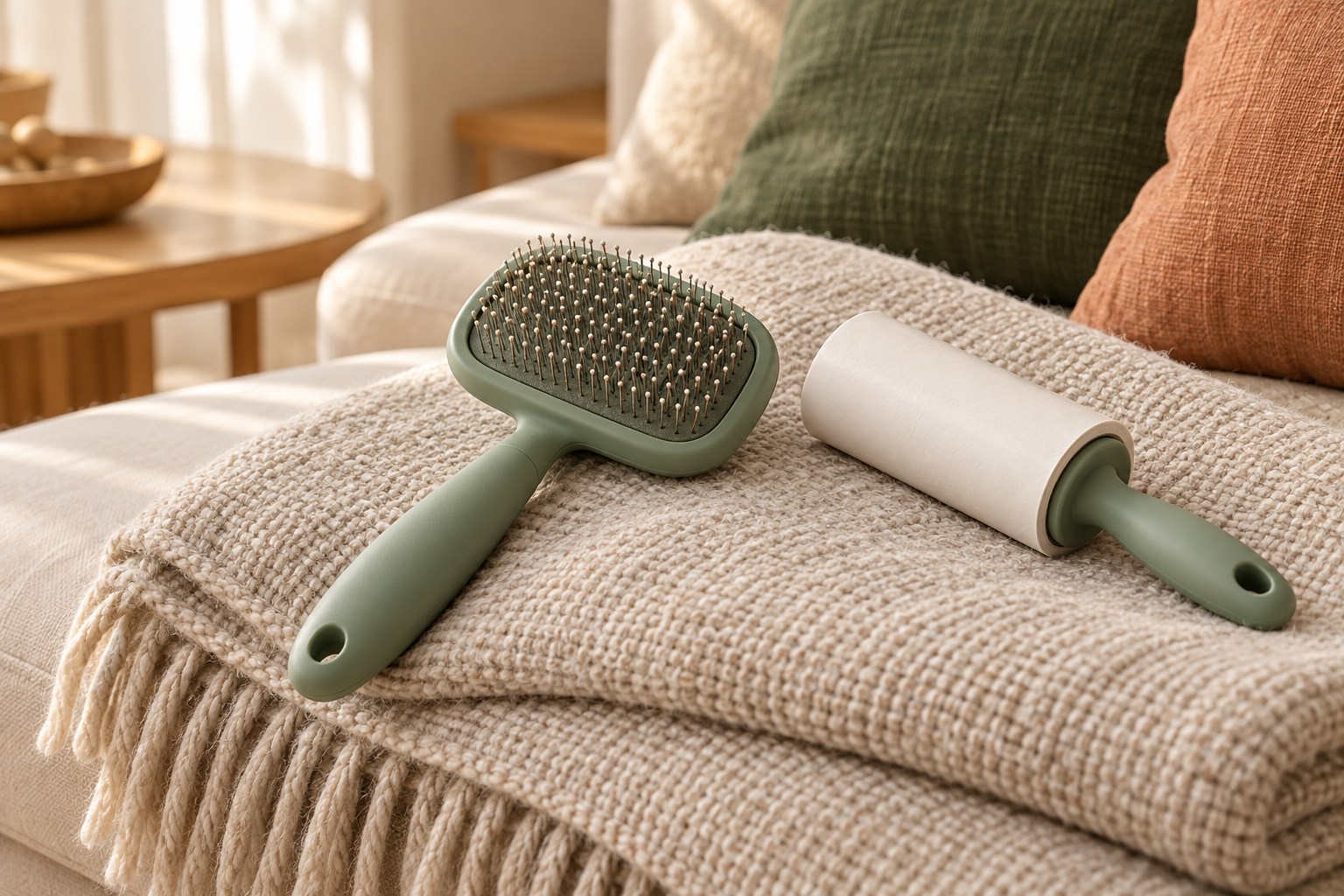
Reusable lint tools use several different mechanisms under a similar name. Some have directional fabric, some move hair into a chamber, and others use a washable tacky surface. Their convenience depends on the material being cleaned and on resetting the tool properly. Identify the mechanism first so the promised reusability becomes a practical household routine rather than an attractive label.
Learn the intended movement
A directional fabric roller may need back-and-forth motion or a particular stroke direction to collect hair. A tacky surface may need rinsing and complete drying before it works again. Read the actual instructions instead of applying one product's method to another. Demonstration videos can clarify the movement, but the fabric's compatibility still needs separate checking.
Handle orientation affects that movement. A tool that is easy to use on a broad horizontal seat may be awkward on a vertical chair back. Check whether the grip allows a relaxed wrist and whether the head reaches near seams without hard housing edges rubbing the textile. Extra width can speed broad coverage while reducing maneuverability around curved furniture.
The tool should move without forceful scraping. If the mechanism only seems effective when pressed hard, reassess surface compatibility and technique. Deeply embedded hair may need another suitable cleaning method. A reusable design is useful when it preserves the textile and makes ordinary cleaning repeatable, not when every session becomes a prolonged attempt to reproduce a promotional result.
Inspect collection and emptying
For chamber-style tools, look at how the compartment opens and whether the collected hair can be removed without spreading it back over the furniture. A tiny chamber may need frequent emptying; a large one can make the tool bulky. Check the latch and hinges because a chamber that opens unexpectedly can undo the cleaning work. Operate the empty tool first to understand the reset.
Internal corners and seals can retain fine hair. Follow the cleaning instructions and avoid immersing a mechanism that is not designed for water. A removable insert may be convenient if it is securely refitted and available as a replacement. Do not assume the entire tool can be washed simply because one working surface is described as washable.
Tacky rollers create a different maintenance task. Residue, drying time, and protective storage may affect how often they can be used. Keep the supplied cover if one is provided and follow the specified cleaning method. A bare tacky surface placed in a drawer can collect unrelated debris before the next session. Reusability still requires care between uses.
Match the roller to household textiles
Check the maker's permitted surfaces and test an inconspicuous area as directed. Smooth clothing fabric, sturdy upholstery, and loose knitted throws are different tasks. Raised piping and delicate trim may need to be avoided. Do not run a household lint roller directly over a pet as a substitute for an appropriate grooming tool; its role is cleaning compatible objects.
After use, inspect the textile for pulled fibers or changes in surface appearance. If a roller catches repeatedly, stop rather than changing direction aggressively. A vacuum tool or washing routine may be more appropriate. Keep disposable sheet rollers available only if they serve a clear different role; accumulating every format can make the cleaning drawer harder to manage without improving results.
Store the clean tool where pets cannot chew it and where heavier items will not distort the head. Inspect fabric strips, seals, and chamber hinges over time. Replace worn working parts through approved options, or replace the tool when the mechanism no longer functions soundly. A reusable roller earns its place through many suitable gentle uses, with each reset leaving it genuinely ready for the next one.

For our approach to product claims and illustrations, see the Editorial Policy.