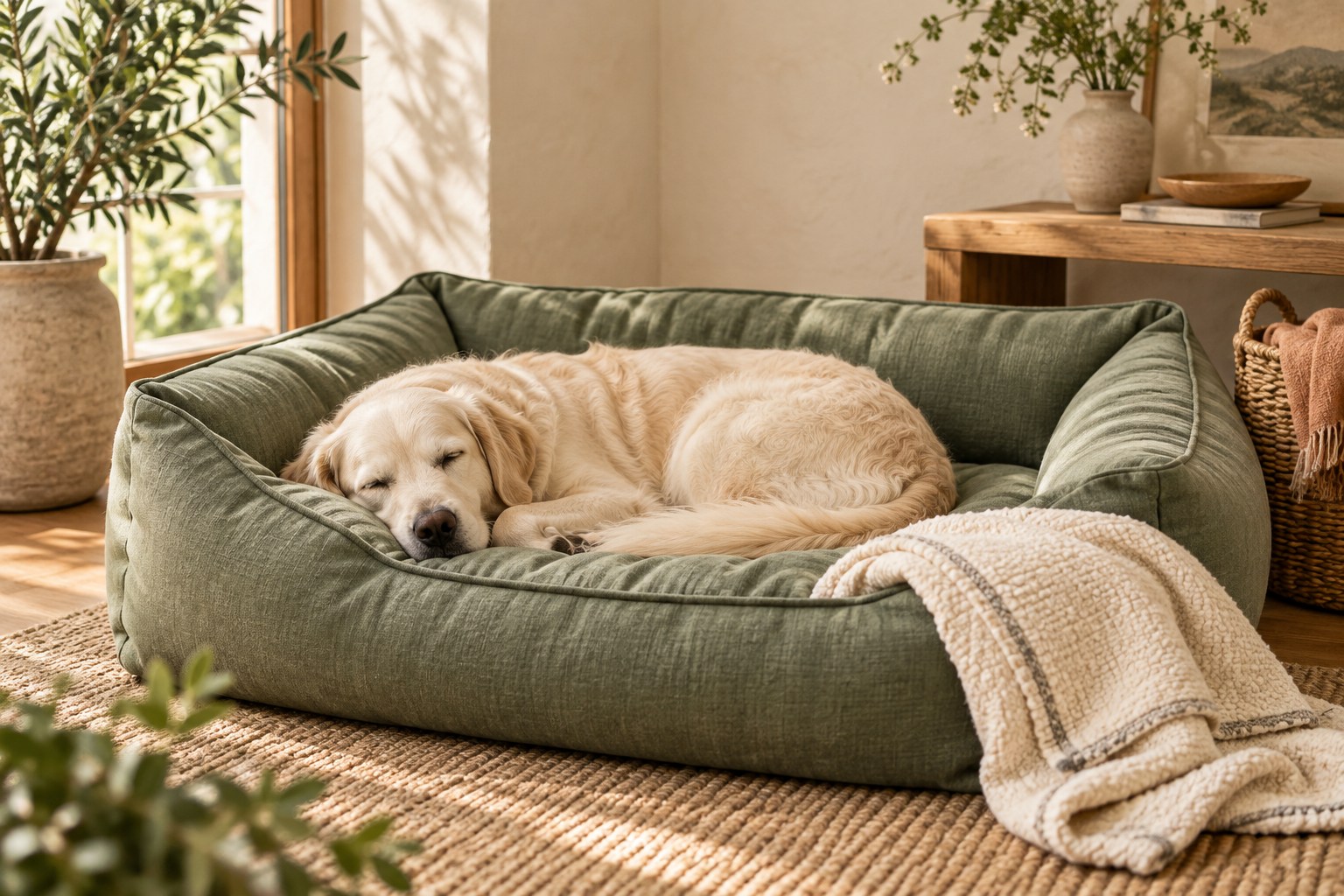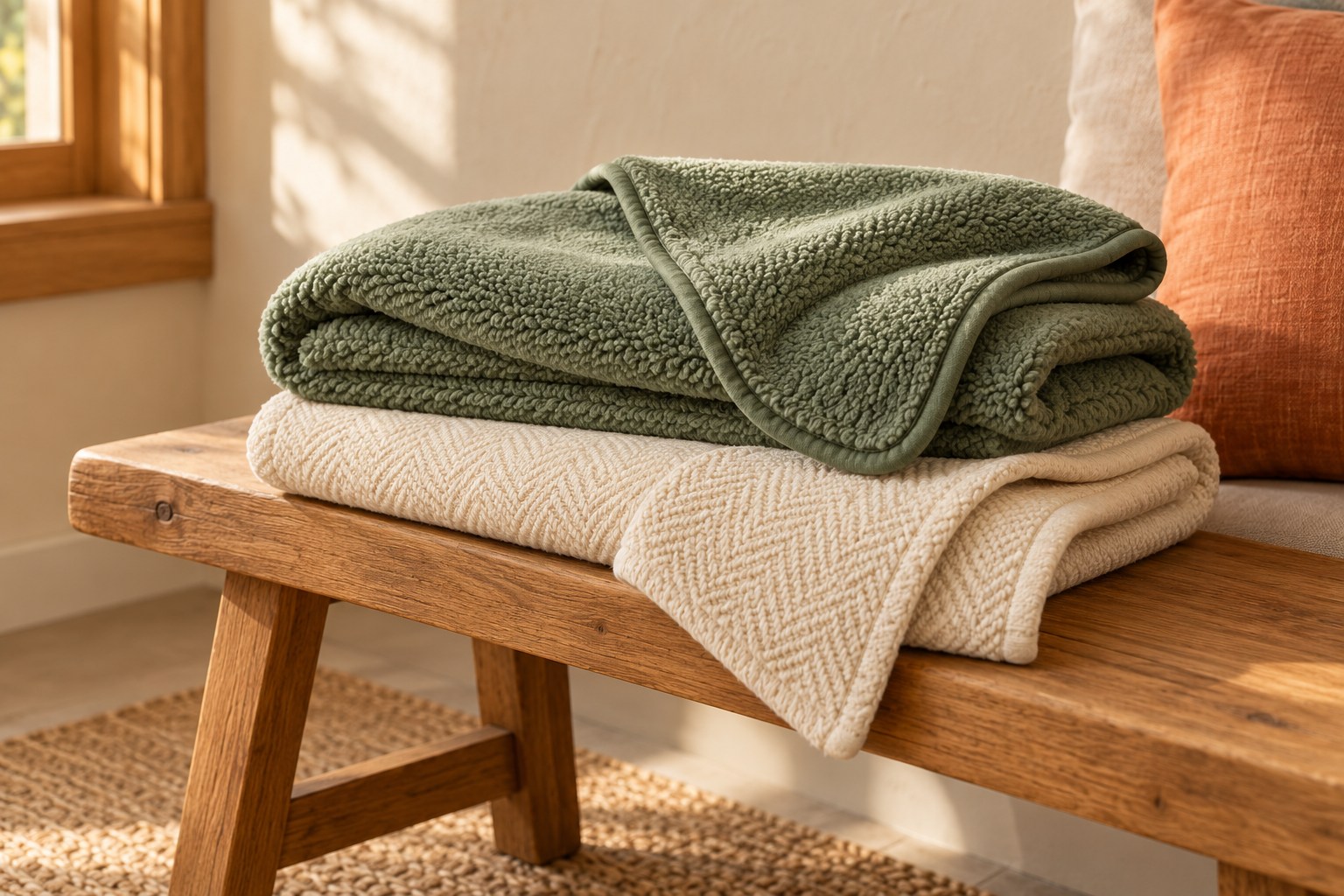
A pet blanket has a simpler job than a full bed: it adds a removable surface that can be washed or moved independently. Yet the wrong material can become a slipping, bunched layer that creates more work. Before choosing a pattern, decide whether the blanket will cover a mattress, protect one corner of a sofa, or travel between several resting places.
Fleece and its practical compromises
Fleece is usually lightweight relative to its thickness and easy to fold into a portable layer. Its soft surface may suit pets that already choose similar household throws. Hair can cling to the pile, though, and different fleeces vary in how readily they release debris. Examine the reverse as well as the front; a very smooth backing may slide on a polished cushion.
The edge finish deserves attention. A narrow stitched hem makes a flatter layer than a thick decorative binding, while long fringe adds something to mouth or pull. Look for consistent stitching without exposed loops. If a pet repeatedly chews textile edges, choose supervision and an appropriate alternative rather than expecting a heavier fleece to solve that behavior. No ordinary blanket is an edible or chew-safe accessory.
Woven fabrics provide a different surface
A tightly woven cotton blanket generally feels less plush and can create a flatter, more defined layer. The weave and weight affect drape, so the fiber name alone cannot predict how it sits over a bed. Fine claws and coarse coat hairs may interact differently with open and closed weaves. Avoid loose decorative loops where the pet is likely to paw before settling.
Cotton may require a different drying routine from a synthetic fleece. Read permitted temperatures, shrinkage guidance, and whether the item should be reshaped after washing. A blanket that shrinks enough to uncover the chosen resting zone may be inconvenient even though its fabric remains sound. Compare dimensions after any expected washing change, particularly when the blanket is intended to tuck around a fitted mattress.
Quilting adds structure and seams
A quilted layer sandwiches filling between textile faces. It can provide a little body without the bulk of a full cushion, but stitched channels create more edges for hair and crumbs. Check whether the filling is held evenly across the entire surface. Large unstitched areas may allow material to migrate, while very dense quilting can make the blanket stiffer than the product photograph suggests.
Thicker quilting also means more material to dry. A quilt that spends a day damp on a rack may require a second blanket in rotation. Inspect the inner layers when possible through the care information; a washable shell does not always mean the whole construction tolerates every machine setting. Dry it completely before folding for storage, especially where seams bring several layers together.
Fit the layer to its location
For a mattress, choose enough fabric to cover the sleeping surface without leaving a long skirt where paws can catch or a pet can pull it down. For a sofa corner, measure the seat depth and the anchoring area rather than buying only for the pet's body length. A layer that bunches repeatedly may need a fitted alternative instead of a larger loose throw.
Keep cleaning simple by using one blanket at a time and checking the bed beneath it. A clean top can hide dirt at the edges, and a dry-looking blanket can cover a damp cushion. Rotate and inspect both components. Buying a second identical blanket can help during laundry, but a small trial purchase first avoids multiplying a fabric that does not suit the pet or the household.
For our approach to product claims and illustrations, see the Editorial Policy.