Indoor fetch is easiest to manage when it is treated as a small retrieval exercise rather than an outdoor game squeezed between furniture. A short roll across a clear surface can be more appropriate than a throw that rebounds unpredictably. Start by choosing the space, then select the toy.
Check that the activity suits the individual animal and its abilities. Keep movements modest and stop if footing, excitement, or the room layout makes the game hard to control. A small room does not become suitable simply because the toy is soft.
Inspect the route at floor level
Remove loose objects, cables, and small items that could be mistaken for the toy. Check low table edges, narrow furniture gaps, and doors that might open into the route. A ball rolling beneath a cabinet can turn a planned game into repeated reaching and frustration.
Look at the stopping point as well as the start. The animal needs room to slow and turn without hitting a wall or sliding into furniture. Avoid using a dead-end corridor as a distance target if it encourages a rapid approach to a hard boundary.
Test the floor before choosing motion
Smooth floors, loose rugs, and transitions between surfaces can affect grip. Use a suitable stable surface and avoid a game that encourages skidding. A runner should lie flat and stay secure rather than wrinkle under movement.
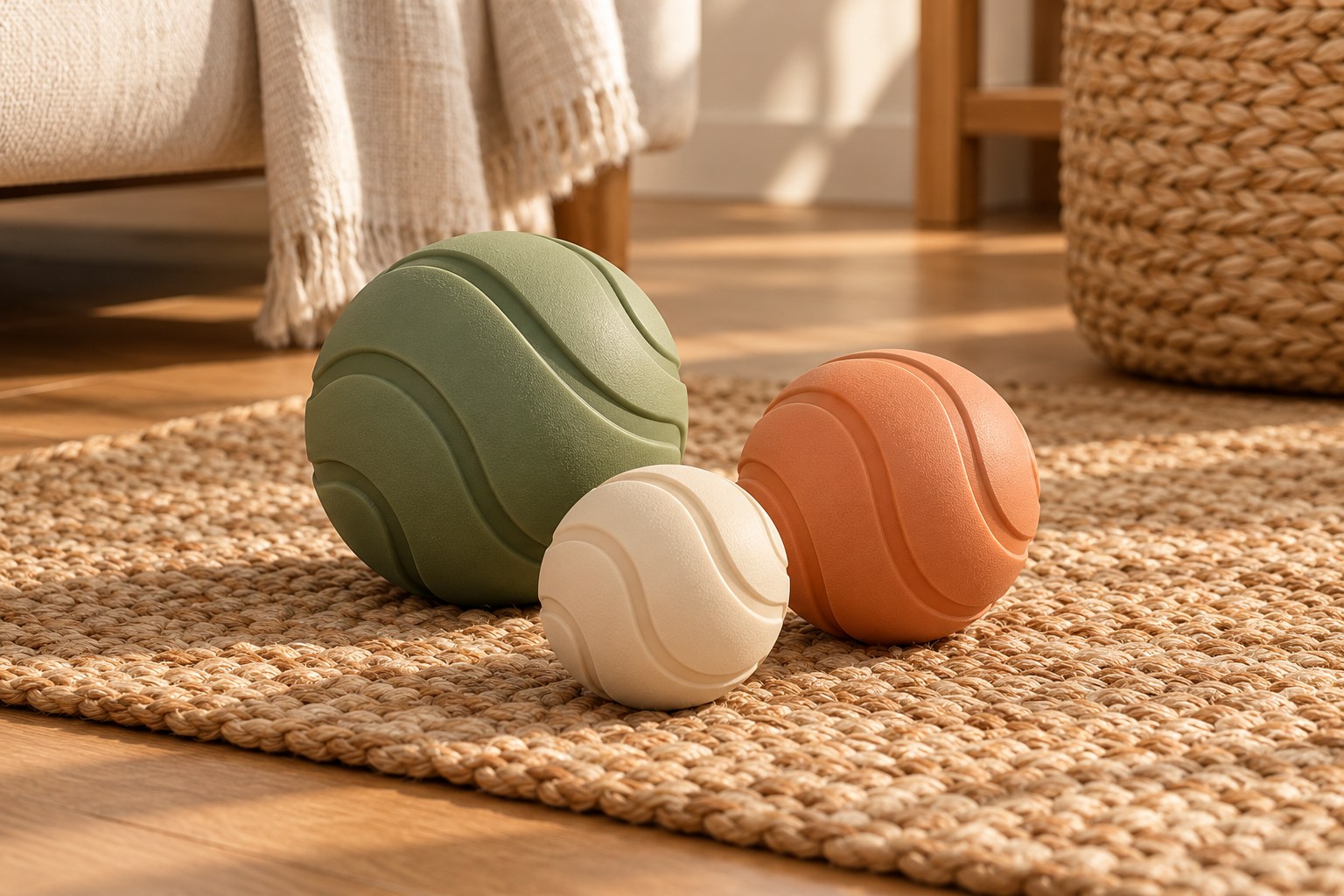
Roll the empty toy yourself and watch how it behaves. A foam ball may stop quickly on one surface and bounce unexpectedly on another. If a toy repeatedly changes direction at a rug edge, choose a simpler path or another activity instead of making longer throws.
Select quiet, inspectable equipment
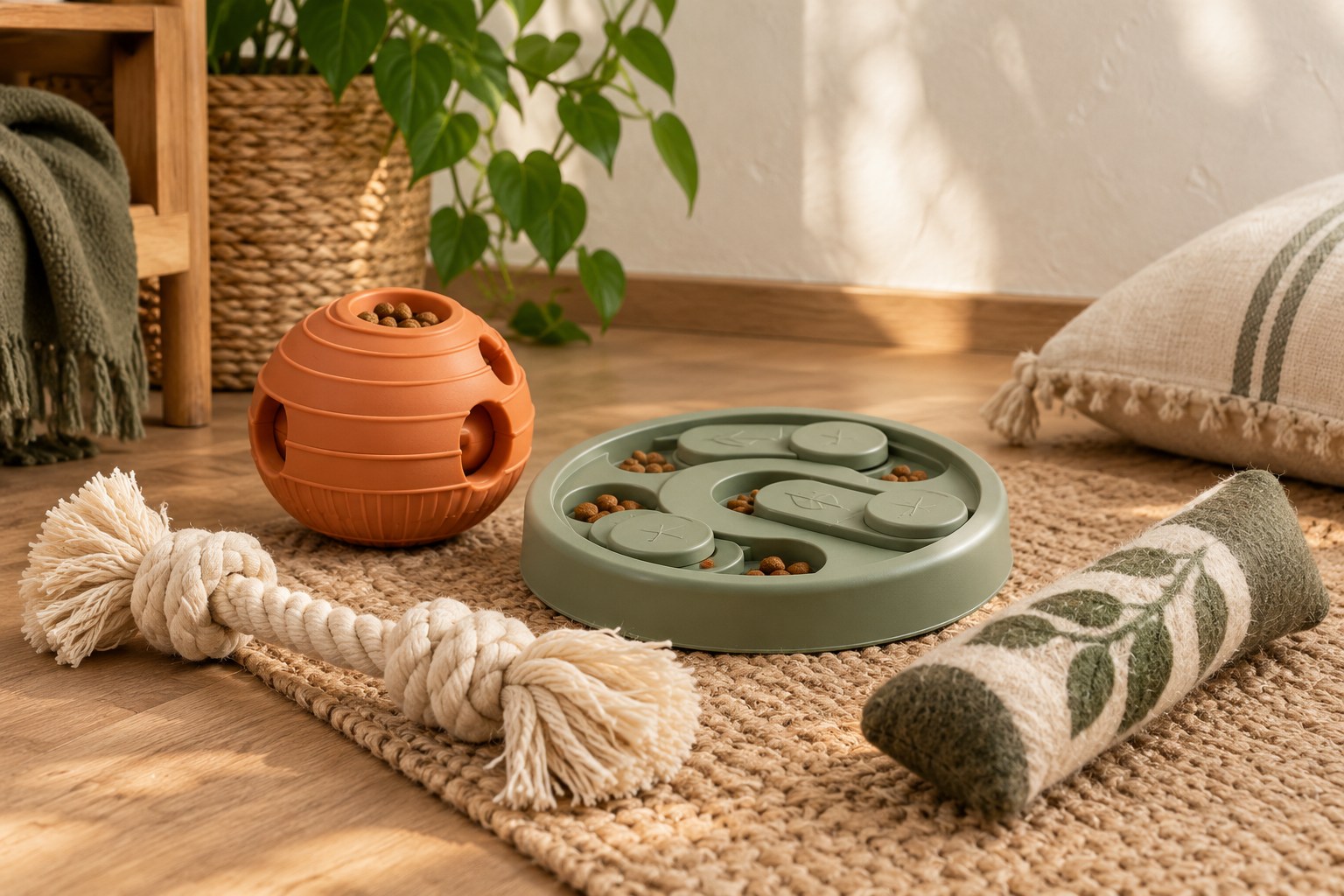
Choose an appropriately sized pet toy intended for the activity. A soft surface may reduce impact and noise, but it still needs seams and condition checked. Avoid small household balls, improvised socks with loose contents, or toys whose hard fittings can strike furniture.
For a hypothetical apartment living room, a soft elongated toy rolled a short distance may stay in the clear area more predictably than a high-bounce ball. The choice depends on the actual floor and pet, so test movement before increasing the pace.
Use a defined start and finish
Keep the retrieval distance short enough to remain controlled. Pause between repetitions and reset the toy rather than launching continuously. If the animal begins jumping at the person's hands, grabbing furnishings, or turning the game into chewing, stop and reassess.
You can end with a simple exchange and put the toy away. There is no need to keep the session going until the room's limitations become a problem. A few manageable repetitions may suit the space better than a long sequence.
Consider alternatives when the layout fails
A supervised search game or suitable puzzle may fit a crowded room better than retrieval. Do not rearrange heavy furniture or block normal exits just to create a throwing lane. The home should remain practical for everyone sharing it.
After play, collect the toy and inspect any soft edges or seams. Check under furniture for released pieces or forgotten secondary toys. Keeping the activity equipment separate from general household objects helps preserve a clear distinction during the next session.

For our approach to product claims and illustrations, see the Editorial Policy.