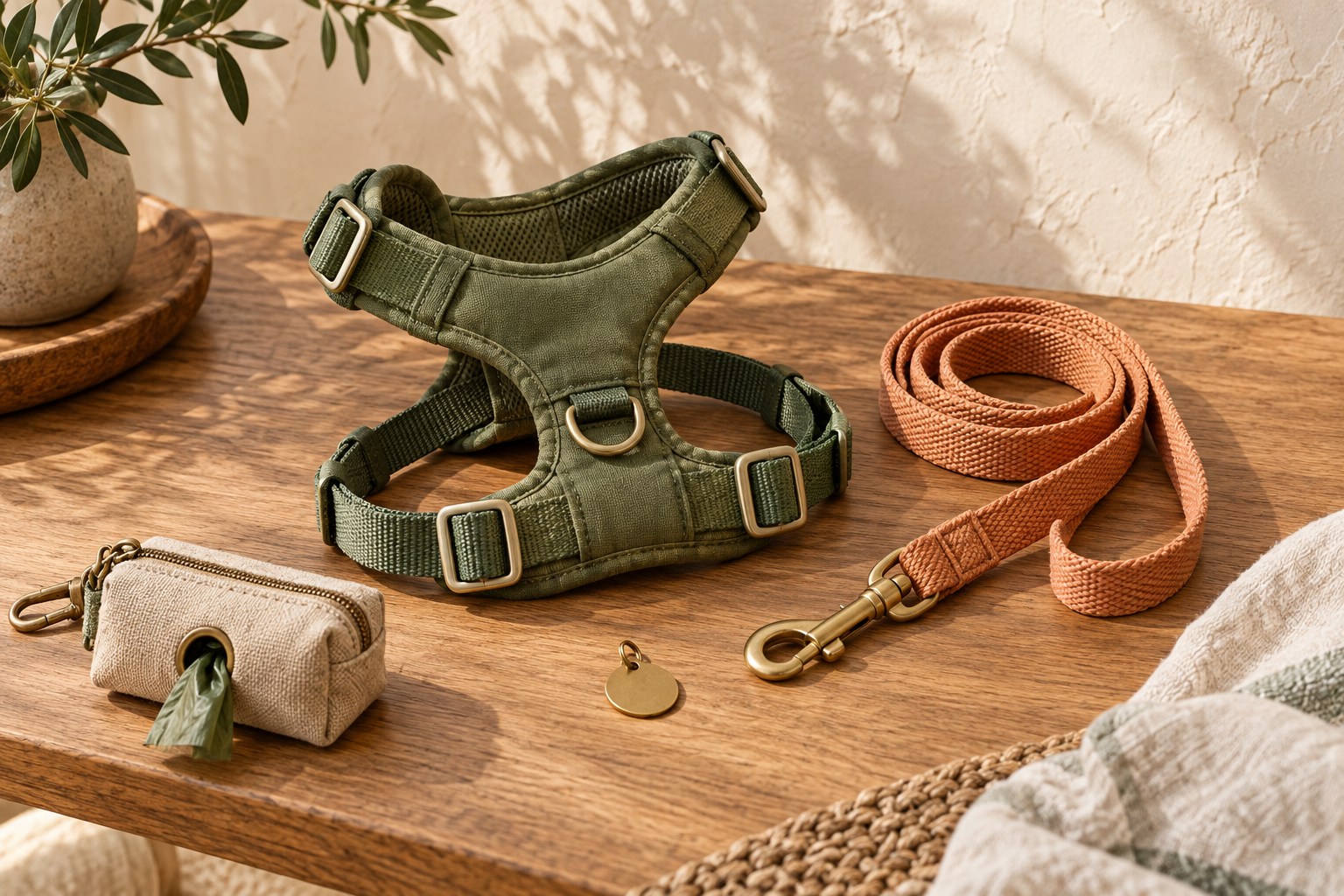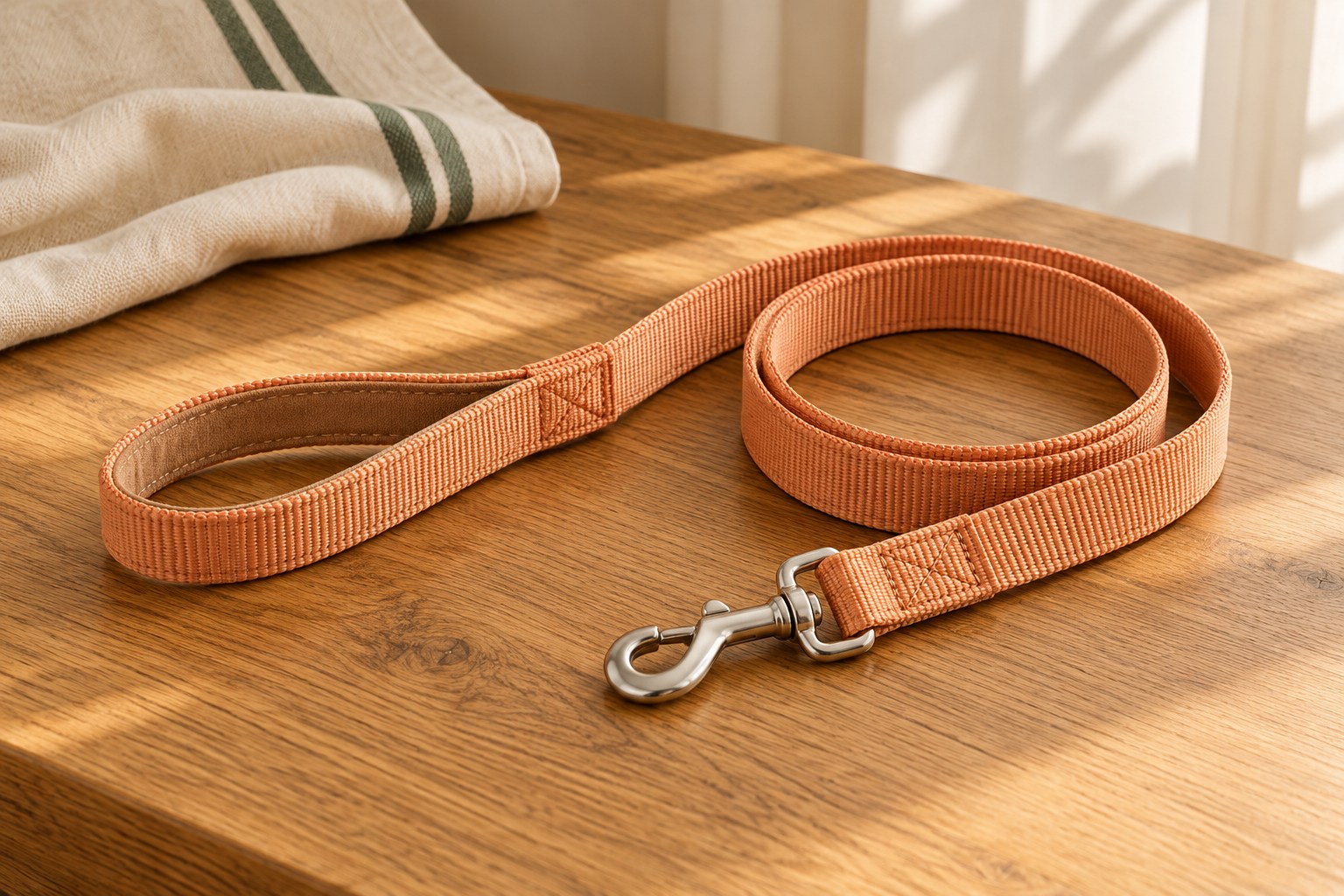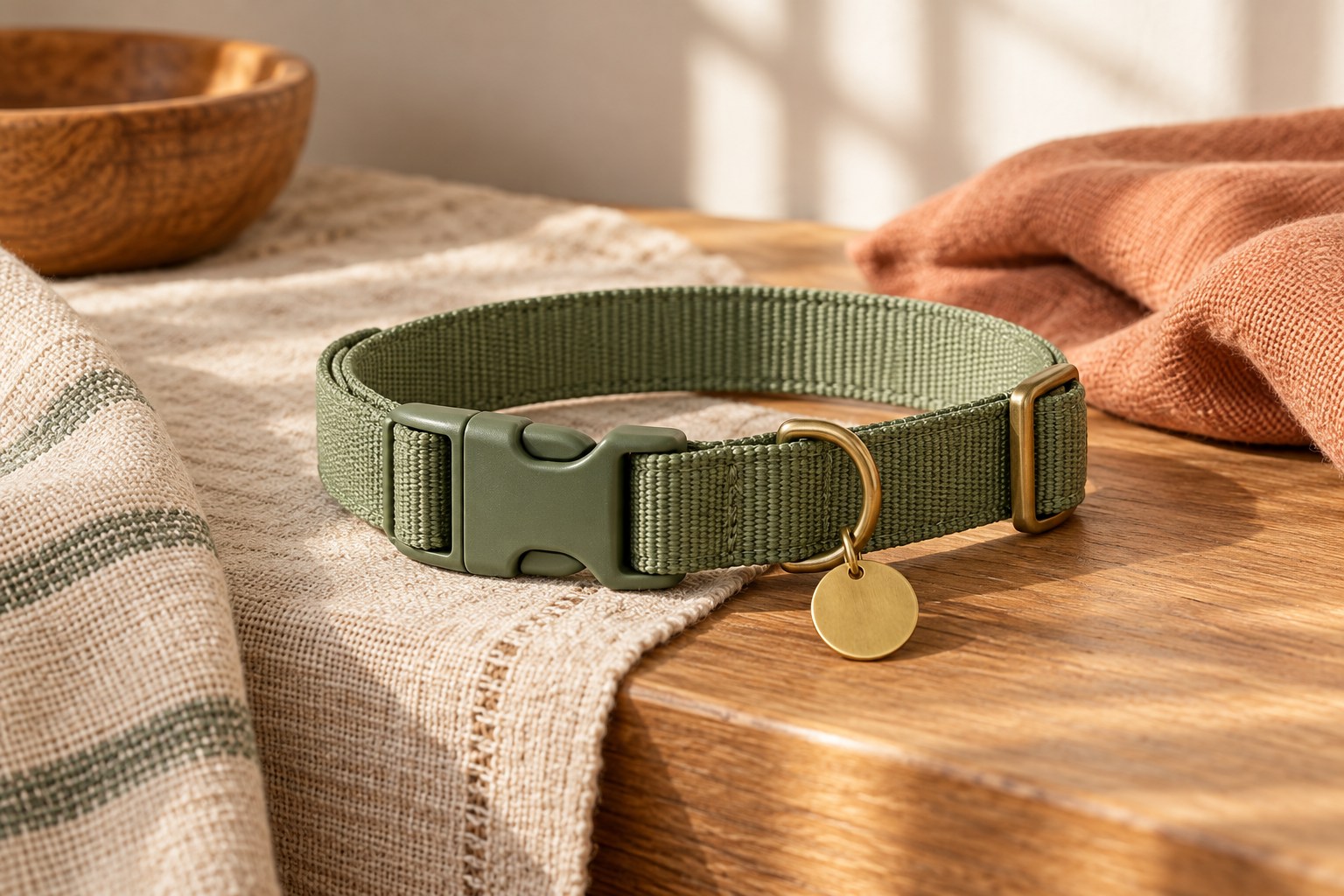
Collar closures affect how a collar goes on, how precisely it adjusts, and how easily its condition can be checked. A side-release buckle is quick to open and close. A pin buckle offers a familiar belt-like fastening with fixed holes. Neither type is automatically appropriate merely because it looks sturdy.
Evaluate the closure together with the strap, the adjustment method, and the dog’s proportions. The weakest or least convenient part determines how the whole collar works.
Operate the closure before choosing
Try fastening the collar with the hands and clothing you normally use for walks. A small side-release buckle may be hard to squeeze with gloves, while a stiff pin buckle may require several seconds of threading near a moving dog’s face. You should be able to see or feel that a side-release buckle is fully engaged on both sides. For a pin buckle, confirm that the pin passes cleanly through the selected hole and that the strap is threaded correctly.
Compare continuous and stepped adjustment
A slider can offer small changes within a range, useful when the dog falls between fixed hole positions. However, a slider that creeps along smooth material may change fit during use. A pin buckle holds at defined holes, which makes the setting easy to remember but can leave one hole too loose and the next too tight. Do not punch an extra hole casually: its position, edge finish, and effect on the strap need the manufacturer’s guidance.
Look where the strap bends
Repeated folding around a buckle concentrates wear. On a hole-based collar, inspect for elongated holes, cracks, and thinning near the pin. On a side-release version, check the buckle arms for damage and the strap fold for loose stitching. Sand and hair can obstruct closure. Rinse or clean as directed and allow the mechanism to dry. A buckle that sometimes sticks or requires an extra push should not be accepted as normal just because it eventually closes.
Keep the free end controlled
Excess strap should sit through its keeper without projecting far enough to catch on objects or invite chewing. If the tail is so long that it doubles back into the buckle, the collar may be outside its useful adjustment range. A hypothetical growing dog may outgrow one size before the material wears out. That is a fit issue rather than a reason to remove a keeper or cut through structural stitching to extend the product’s life.
Make the daily check specific
After fastening, inspect the closure itself rather than only tugging at the leash. Confirm the correct ring is used and that identification hardware has not wedged into the buckle. Keep a suitable replacement available so a damaged clasp can be retired promptly. For dogs that find collar handling difficult, build a calm dressing routine with reward-based training support; a faster buckle may help logistics, but it does not resolve fear around hands approaching the neck.
For our approach to product claims and illustrations, see the Editorial Policy.