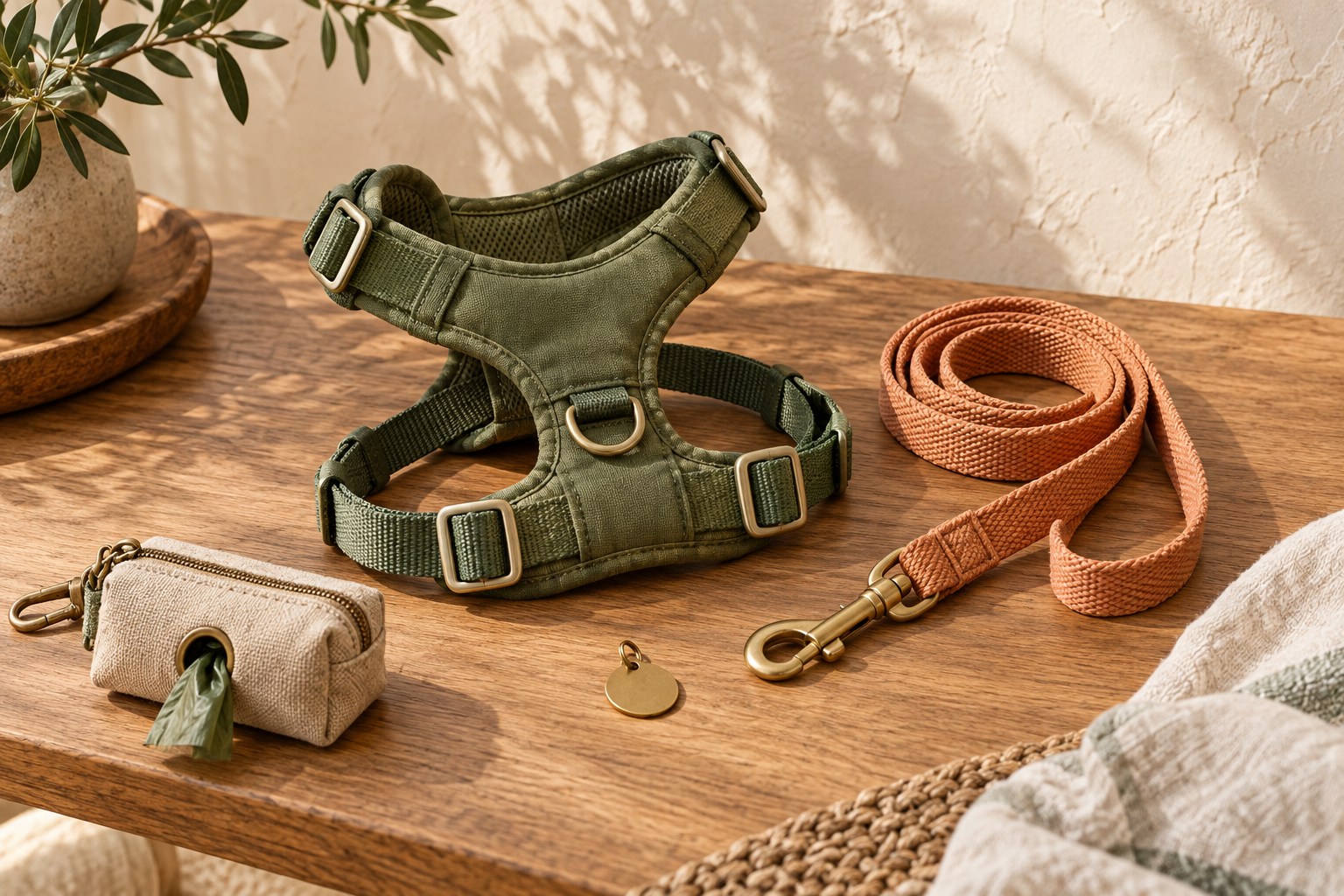
Some dogs reverse direction when startled or uncertain. In that movement, a conventional harness can shift forward toward the head. A three-strap design adds a band behind the main rib band, usually around a narrower part of the torso. Its purpose is additional retention, but the extra strap makes precise fitting more important rather than making the product escape-proof.
Choose it for a specific handling need and inspect how every section sits on the dog.
Identify the function of each band
The front opening positions the harness around the neck and chest, the main girth band supports the ribcage, and the rear band limits forward movement over the wider chest. Read the fitting diagram because manufacturers place that rear band differently. It should not cinch tightly over soft abdominal tissue or interfere with toileting. A design with a long connecting bridge may suit one body shape while hanging loosely on another. More coverage is useful only when the pattern fits.
Fit the rear strap without clamping
Adjust the main harness first so its chest section and rib band are correctly placed. Then bring the rear strap into contact according to the maker’s instructions, checking clearance with the dog standing and sitting. Look for even alignment rather than pulling one side tighter. A narrow strap digging into the belly is not a solution to slipping. If the dog’s shape offers little difference between chest and waist, the extra band may provide less retention than the packaging suggests.
Practice the awkward moments indoors
Doors, unfamiliar surfaces, and sudden noises can trigger backward movement. In a secure indoor space, rehearse turning toward you and moving away from a doorway without pulling the dog through it. Keep the leash positioned so it does not draw the harness toward the head. If an identification collar and a separate backup connector are used, follow both products’ instructions and ensure neither becomes the primary point of sustained tension. Extra connectors also need checking for snagging and excessive length.
Keep inspection part of the routine
A longer harness has more fabric and more opportunities for rubbing. After a short walk, inspect the belly, the back of the forelegs, and any area beneath a buckle. Recheck after washing and after changes in weight or coat thickness. Never use a retention harness as a tie-out or leave it on unattended simply because it feels secure. When a dog frequently panics outdoors, qualified behavior support can help address the circumstances that equipment alone cannot resolve.
Compare retention with ordinary comfort
A rear strap can limit forward movement, but it also occupies an area that a conventional walking harness leaves open. Check whether the dog can sit, bend to sniff, and take a normal stride without that band moving toward the hind legs or pressing into the belly. A product may be secure in a still photograph while becoming awkward during these ordinary changes of shape.
Imagine a slim dog whose chest narrows markedly behind the ribs. The rear band may fit at a smaller circumference than the main band, but it still needs comfortable clearance. Now compare a dog with a much straighter torso: reducing the rear band dramatically may simply clamp soft tissue rather than creating a useful retention shape. Follow the intended fitting method and ask the maker whether the design suits the body type. Additional material should have a clear mechanical role on that individual dog.
Plan the doorway routine explicitly
A dog that backs away near the front door may need a predictable sequence before the walk begins. Secure the equipment in a closed indoor area, check every buckle, gather the leash, and open the exterior door only when the dog is ready to move with you. Avoid standing outside and drawing the dog toward the opening by the leash. If it hesitates, pause and reduce the difficulty.
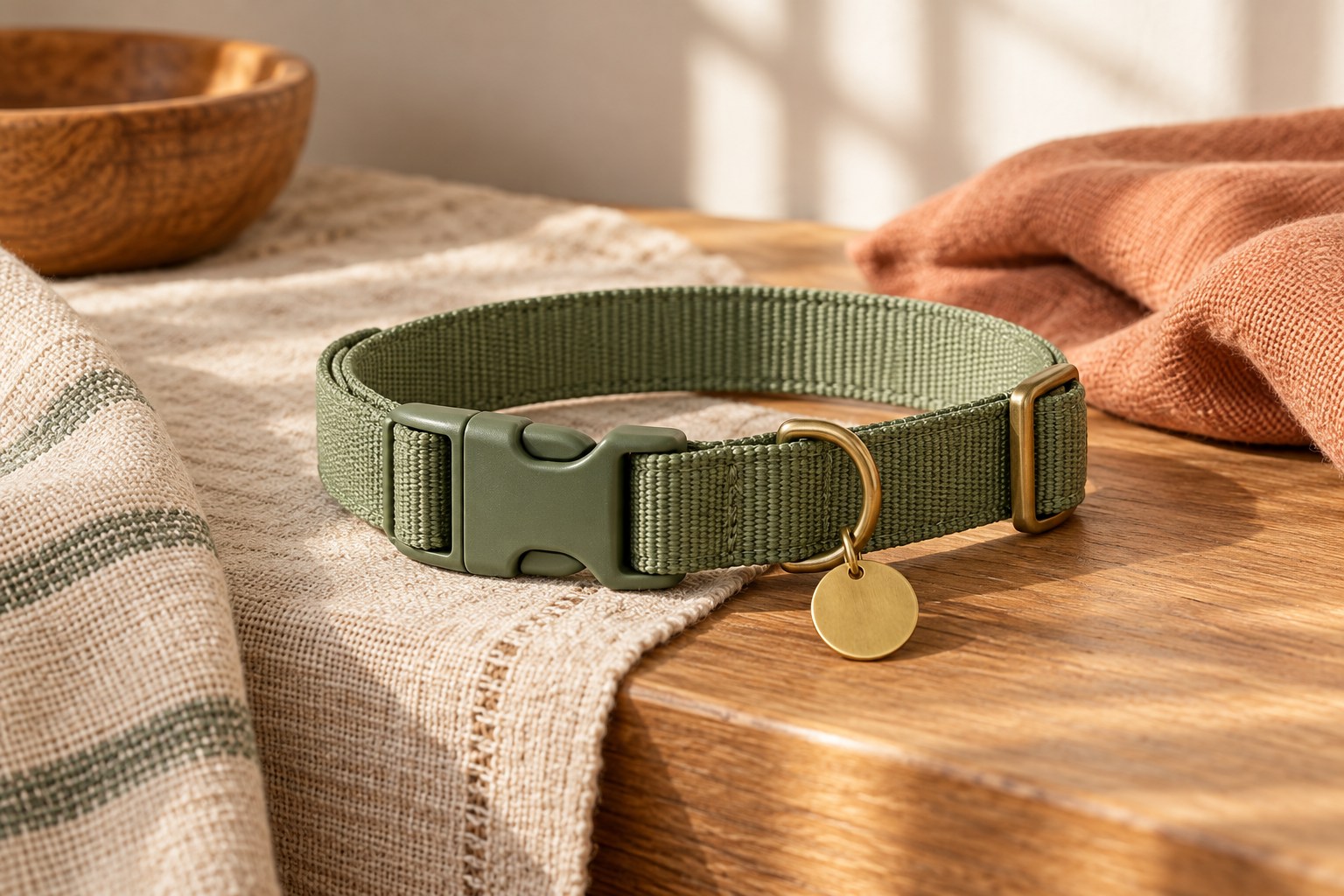
A backup connection, where appropriate and used according to instructions, should be short enough not to dangle into the legs but should not constantly transfer tension to the neck. Practice the whole arrangement in good light so each attachment is obvious. Keep identification current and consider qualified behavior guidance for repeated fear or escape attempts. The harness is one part of an exit routine that also includes secure doors, calm handling, and routes matched to the dog’s present confidence.
Label the intended rear strap in your fitting notes if the harness is easy to reverse. Its shape may look roughly symmetrical when laid flat, but the retention band has a specific position. Check orientation before fastening rather than discovering the mistake outside.
For our approach to product claims and illustrations, see the Editorial Policy.