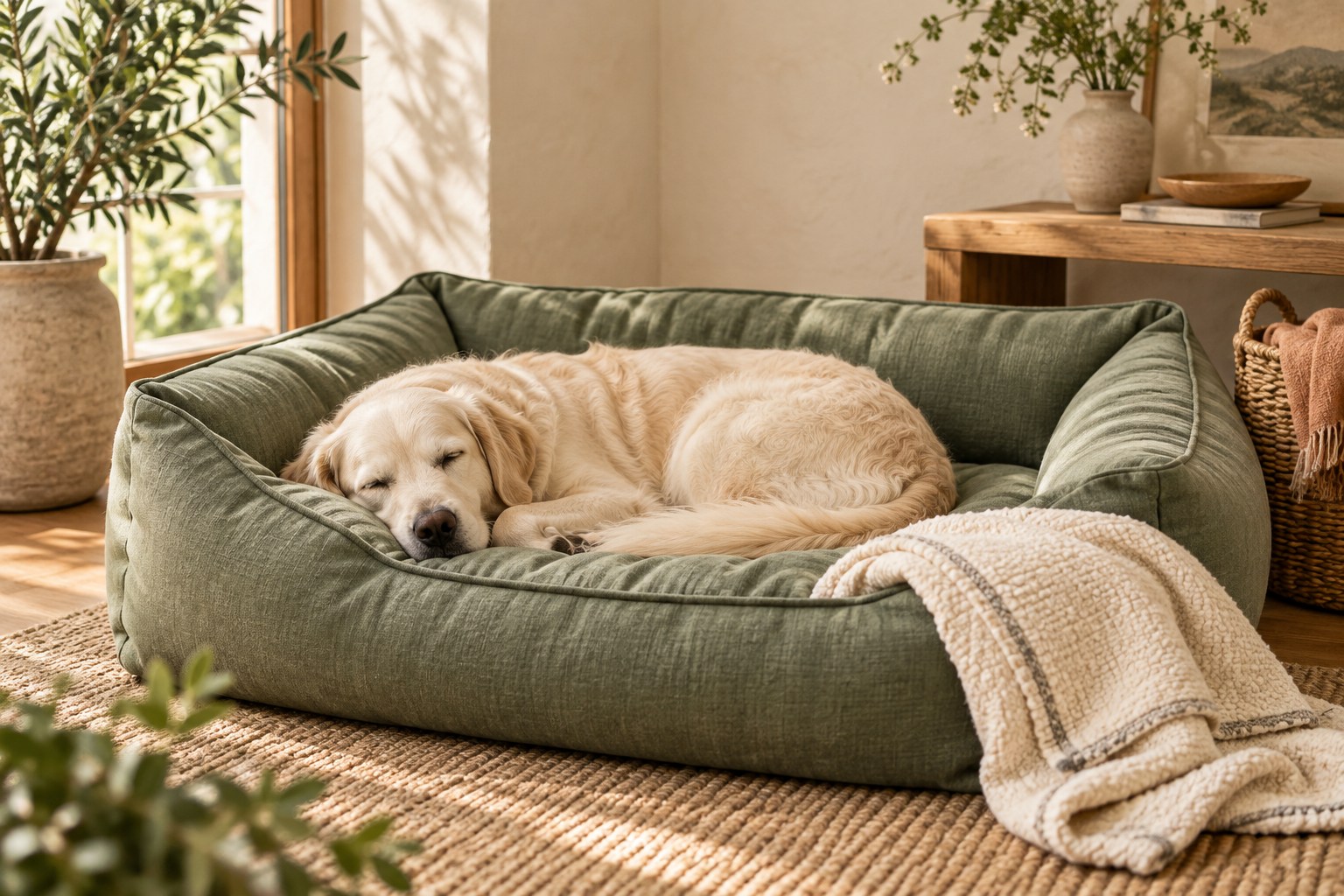
A dog's weight helps narrow a bed search, but it does not describe the space that dog uses asleep. Two equally heavy dogs may choose completely different shapes: one curls into a compact circle, while another extends legs beyond a square cushion. Begin with ordinary resting behavior before choosing a size from a retailer's chart.
Measure the sleeper and the surface
Watch a few settled naps rather than asking the dog to pose beside a tape measure. Mark the approximate footprint on the floor with removable tape, then measure its longest and widest points. Include the paws if they regularly extend forward. Leave a modest margin for turning and repositioning; a bed that only fits one carefully arranged pose is restrictive.
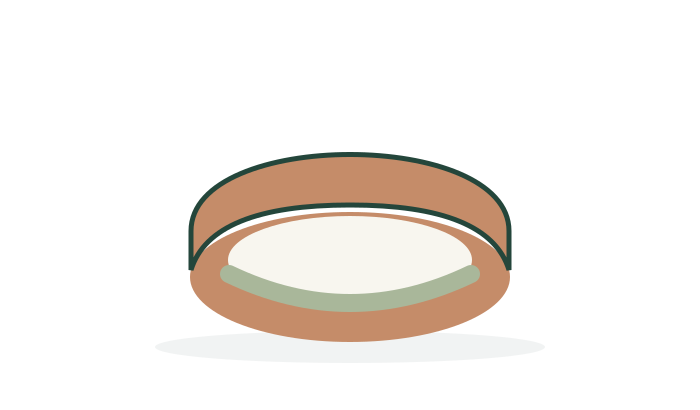
Compare those measurements with the internal sleeping platform. Advertised dimensions often include thick bolsters, piping, or a decorative outer shell. A rectangular bed measuring ninety centimeters outside might offer considerably less space between its raised sides. Ask for a diagram when the listing gives only the overall footprint, especially when the photograph makes the center appear unusually large.
Match the boundary to the posture
A curled sleeper may appreciate sides against its back, but an enthusiastic stretcher can find a fully enclosed bolster frustrating. An open front or two low sides provides a boundary without blocking every direction. A flat mattress lets a dog place its head wherever it wants, and can be easier to enter when a high rim would require an awkward step.
Consider how the dog gets onto the bed as well as how it lies there. A soft edge may collapse beneath a paw; a firm edge can remain a physical obstacle. Place a folded household blanket inside a taped outline to check the proposed location and orientation before ordering. This is a space rehearsal, not a substitute for assessing the actual product after arrival.
Allow for the room around it
An oversized bed can be inconvenient in a narrow room even when the dog fits beautifully. Leave a clear route past doors, drawers, and frequently used seating. The bed should not need to be moved every time a cupboard opens. If two pets share a room, separate resting spots may be more useful than one enormous cushion that both must negotiate.
Inspect the return conditions before removing packaging, then assess the delivered bed with its cover and filling fully expanded. Photograph its internal dimensions and compare them with the listing if something differs. A size name such as medium or extra large has no consistent meaning across brands, so retain the measured numbers for future replacement covers and purchases.
For our approach to product claims and illustrations, see the Editorial Policy.