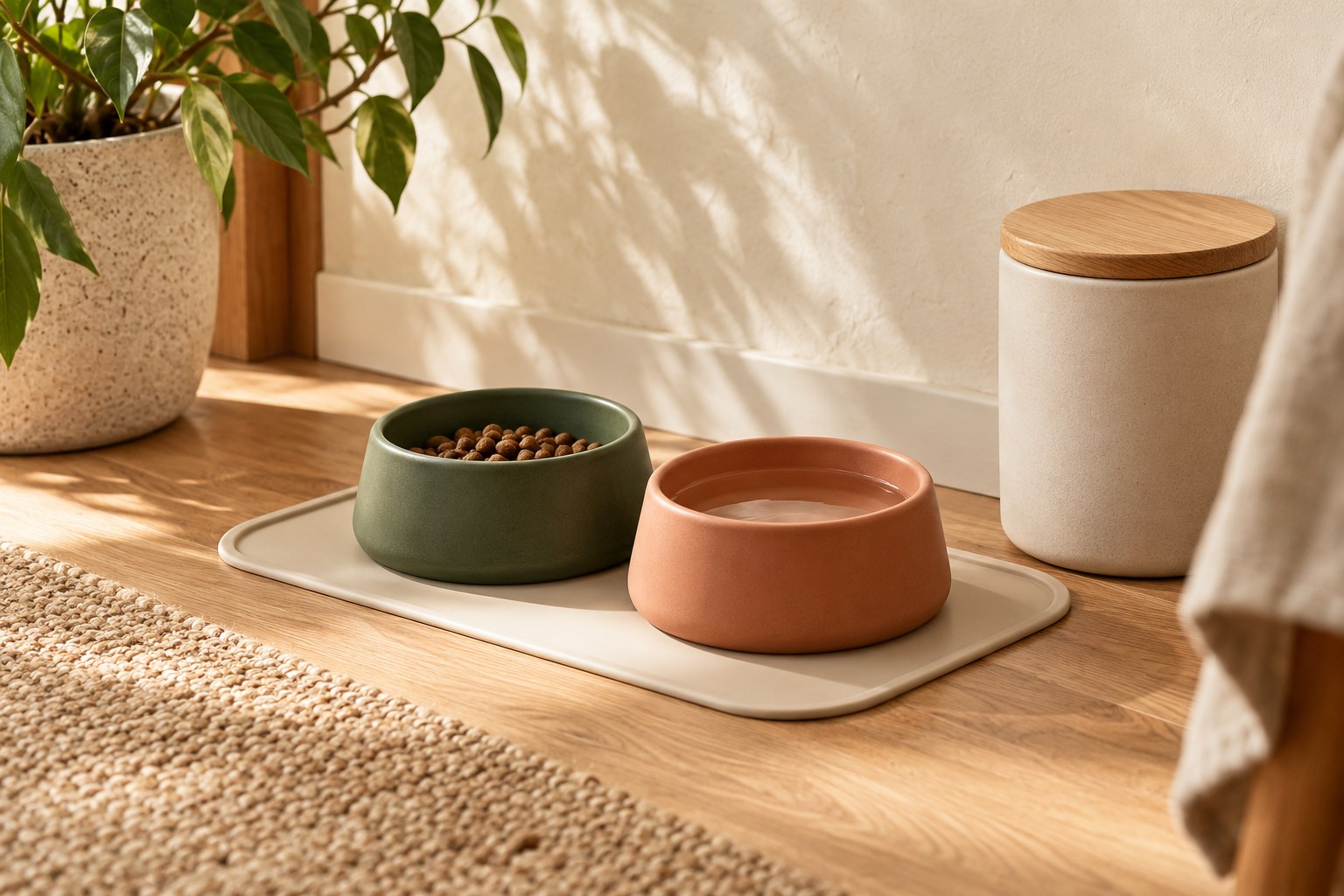
A ceramic bowl often appeals because it feels substantial and looks at home beside kitchenware. Weight can be helpful when a pet nudges a bowl, but it also makes dropping or carrying it with wet hands less forgiving. Treat appearance as one part of a practical purchase.
The most useful ceramic bowl is easy to lift, comfortable to reach into, and clearly intended for food contact. A decorative planter or an unlabelled craft vessel is not an interchangeable substitute simply because the dimensions look right.
Ask what the surface is intended to do
Look for a clear statement that the bowl is intended for serving food, along with the manufacturer's care instructions. Photographs cannot establish glaze suitability. If a listing gives extensive colour descriptions but no information about food use or cleaning, ask the seller before purchasing.
Examine the inside for texture. Raised lettering, deeply embossed patterns, and rough decorative patches add places that need attention with a brush. A smooth interior can make portion collection and washing easier. Decorations on the outside are usually less intrusive to the feeding surface.
Balance weight with a manageable shape
A very thick bowl may resist casual movement yet be difficult to pick up from a shallow tray. Look for enough external space below the rim to grip it securely. Handles are not essential, but a slight outward lip can help if it is rounded and well finished.
Measure the bowl's foot as well as its opening. A small pedestal beneath a wide basin can tip more readily than its weight suggests. In a busy kitchen, a low broad base also gives fewer opportunities for a passing foot to catch the side.
Build an inspection habit
Ceramic needs a quick condition check during washing. Look at the rim, the interior, and the underside rather than only the visible face. A chip can expose a rough edge, and a fine crack may be easier to spot once the bowl is clean and dry.
Remove a damaged bowl from feeding use instead of smoothing a chip with an improvised repair. Glue and household coatings may not be suitable for this purpose. Keep a simple spare bowl available so replacing a damaged favourite does not become an urgent shopping problem.
Plan for daily handling
Check whether the bowl is dishwasher safe and whether the base retains water after a wash. An unglazed foot may need time to dry. Do not assume a decorative metallic band or printed finish tolerates the same cleaning method as plain glazed ceramic.
For a hypothetical feeding shelf with two bowls, weigh the complete wet tray in your hands before deciding to carry everything together. Moving bowls separately may be safer and less awkward. A tray with handles can help contain drips, but it should not conceal cracks underneath.
For our approach to product claims and illustrations, see the Editorial Policy.