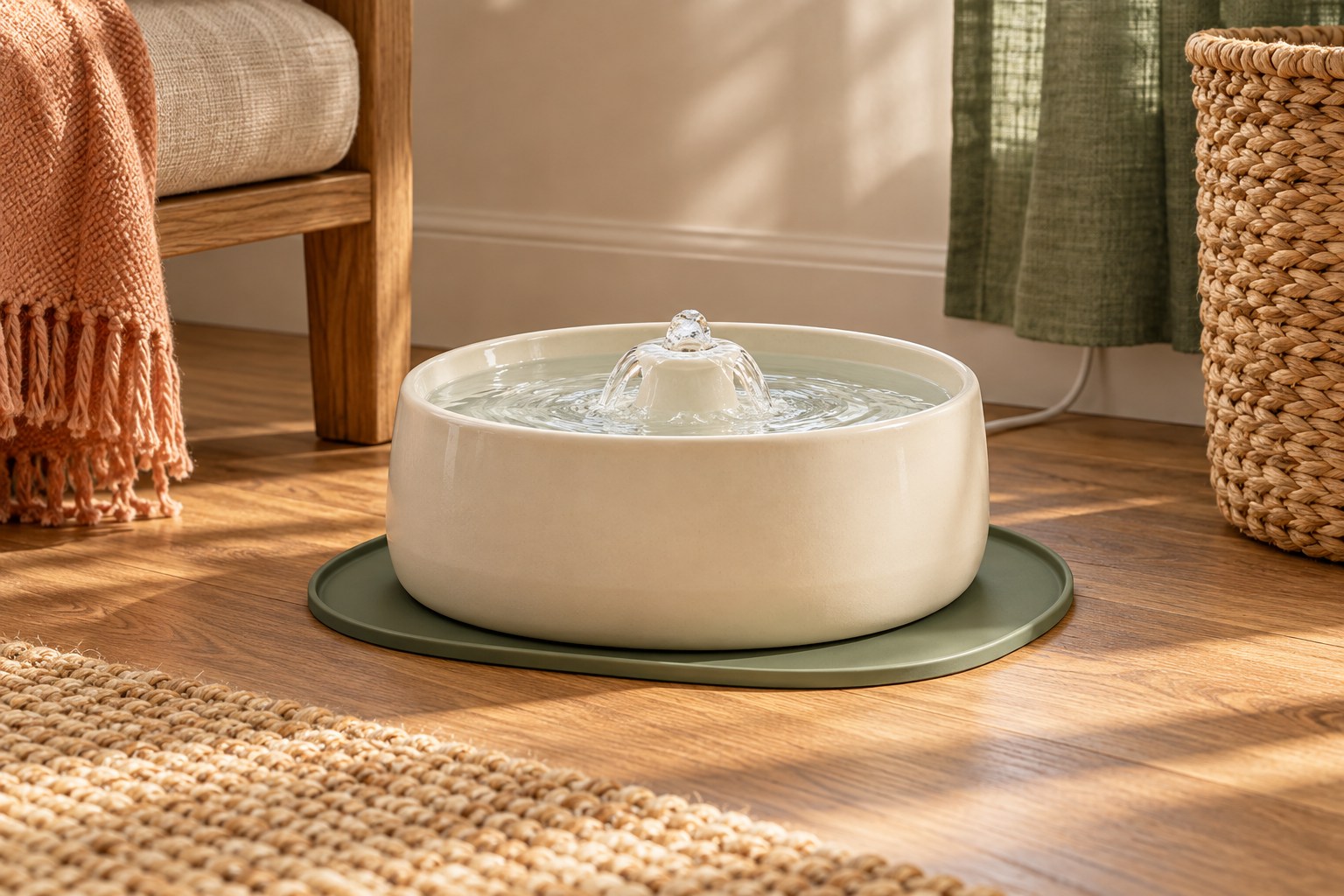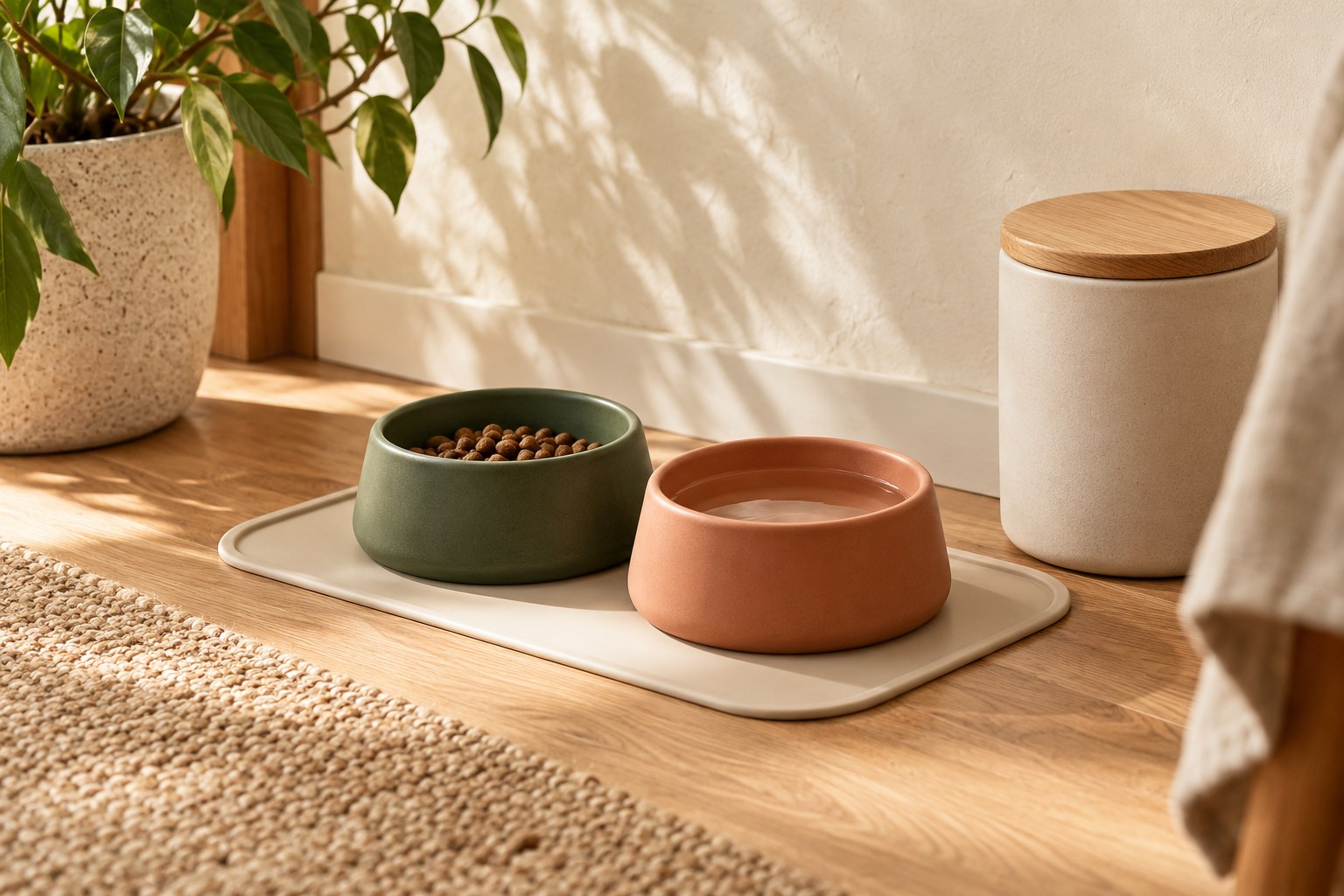
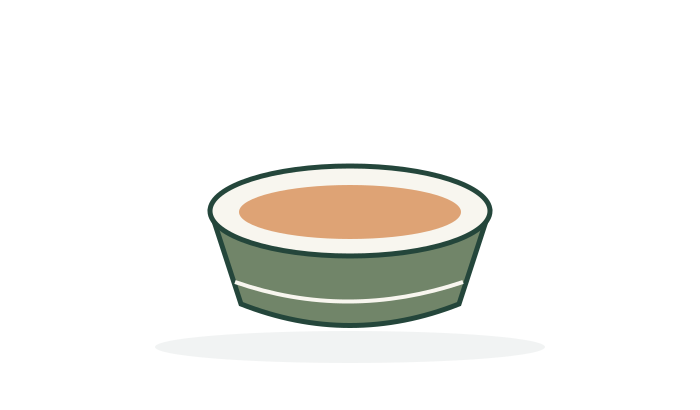
Bowls marketed for long-eared dogs often have a small upper opening above a wider base. The idea is to limit how much of the surrounding ear area enters the bowl. That shape also narrows the route to food or water, so the opening deserves as much attention as the intended benefit.
Begin with an observation of the current bowl: where do ears actually touch, and at what stage? Contact with a wet floor beside the bowl is a different problem from contact inside it. A new bowl shape will not address every source of dampness or mess.
Compare opening and interior depth
Measure the animal's comfortable approach using the current bowl as a reference, without forcing the head into any object. Compare the new bowl's opening, depth, and inward slope. Photographs taken from above may disguise how steeply the walls narrow.
Food that settles at the deepest point still needs to be reachable. An opening that prevents obvious ear contact but makes the last pieces difficult to collect is a poor trade. Look for dimensions and side views rather than relying only on a breed name in the listing.
Keep the base broad and stable
Tall narrow openings can raise the point where a pet applies pressure. A wide base helps resist tipping, but the actual result also depends on floor grip and bowl weight. Test the assembled setup on its intended surface with a light sideways push.
If the bowl sits in a holder, check that its profile fits fully into the opening. A holder designed for a conventional tapered insert may not support a specialist bowl securely. Do not assume similar upper diameters mean the lower bodies are interchangeable.
Match the solution to the mess
If ears brush a puddle outside the water bowl, a correctly sized low-lipped mat may be more relevant than narrowing the opening. If the bowl travels across the floor, grip deserves attention. Observe the whole station rather than assigning every issue to the dog's ear length.
For a hypothetical dog using a wide, shallow water dish, a moderately narrower model with the same low height may be worth comparing before a deep conical design. Make one equipment change at a time so you can identify which feature made access or cleanup easier.
Keep washing straightforward
A steep inward wall can hide a ring of residue below the opening. Check whether your hand or usual brush reaches all of it. Rolled rims and detachable bases need inspection too. Select a material and cleaning method supported for the complete product.
When trying a new water bowl, keep familiar water access available and observe its use. Record whether the bowl stays upright, whether the final portion remains accessible, and where moisture ends up afterward. Those practical results are more informative than a product photo showing neatly arranged ears.
Evaluate the fit again after placement
A bowl positioned under a shelf or beside a cabinet can force an angled approach. Move surrounding objects away during the comparison. The animal should have room to stand and withdraw easily, and the bowl should be simple for you to lift without spilling.
Avoid adding several accessories merely to make a poor-fitting bowl usable. If the geometry is wrong, a simpler alternative is often easier to maintain and assess.
For our approach to product claims and illustrations, see the Editorial Policy.