A waist-connected leash can free a hand, but it also sends the dog’s movement directly to your body. That changes the balance of the system. A sudden sideways pull may be more difficult to manage when you cannot immediately reposition the connection, and carrying groceries does not remove the need to supervise the leash.
Evaluate whether the arrangement suits your mobility, your dog’s walking habits, and the environment before buying.
Start with the belt fit
A belt should sit according to its instructions, remain stable over your clothing, and let you breathe and move comfortably. A narrow strap can concentrate pressure; a wide padded belt may be bulky under a jacket. Check whether the connection point slides around the belt or stays fixed. Either behavior changes how a turn feels. The product should not rotate unexpectedly into a pocket, zipper, or bag strap, and its buckle should remain visible enough to inspect before leaving.
Keep an accessible way to intervene
Look for a documented method of quickly taking the leash in hand and releasing the waist connection when necessary. Practice while unloaded, then in a calm enclosed area. Do not assume that a buckle is easy to release under tension simply because it opens easily on a table. Avoid routing the leash behind your body where you cannot see it or stepping through loops during turns. Any release procedure needs to be simple enough to remember in a distracting setting.
Consider the dog’s movement pattern
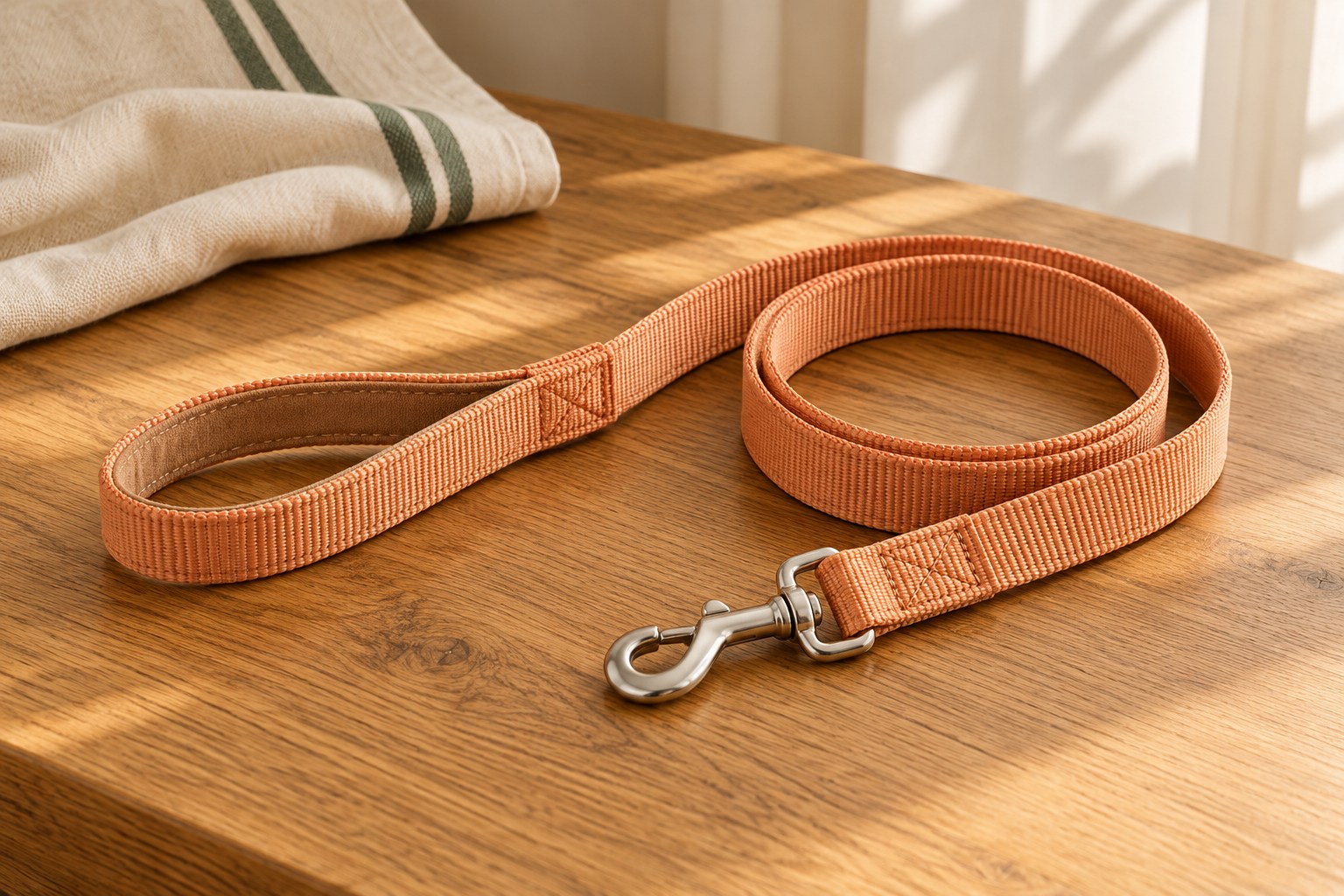
A dog that abruptly chases, lunges, circles, or stops may make a belt connection difficult to manage. Begin with loose-leash skills using a hand-held setup and seek qualified training support when needed. Elastic sections can soften small changes in distance but may also stretch far enough to place the dog beyond the position you expected. Check the maximum extended length before approaching roads or other people, rather than judging only the relaxed length printed prominently on the package.
Choose an uncluttered trial route
First use should be a short walk in a quiet area with room to stop, not a busy market or a run with several distractions. Keep one hand available and observe how the belt behaves during ordinary turns. People with balance concerns, pregnancy-related changes, or physical limitations should seek suitable professional guidance before using body-connected restraints. A hypothetical owner carrying a light shoulder bag may discover that a compact ordinary leash is still easier to reposition around benches and narrow gates.
Rehearse an ordinary interruption
Imagine reaching a gate while the dog stops to sniff to one side. With a waist connection, turning your body toward the latch can change the leash angle before you intend to move the dog. Practice stopping, taking the leash in hand, and opening the gate with the dog comfortably positioned. If that sequence feels awkward, the route may not suit hands-free use even when a straight open section feels easy.
Check what happens when you sit on a bench or remove a jacket. The belt should not become trapped beneath a bag strap, and no loose section should loop around a leg. Release and reconnect only in a secure situation with the dog managed appropriately. Avoid using the arrangement while handling tasks that prevent you from attending to the dog.
A useful trial is deliberately short and uneventful. Note whether you used the handhold repeatedly, whether the belt rotated, and whether the extended elastic section placed the dog farther away than expected. Those observations can lead to a different configuration or back to a conventional leash without treating the purchase as a commitment to one style.
For our approach to product claims and illustrations, see the Editorial Policy.