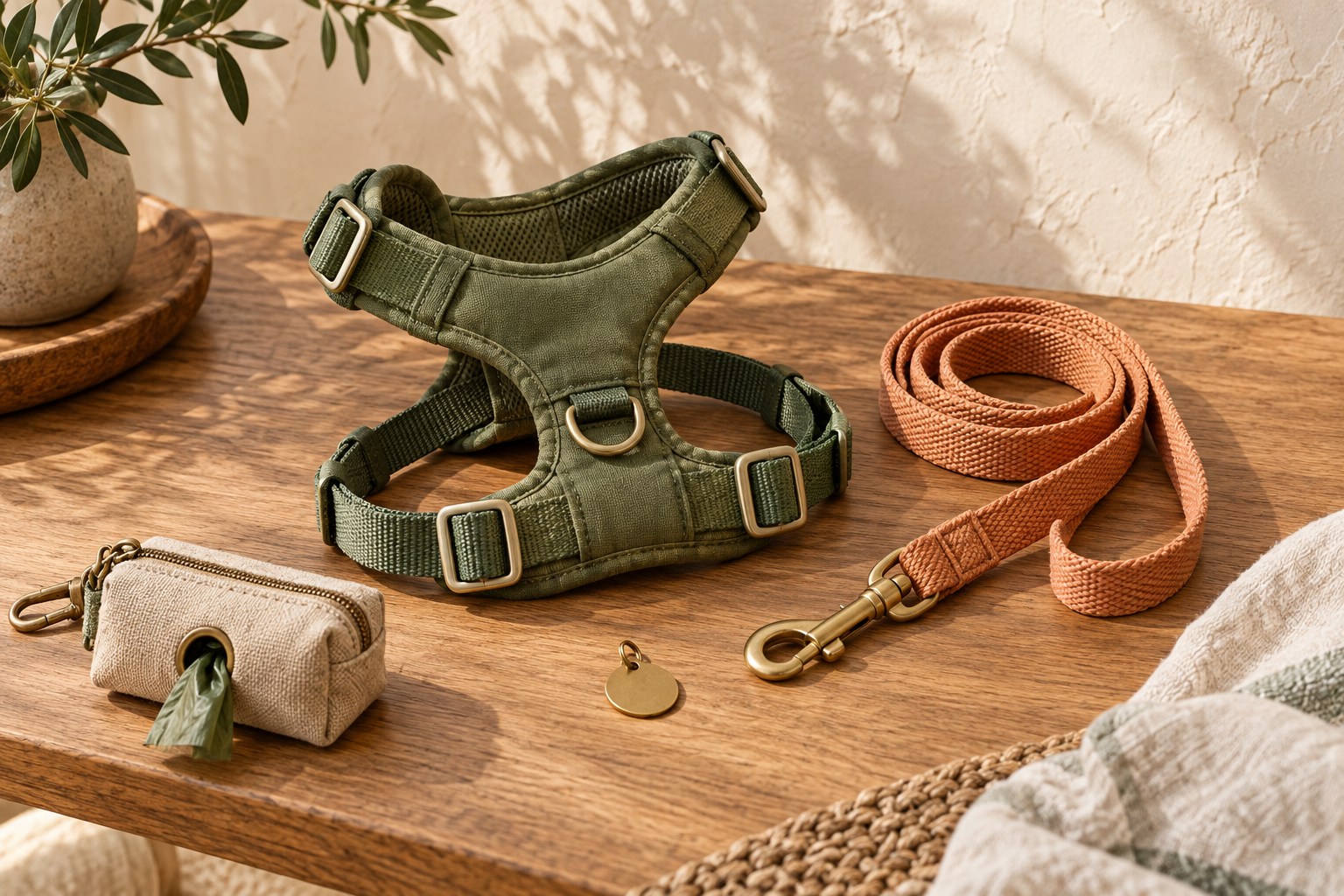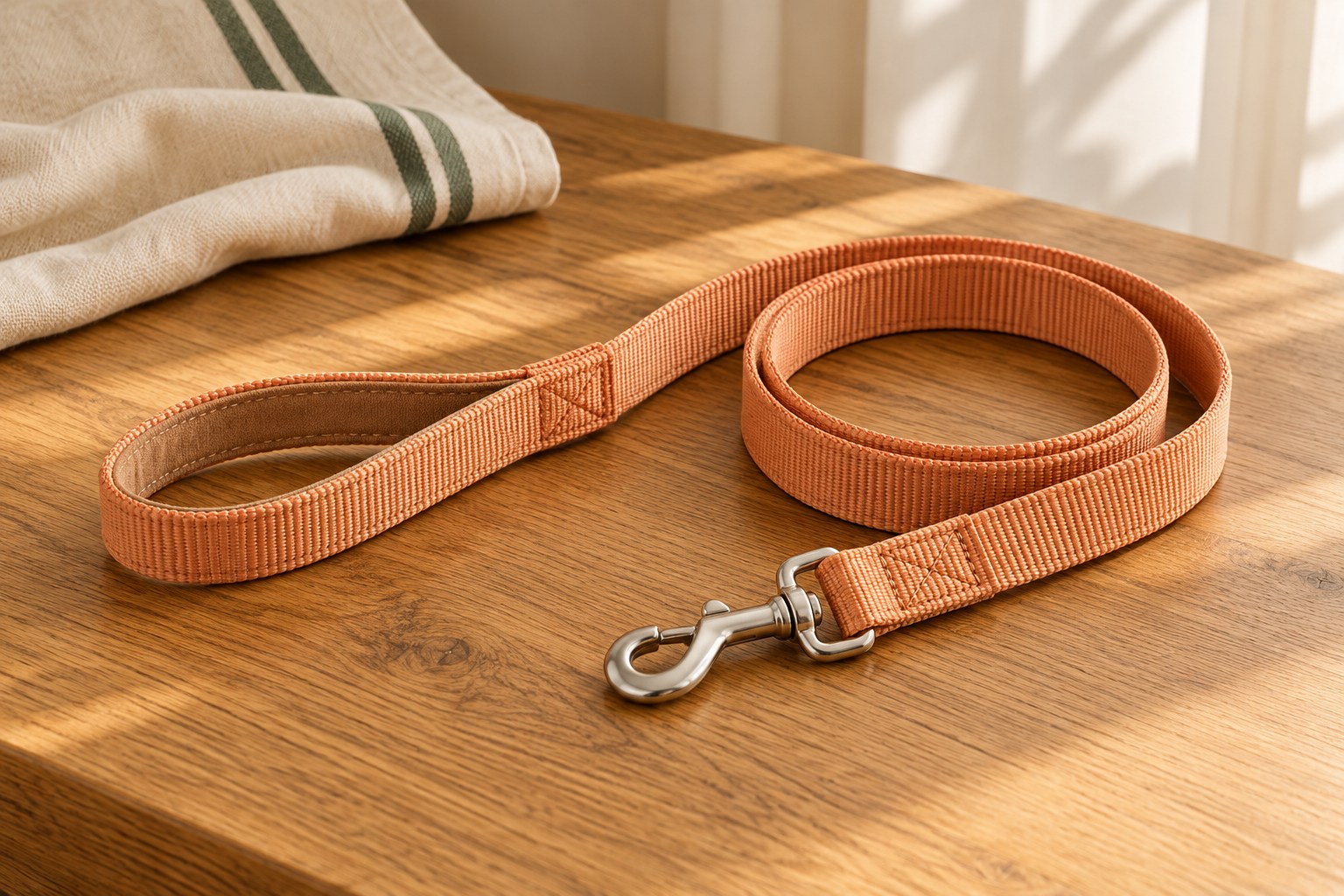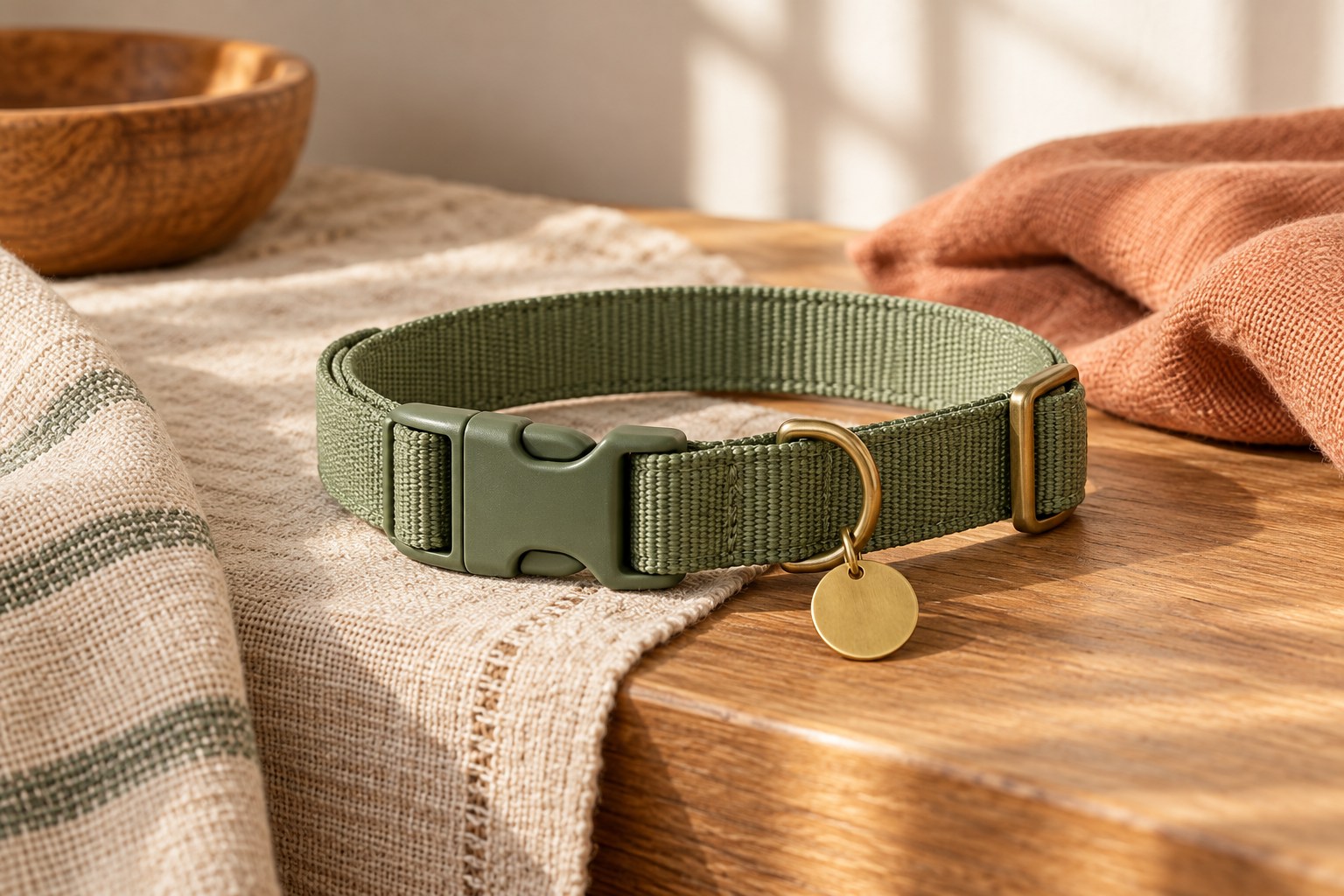
A flat collar may carry identification, connect a leash where appropriate, or do both. Its width affects how it sits between the jaw and shoulders, while the material and hardware affect weight and flexibility. A very wide collar can crowd a short neck; a narrow one may concentrate contact or leave little room for sturdy fittings.
Begin with the collar’s job, then fit the whole assembly on the individual dog.
Match width to available neck space
Look at the distance between the back of the jaw and the top of the shoulders while the dog stands naturally. The collar should fit in that space without pushing against either area during a head turn. A broad decorative band may look balanced in a photograph but fold or rub when the dog lowers its head. Conversely, a very slim collar on a larger neck can twist easily. Compare usable contact area, soft edges, and flexibility rather than choosing purely by dog size.
Measure without compressing the coat
Follow the manufacturer’s measuring location and guidance, keeping the tape flat rather than pulling it into thick fur. Choose an adjustment range with room on both sides of the measured size. Once fitted, check comfortable clearance and whether the collar could pass over the head unexpectedly. A finger check alone cannot account for every neck and skull shape. If there is doubt about secure walking restraint, use a suitably fitted harness and treat the collar primarily as an identification carrier.
Inspect seams and edge treatments
Run a fingertip around the inner surface and folded joins. Stiff heat-sealed edges, raised stitching, and protruding labels can be more important than whether the visible side feels soft. Metal eyelets and adjustment sliders should not create a hard point against the throat. For a hypothetical long-coated dog, a flat fabric collar may be comfortable but collect loose fur around the buckle. Check the hidden surface regularly rather than judging condition only from the outside.
Include the attached hardware
A buckle, leash ring, tag ring, and multiple tags can add considerable weight to a small collar. Check that the intended leash ring is clearly identifiable and that tags do not obstruct the buckle. Never attach the leash to a lightweight tag split ring. If the collar has a decorative loop, confirm its intended use instead of assuming it is load-bearing. A simple, proportionate arrangement often stays flatter and is easier to inspect before leaving the house.
Review fit as circumstances change
Growth, body-condition changes, a haircut, and seasonal coat thickness can all alter the practical fit. Remove the collar regularly to inspect the neck and the inside surface, and follow care instructions before washing. Leave enough drying time that damp material is not held against the skin. Consider snagging risks in crates, play, and unsupervised settings and choose the relevant management approach with professional advice where needed. A walking collar should not become an unattended tethering device.

For our approach to product claims and illustrations, see the Editorial Policy.