
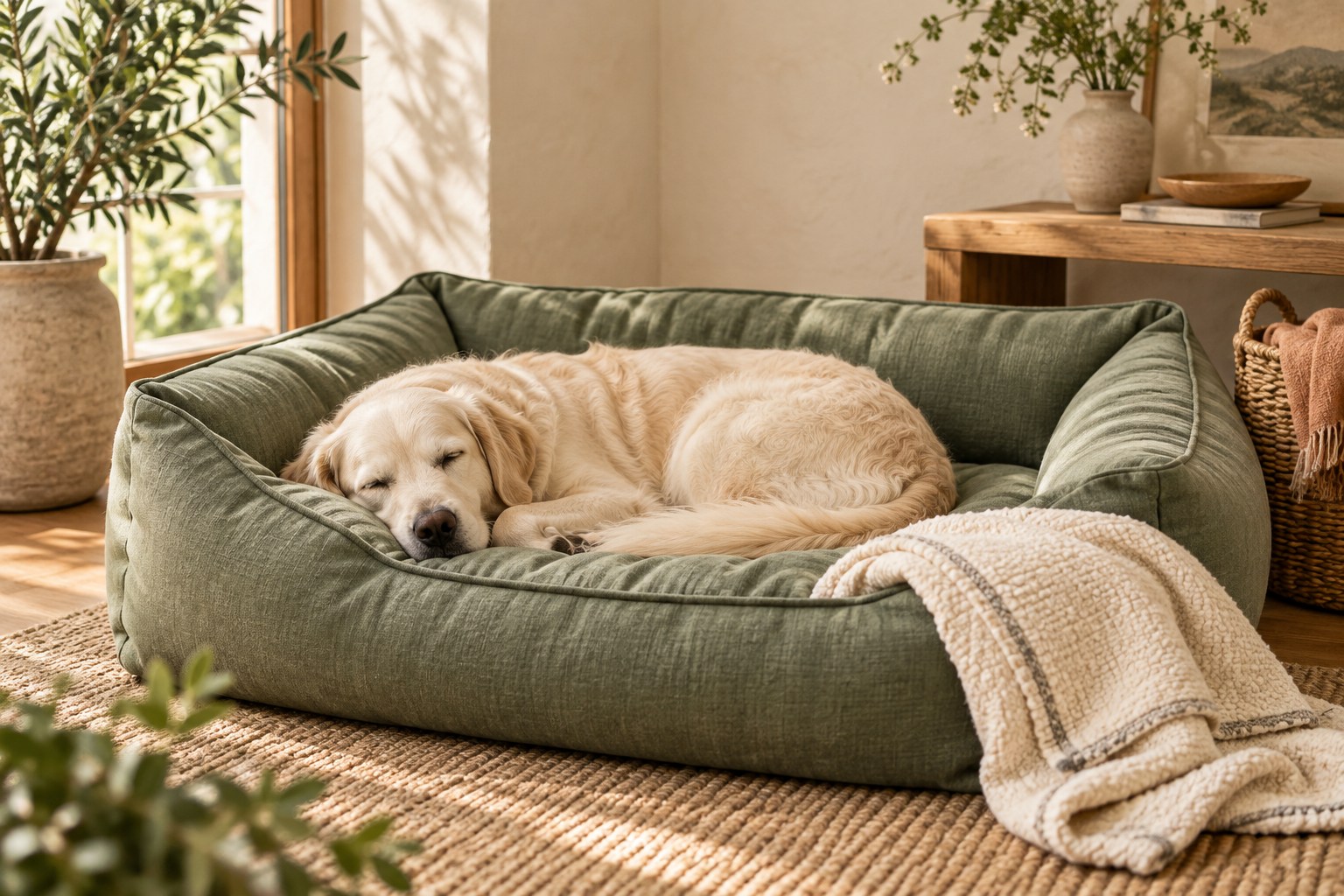
A pet may enjoy a quiet bedroom at night yet prefer to rest near people during the afternoon. Moving one bulky bed around the house makes both locations less convenient. A second bed can support those different routines, provided it has a clear purpose. Start with where the pet already chooses to settle instead of buying a matching pair for visual symmetry.
Identify the missing location
Observe the pet across ordinary household activities. A dog may lie beside a desk during work and move to the living room after dinner. A cat might select a sunny chair in the morning and a quieter corner later. Note where a bed would make those chosen spots more comfortable without blocking movement. Avoid locations that require constant relocation for doors, drawers, or cleaning equipment.
The second bed does not have to duplicate the first. A flat portable pad might fit beneath a desk while a substantial mattress remains in a bedroom. Keep the desired sleeping posture consistent, but adjust the format to the available space. If the pet only uses a location briefly, a washable blanket over a suitable existing surface may be enough instead of another thick cushion.
Think about pets individually
Two animals sharing a house may not want to share a resting surface. Separate beds create distinct choices and allow one pet to settle while another moves around. Place them so an animal can leave without crossing directly over the other. The number of beds is less important than whether the locations offer usable, independent resting opportunities rather than a row of competing spaces.
Do not assume that a frequently unused bed is the wrong color or brand. Traffic, noise, temperature, visibility, and access may explain the preference. Move a spare to a plausible quiet location before replacing it, and allow voluntary exploration. If pets show conflict over resting spaces, seek appropriate behavior guidance rather than expecting a more expensive cushion to address the relationship by itself.
Balance cleaning with duplication
A second bed can be available while the main cover dries, but only if it fits the pet well enough to serve that role. Interchangeable covers simplify laundry when two beds use the same model, yet identical bulky inserts may be unnecessary in a small home. Compare the value of a spare cover with the value of a complete second resting place before buying.
Choose materials according to each location. An entry-adjacent pad may need frequent washing because outdoor dirt reaches it first. A quiet indoor mattress may benefit more from a removable hair-releasing cover. Record the separate care instructions rather than sending visually similar pieces through the same cycle. A routine that keeps both beds dry and intact matters more than having a perfectly coordinated set.
Reassess after the household changes
New furniture, different working hours, and seasonal light can alter where pets choose to rest. Keep the second bed flexible enough to move to another suitable location. Photograph the setup or note the dimensions before rearranging a room so you do not lose a useful clear approach. Small changes in orientation can make a previously awkward corner easier to use.
After a few ordinary days, compare actual use with the intended purpose. A bed that supports a quiet afternoon while the main bed handles nighttime has earned its space even if the pet never alternates evenly. If both remain mostly empty, reconsider the surfaces and locations rather than accumulating more options. Product choices should follow the household's observed needs.
For our approach to product claims and illustrations, see the Editorial Policy.